Two recent patent publications present how Smart Steering functions in Mario Kart World:
- The game looks “a certain distance” ahead of player kart, and identifies the rightmost and leftmost points (Pa and Pb in image 1 below) of the path. Between these points is the appropriate range (AR).
- If the kart is heading beyond the AR, the user’s steering input is adjusted toward either Pa or Pb, whichever is closer.
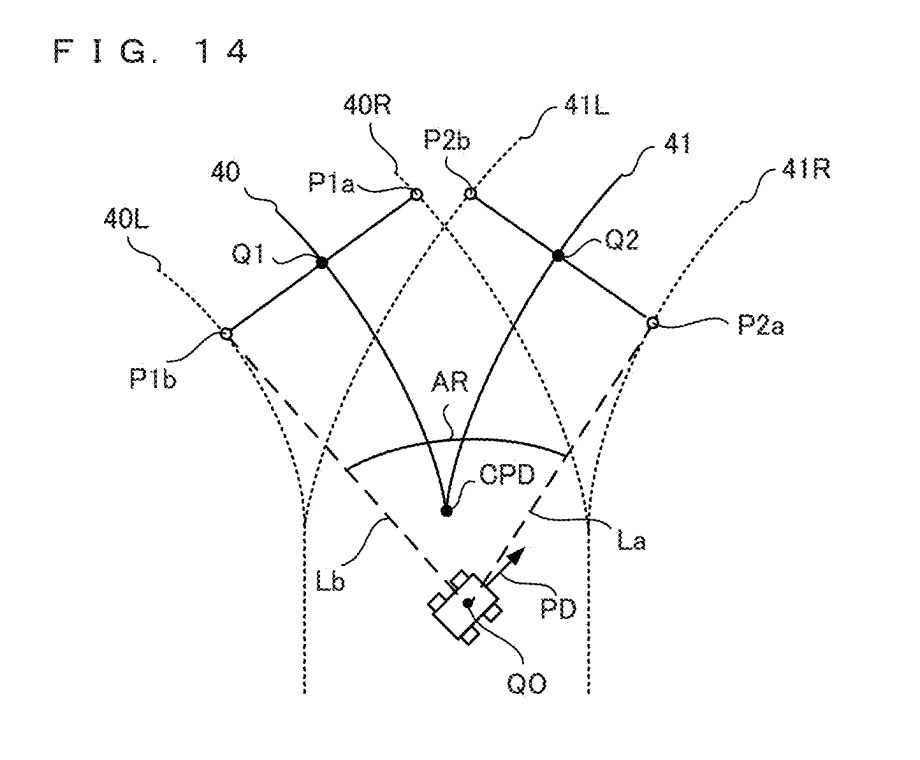
- When approaching a fork, the rightmost point of right path and leftmost point of left path are used to determine AR (image 2).
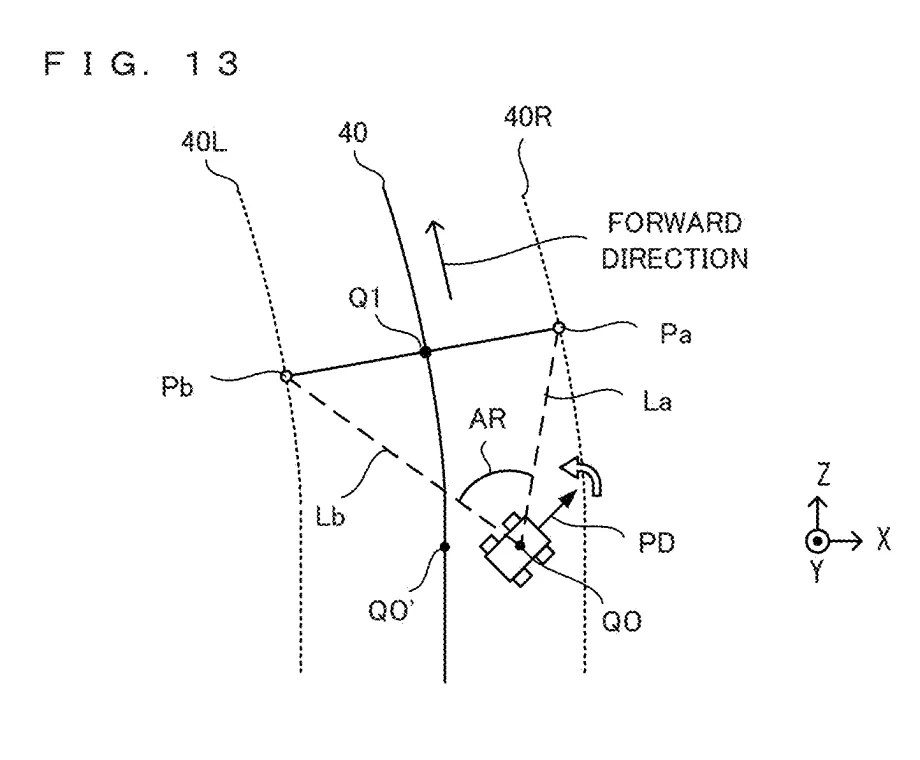
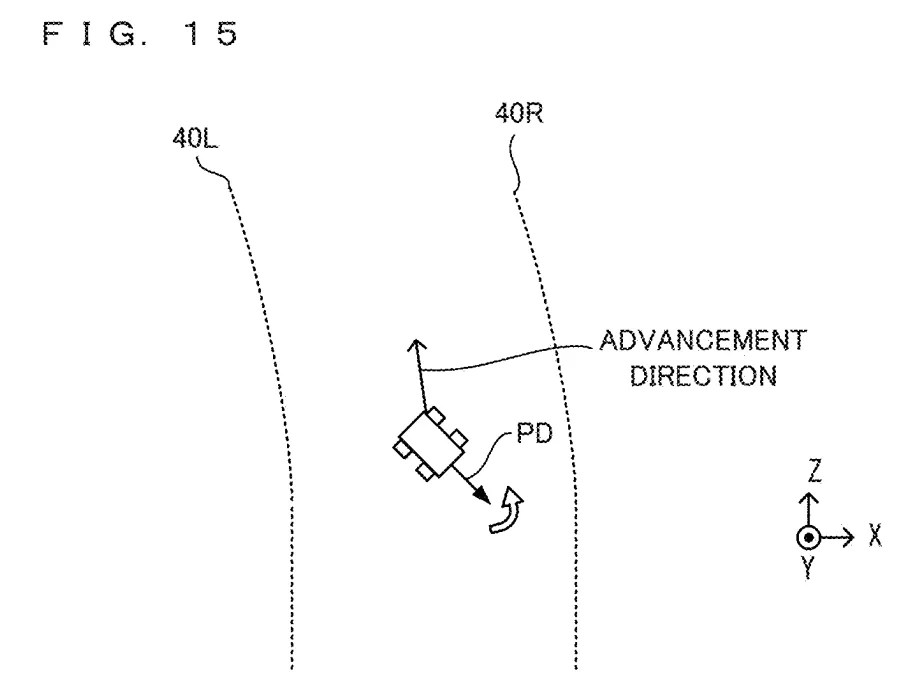
- If the kart is heading toward the wrong direction, a “forcible correction” will overwrite—not just adjust—the user input to turn it around (image 1 below).
- [Two adjacent paths w/ different heights] When the kart is on the lower path, Smart Steering keeps it in the lower path (btw 42R & 42L; image 2).
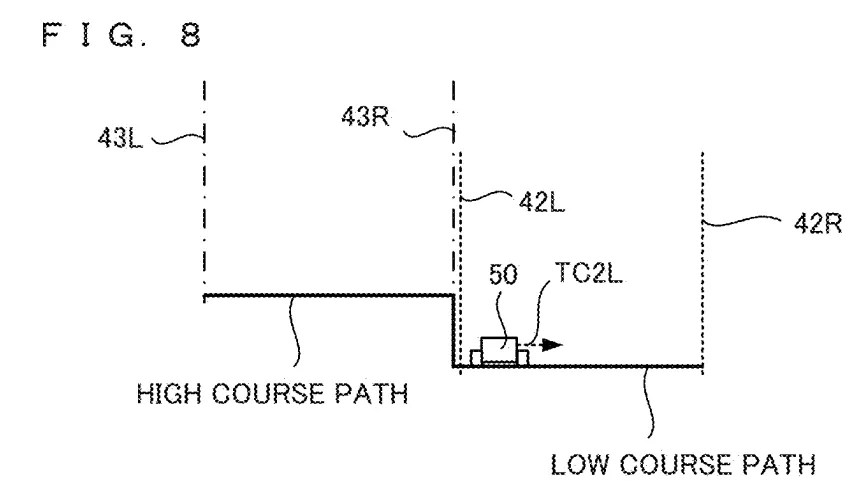
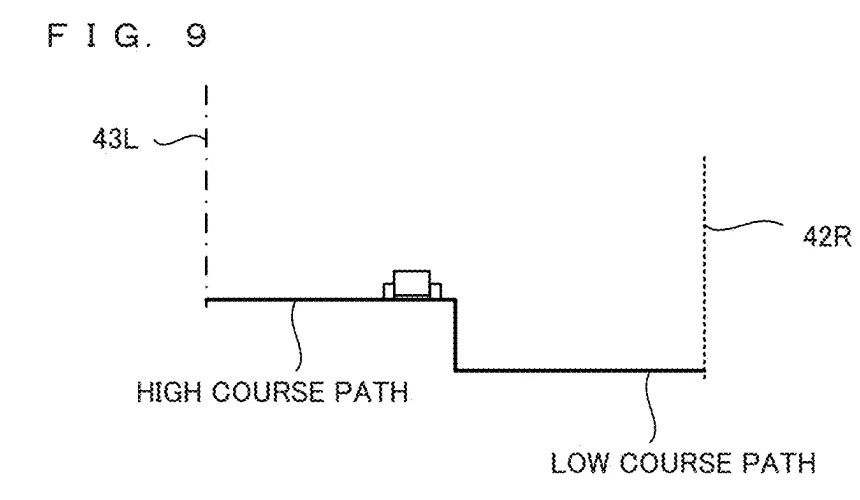
- [Two adjacent paths w/ different heights] When the kart is on the higher path, Smart Steering considers both paths (btw 42R & 43L; image 1 below).
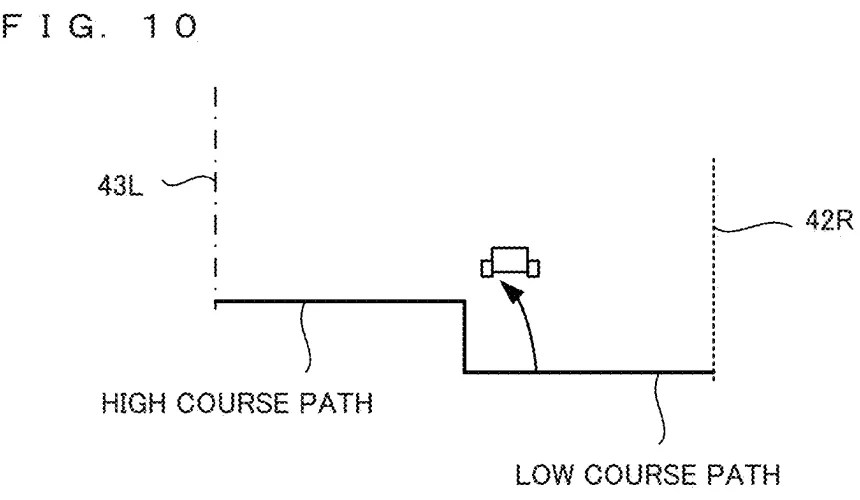
- [Two adjacent paths w/ different heights] If the kart performs a jump when on the lower path, Smart Steering considers both paths (btw 42R & 43L; image 2).
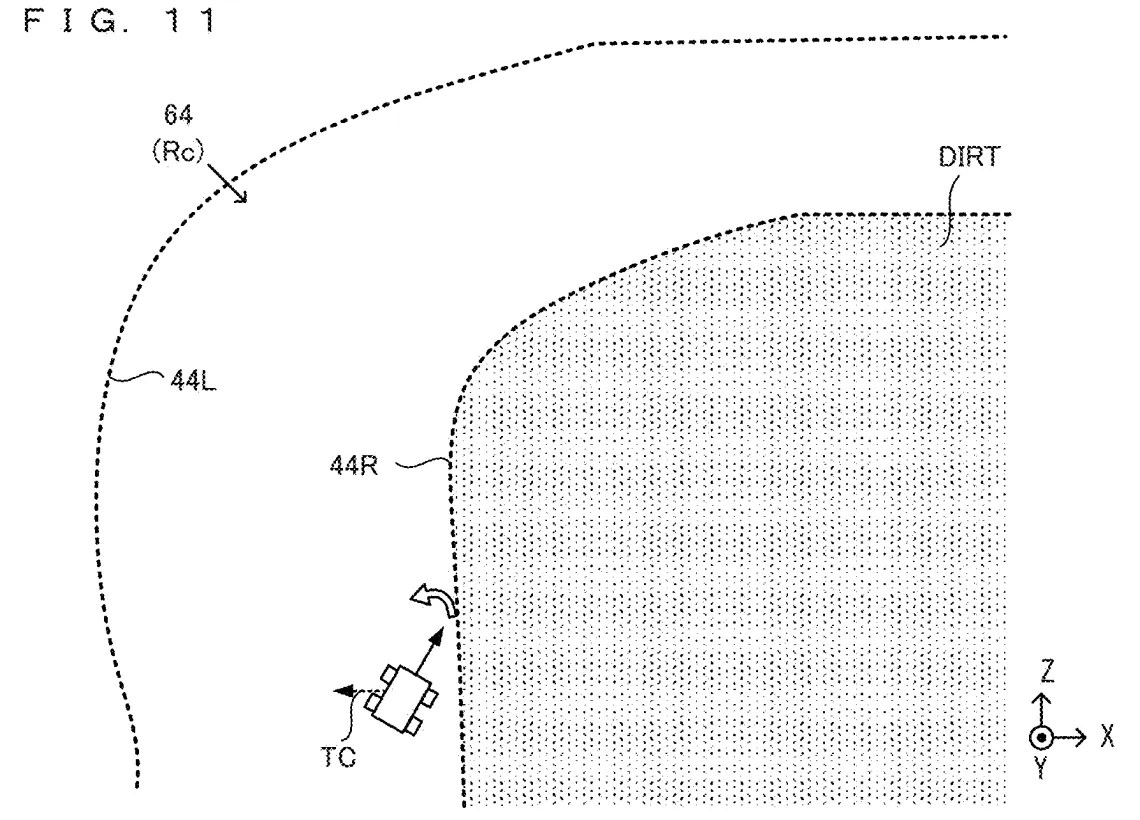
- When an adjacent path is on a speed reduction field (e.g., dirt), Smart Steering keeps you away (staying btw 44R & 44L; image 1 below).
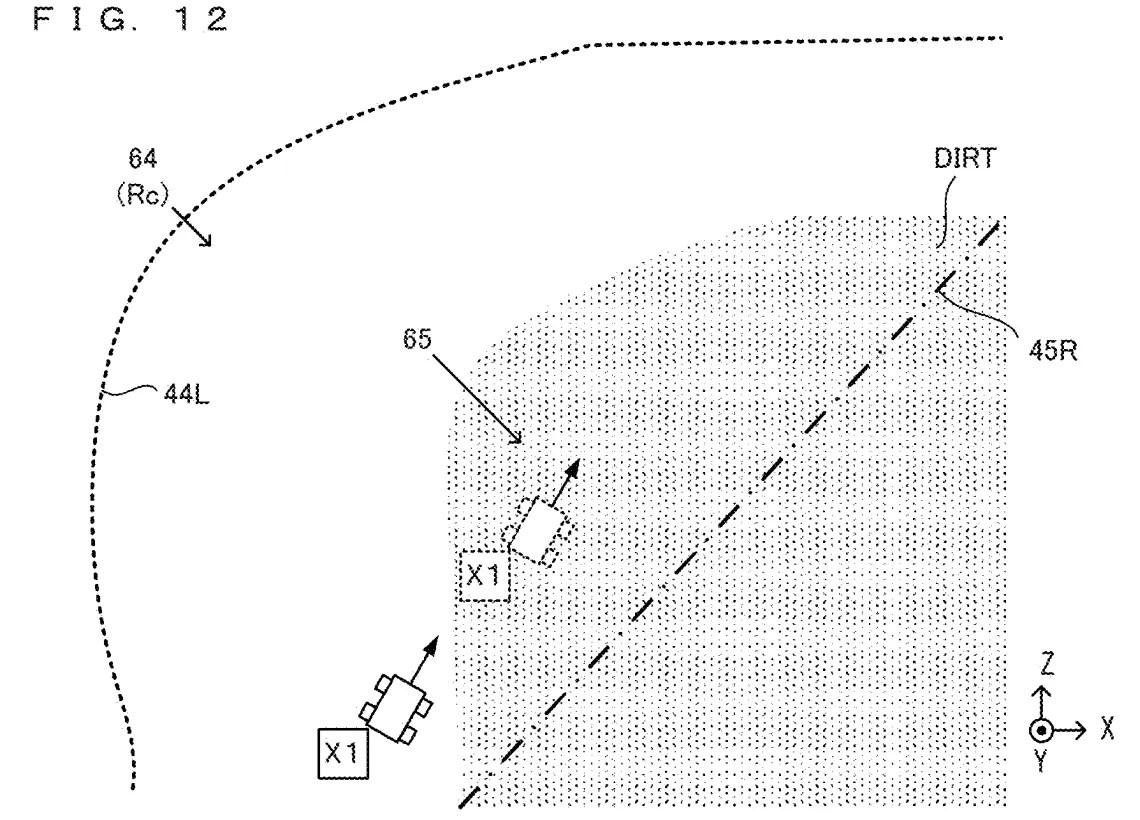
- If you’re using an item (or Auto-Use Item is enabled) to negate speed penalty (e.g., mushroom), Smart Steering now expands into the dirt area (btw 45R & 44L; image 2).
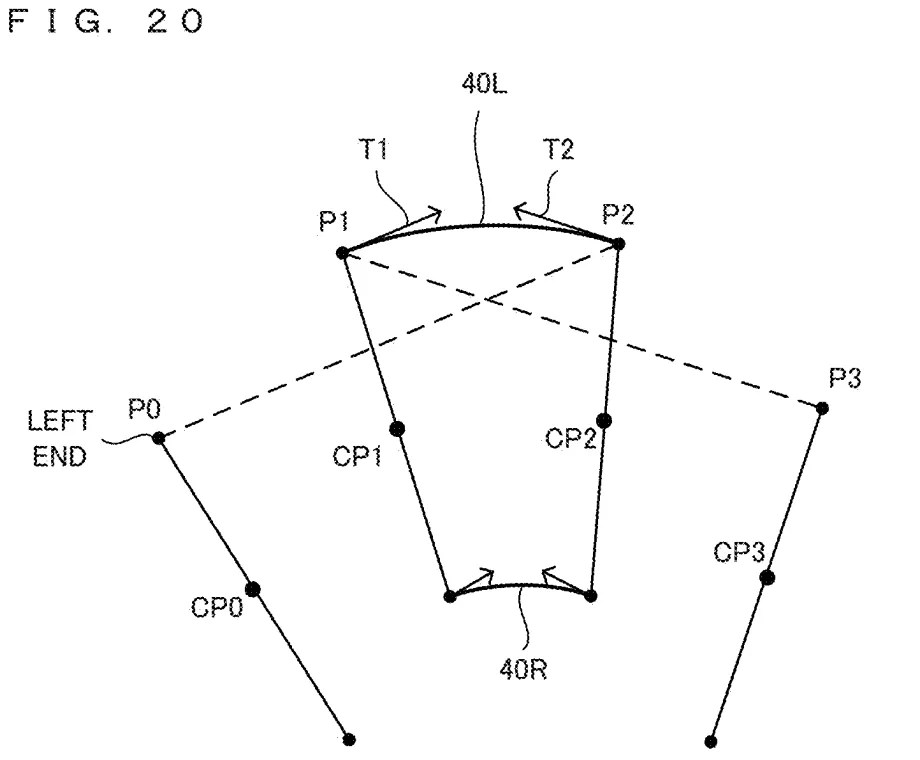
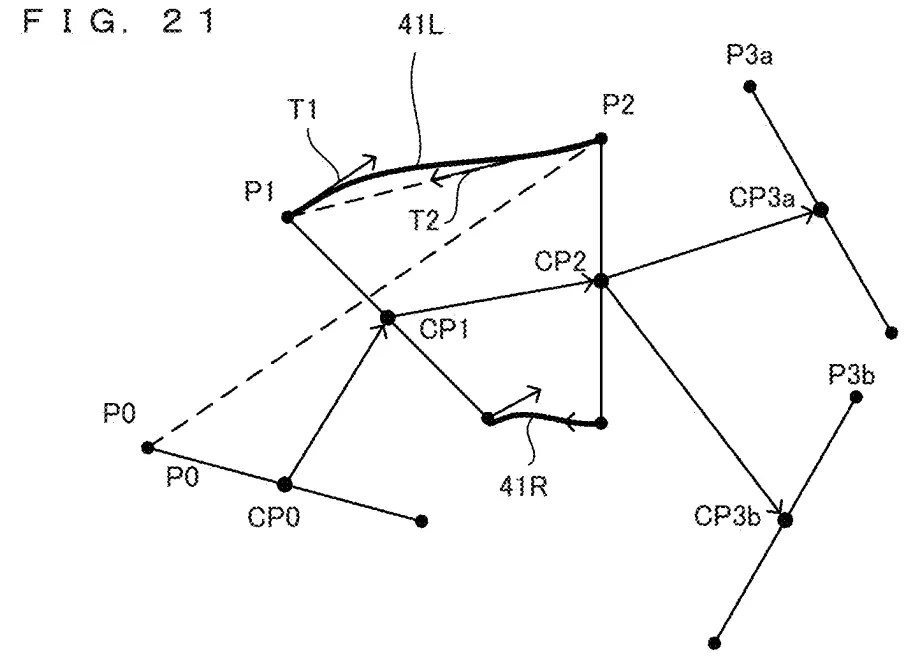
Refer to the patent applications for further details, such as the calculation of path curves (images below): US20260097304, US20260097310
[Originally posted on 2026-04-13 Pacific Time]
