Some new info for Nintendo historians.
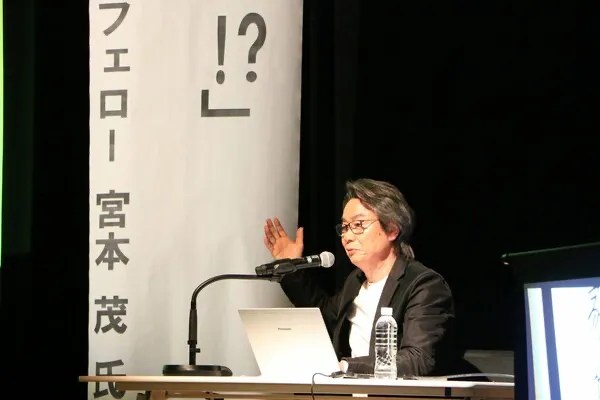
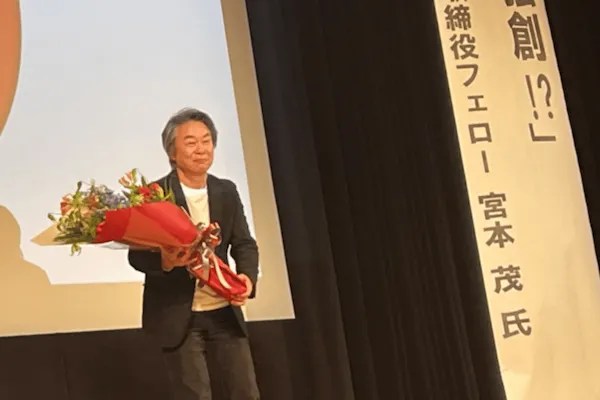
Earlier this year, Miyamoto’s hometown Sonobe celebrated its 20th anniversary of merging into Nantan City, and invited him to give a commemorative speech. The speech is titled “Originality!?” (独創!?). I’ll highlight certain parts below.
Physical experience
Miyamoto recounted his childhood experience playing in the nature of Sonobe, and said: “The senses I learned through physical experience have been incredibly useful in my career.”
“It’s interesting to create something that brings together the interface, the actions, and one’s physical sensations.”
He used Zelda as an example: “When you enter a dungeon, it gets dark. The music becomes melancholic. That gives you a slight chill in your body. Earlier you were just running under a blue sky to lively music and felt the heat, but now you suddenly feel cold.”
“As someone who sells digital products, I always want children to experience not only the digital world, but real-world experiences too.” (I think that this sentiment possibly is shared by many others at Nintendo, resulting in the Wii, Labo, several fitness titles, and now the My Mario products.)
Originality
Despite monopoly’s negative connotation, Miyamoto thinks that “[when you] create something truly original, it results in a monopoly.”
It started with Yamauchi, who encouraged his devs to be “a crane among chickens” (Chinese idiom) and “the silver wolf in a wolf pack” (unknown origin).
“When I pitched an idea, [Yamauchi] would ask, ‘is that a world first?’ And if I replied, ‘yes, it is,’ he would be absolutely delighted.”
“It’s important not to make something safe, but to challenge ourselves with something unseen before.”
“Things that make people say, ‘what’s that? Is this any good? Are you really making this?’ are the ones that, if they succeed, will become enormous.” (To me, Game Boy, Nintendogs, and Tomodachi Life exemplify this line of thinking.)
Blue ocean
Miyamoto stated that it’s difficult to differentiate oneself with other game industry competitors in terms of performance through technological advancements. He also likened engaging in price competition to strangling oneself.
He emphasized the importance of “creating products based on our own way of thinking, highlighting unique value in areas such as control and gameplay, and creating a blue ocean”. (Note that Miyamoto doesn’t define “blue ocean” via the lens of demographics, which many in the industry are wont to do.)
Local vs. global
Miyamoto constantly wonders: “Why doesn’t everyone try to create more things that can sell worldwide?”
“If you make things aiming to follow Japanese trends, you’ll struggle immensely when taking them to the world. You can’t even get on the same starting line.”
But that doesn’t mean giving up on being yourself—it’s the opposite. Miyamoto believes that the ultimate form of “local” is “individuality”, and things that are “the ultimate local can resonate globally”.
“Don’t chase trends; take your time to create exactly what you want to make.”
Sales
When ideating for the next game, Miyamoto never asks the sales team what to make. “Because salespeople want more of what’s currently selling, ‘something like what’s selling now’ will be their proposal.” (So, no extraction shooter from Nintendo then?)
This also began with Yamauchi. He said, “forcing sales of products that don’t sell damages the brand”, and instructed the sales team to “wait until customers come to buy”.
For that reason, Miyamoto declared that “there are no sales targets”. If someone asks, his answer is: “The sky’s the limit.”
Naming
“Safe names will be forgotten. Names that make people think—‘what’s that?’—are the ones that stick.”
Aside from recounting the origin of the Kirby name, Miyamoto also said that he felt the original game title Kirby: Child of the Stars (星の子カービィ) was “way too descriptive”. So he changed it to Kirby of the Stars (星のカービィ) to be more mysterious.
As for Zelda, The Legend of [Something] was decided first, before they landed on Zelda Fitzgerald, “famous for being a shrew, fearsome wife, and unique individual.” He said, “isn’t Zelda cool?”
And in spite of Ocarina of Time’s legendary status in the gaming history, Miyamoto revealed that its naming was somewhat of a dad joke: “Ocarina of Time” is a pun on “ceramic ocarina”, because time (時; toki) sounds like ceramic (陶器; tōki).
Notes on sources:
- Blog of 澪池ひびき; transcript reliability unknown; beware that the author mixed personal commentary with Miyamoto quotes and used quotation marks liberally (part 1; part 2)
- Kyoto Shimbun; reliable but brief; paywalled (link)
[Originally posted on 2026-04-19 Pacific Time]
