Since HD Rumble 1 is less capable than HD Rumble 2, when a Switch 1 controller is used with a Switch 2 game, the vibrations need to be compensated to give the player a close enough experience. A high-level explanation:
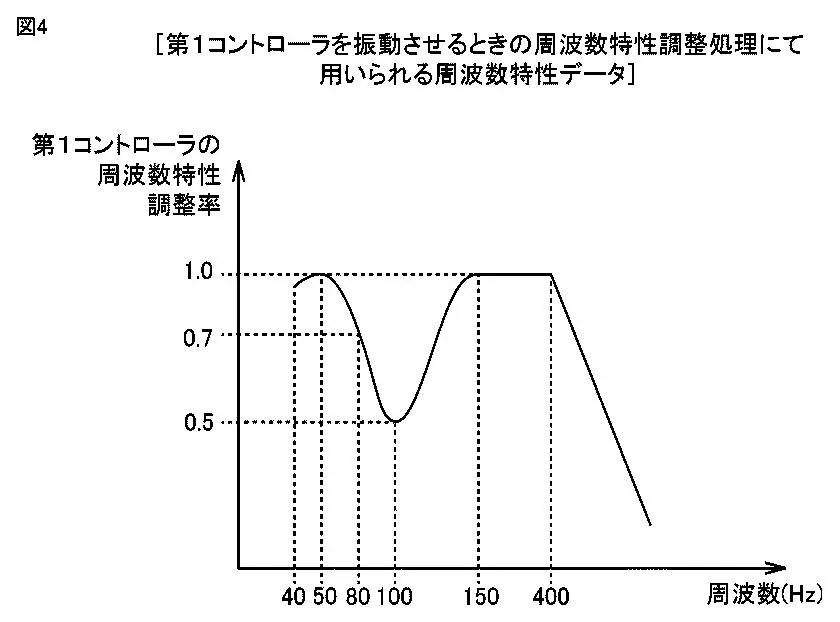
- When using an HDR2 controller, an NS2 game’s vibration output is adjusted based on the motor’s frequency response characteristic (single curve in image above). E.g., the voltage is reduced around 100Hz bc the motor is more efficient there.
- To map the above to HDR1, four different curves are employed (Ln1-Ln4 in image below). Ln1 is the minimum vibration threshold. When the amplitude is 0.1, Ln2 is used; Ln3 when amplitude is 0.5, and Ln4 when 1. Any in-between amplitudes use linear interpolations.
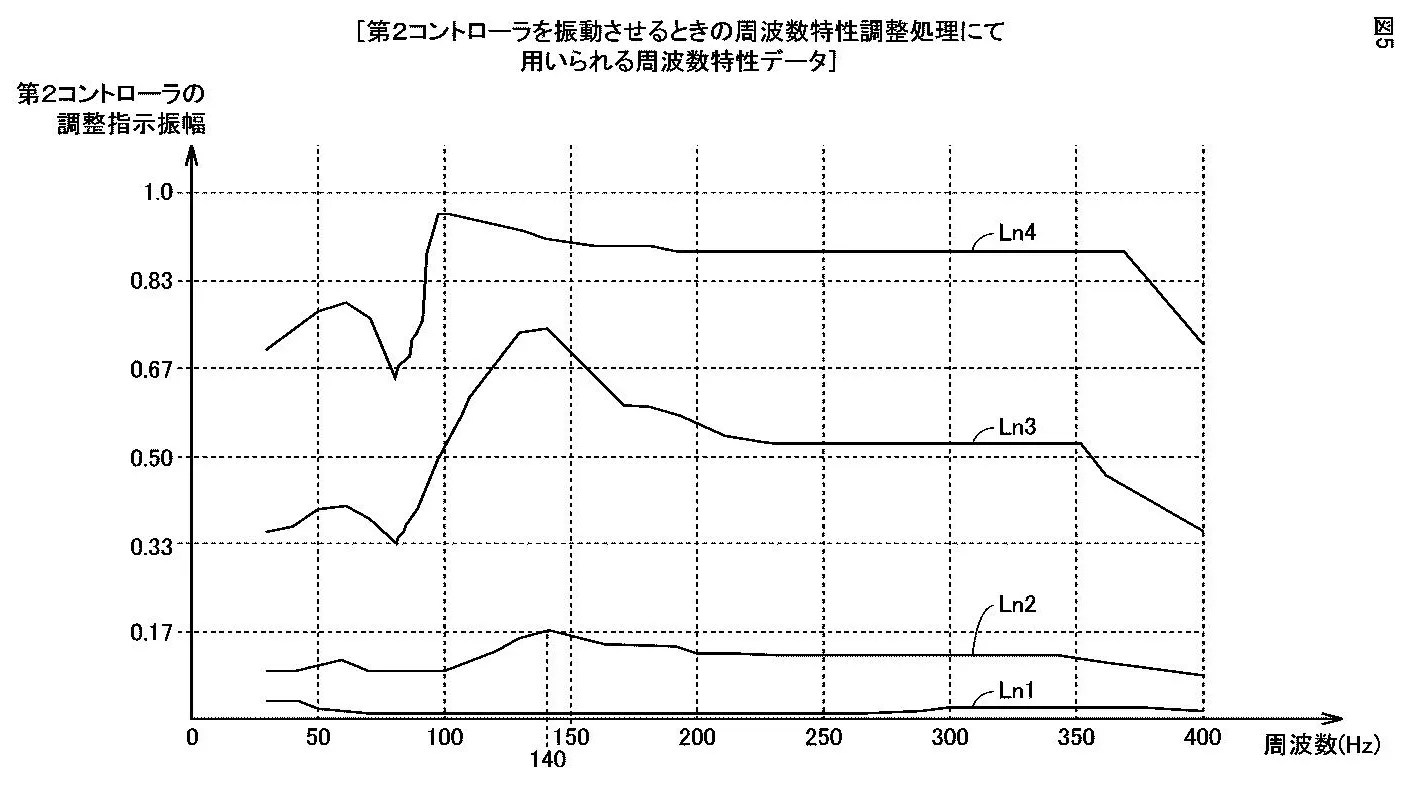
- When a vibration is below HDR2’s minimum threshold, it’s set to zero (silence) for HDR1—instead of using Ln1—to equalize the player experience.
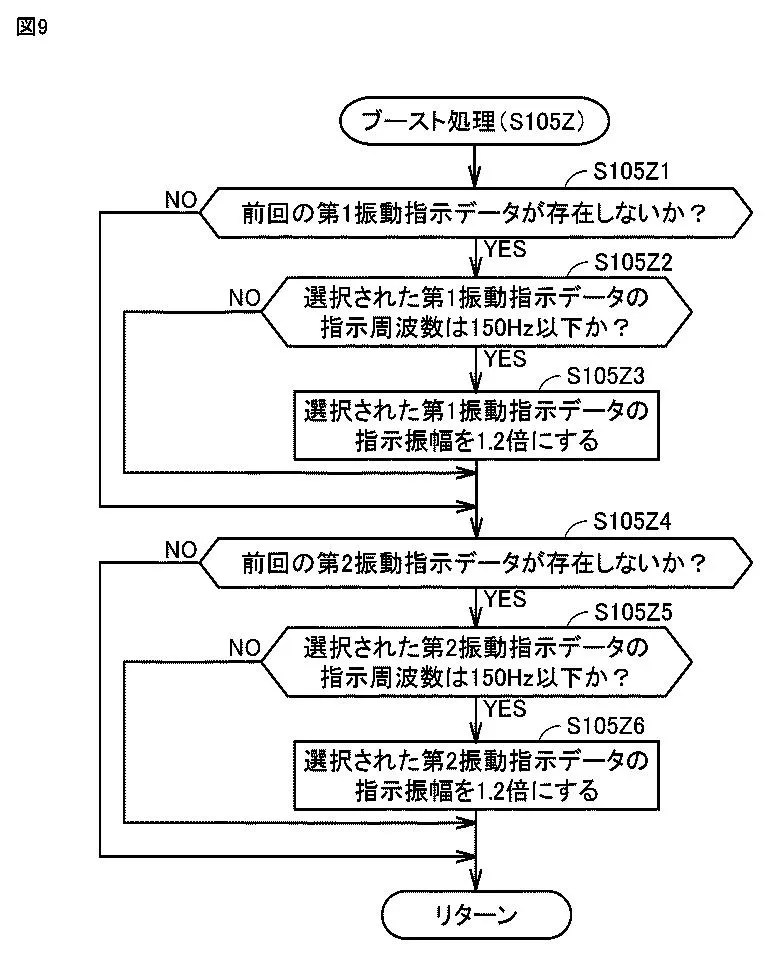
- Because HDR1 motor ramps up slower than HDR2, when 1) a vibration starts/resumes from zero, and 2) the frequency is <150Hz, the amplitude is temporarily boosted 1.2x for HDR1 (image below).
[Sidebar] The amp’s PWM control frequency is 8kHz, and duty cycle 0.125ms.
[Sources] Patent applications: JP2026015701, JP2026015702, JP2026015703
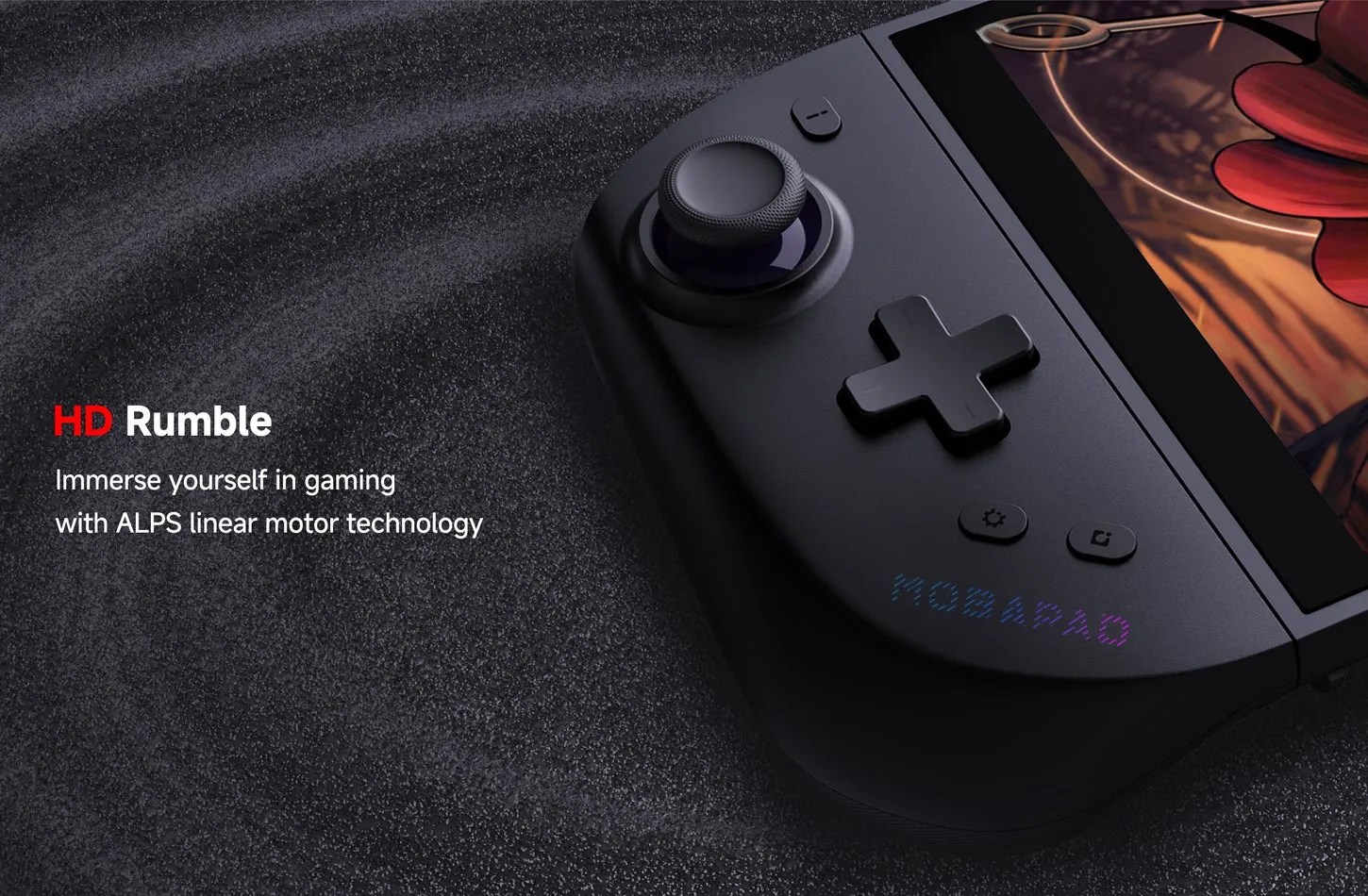
P.S.: This is a friendly reminder that no 3rd party is able to replicate HD Rumble 2 yet. Their so-called “Switch 2” controllers are glorified Switch 1 controllers with HD Rumble 1 motors, so you’re getting a lesser experience. Even the Mobapad M12 HD joy-cons (image below), which connect to the console directly, are in actuality NS1 controllers passing USB data through the magnetic connectors to the USB2 hub IC (Genesys Logic GL852G) on the motherboard. It’s a neat trick, but doesn’t make it an NS2 controller.
[Originally posted on 2026-04-29 Pacific Time]
