Many Nintendo games don’t use DLSS. While no rationale was public given, one possible explanation is the rendering budget. A recently published NERD patent reveals an interest in offloading image upscaling from the GPU to a dedicated ASIC that is fast, small, and power/memory efficient.
This patent application describes a new neural network architecture—Grouped Separable Tensor Transform—evolving from NERD’s earlier ML upscaling patents based on Separable Block Transform (you probably recall a flurry of “Nintendo DLSS” reports a few years back).
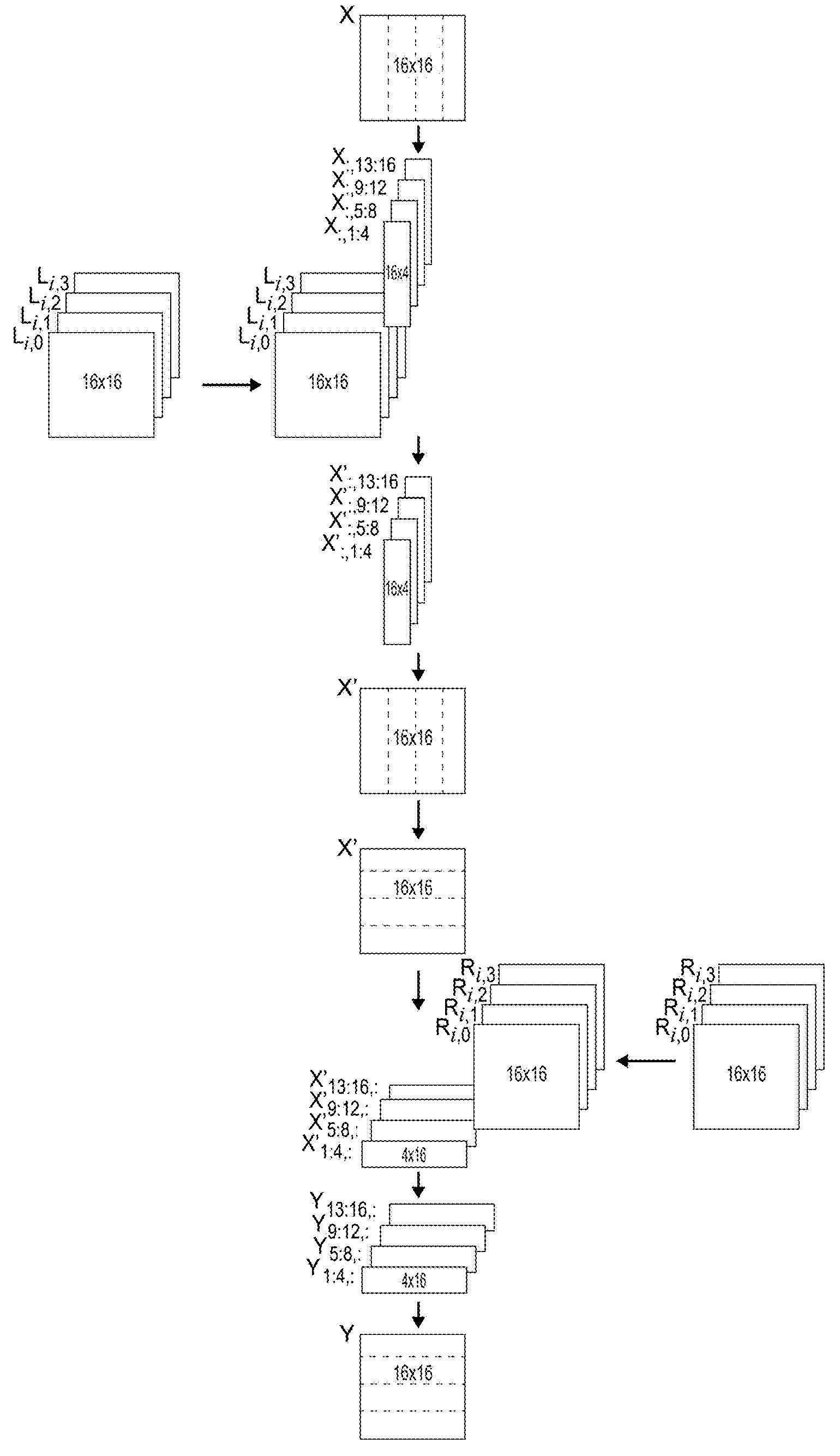
- Instead of one big matrix, it uses a leaner layer design that applies grouped small matrices (image 1 below)
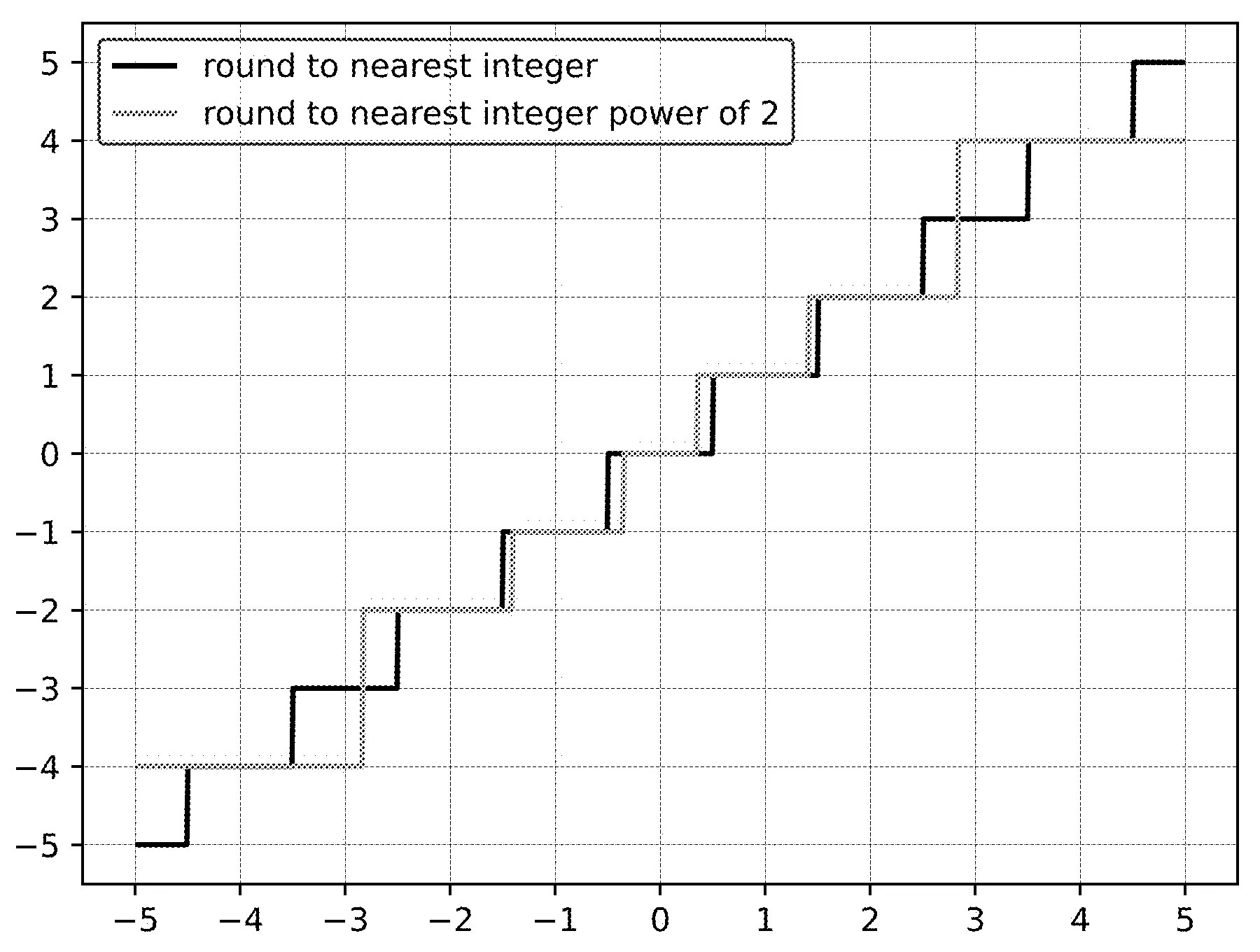
- It uses power-of-two quantization, so no need for multipliers or floating point (image 2)
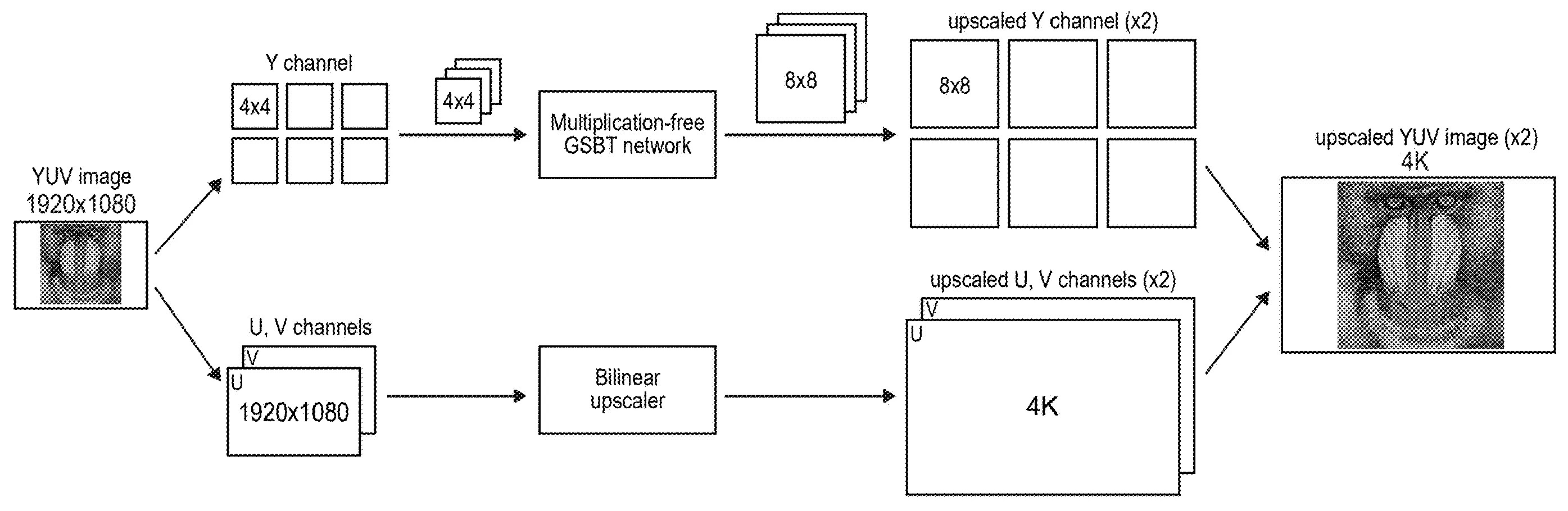
- An image’s Y channel is upscaled by this neural network, and UV channels by bilinear upscaling (image 3)
- Image 4 is an x3 upscale example, comparing bilinear to this method
- The design is aimed at a dedicated chip that needs few transistors, little storage, low power, and runs fast in parallel

Essentially the invention trades a little bit of precision for efficiency, but requires specialized hardware—such as an ASIC or inside an SoC. Because of that, it can’t be patched into Switch 2. It could, in theory, be made part of a cheap GameShare device (receiving only), or the next-gen Switch.
Related: Machine Learning-Based Artifact Reduction
[Originally posted on 2026-11-11 Pacific Time]
