There has been some confusion on the memory types used in Switch Game Cards, and what caused Macronix to exit the supply chain. In this post I’ll attempt to demystify these questions.
As I shared before, Macronix labels its game storage business as “ROM” only for financial reporting purposes. Chairman Wu himself confirmed that the Switch 1 Game Card uses MLC NAND flash—it isn’t ROM at all. No further details were divulged by the company, however.
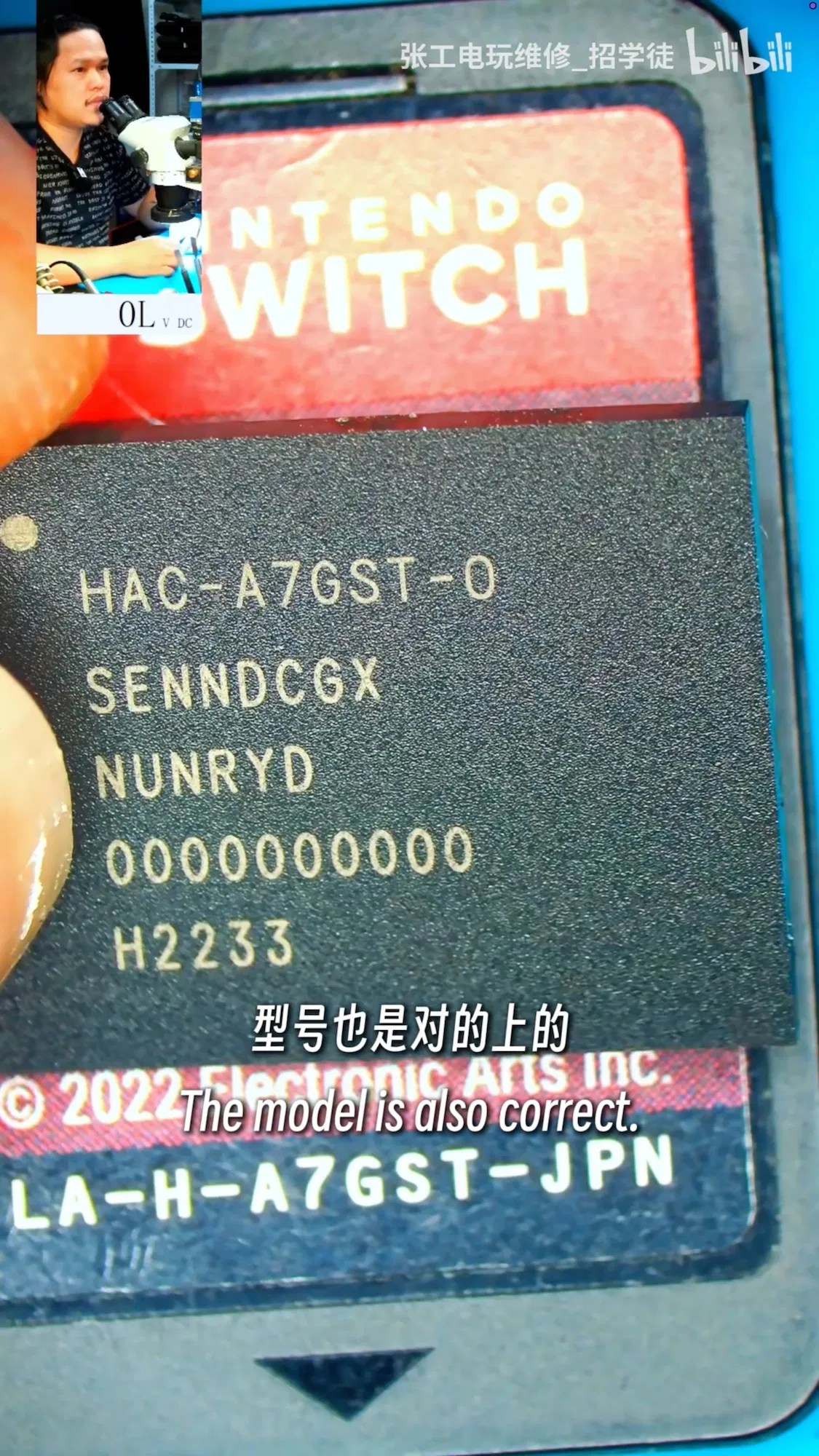
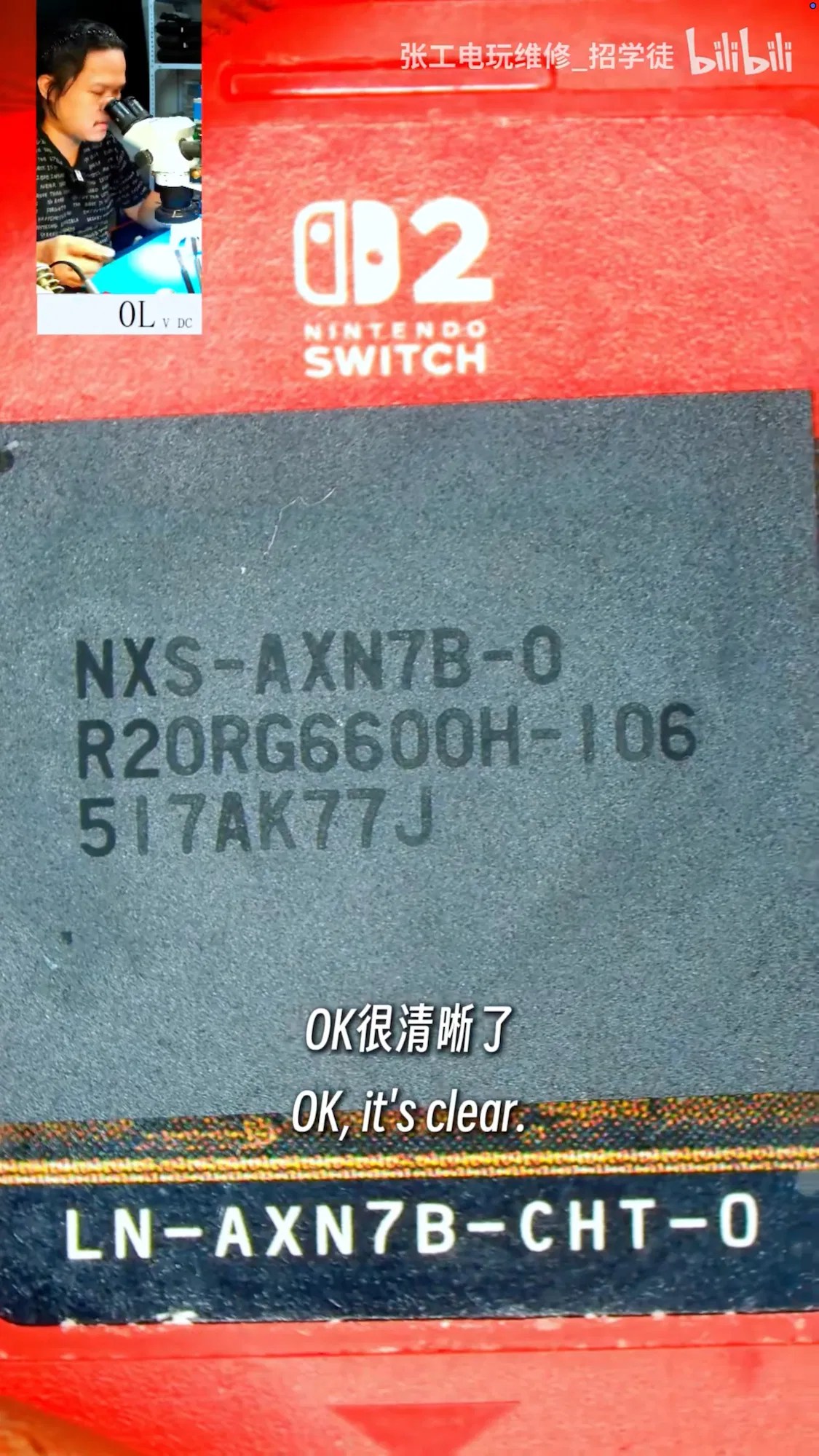
Fortunately, a Chinese repair shop decapsulated a Game Card 1 (It Takes Two; 8GB; img 1 above) and a Game Card 2 (Tears of the Kingdom; 64GB; img 2 above), and provided their die shots (imgs 1-2 below; I added the red rectangles to mark the memory dies). Since both chips measure 17mm × 14mm, I’m able to estimate the density of each die by counting the pixels:
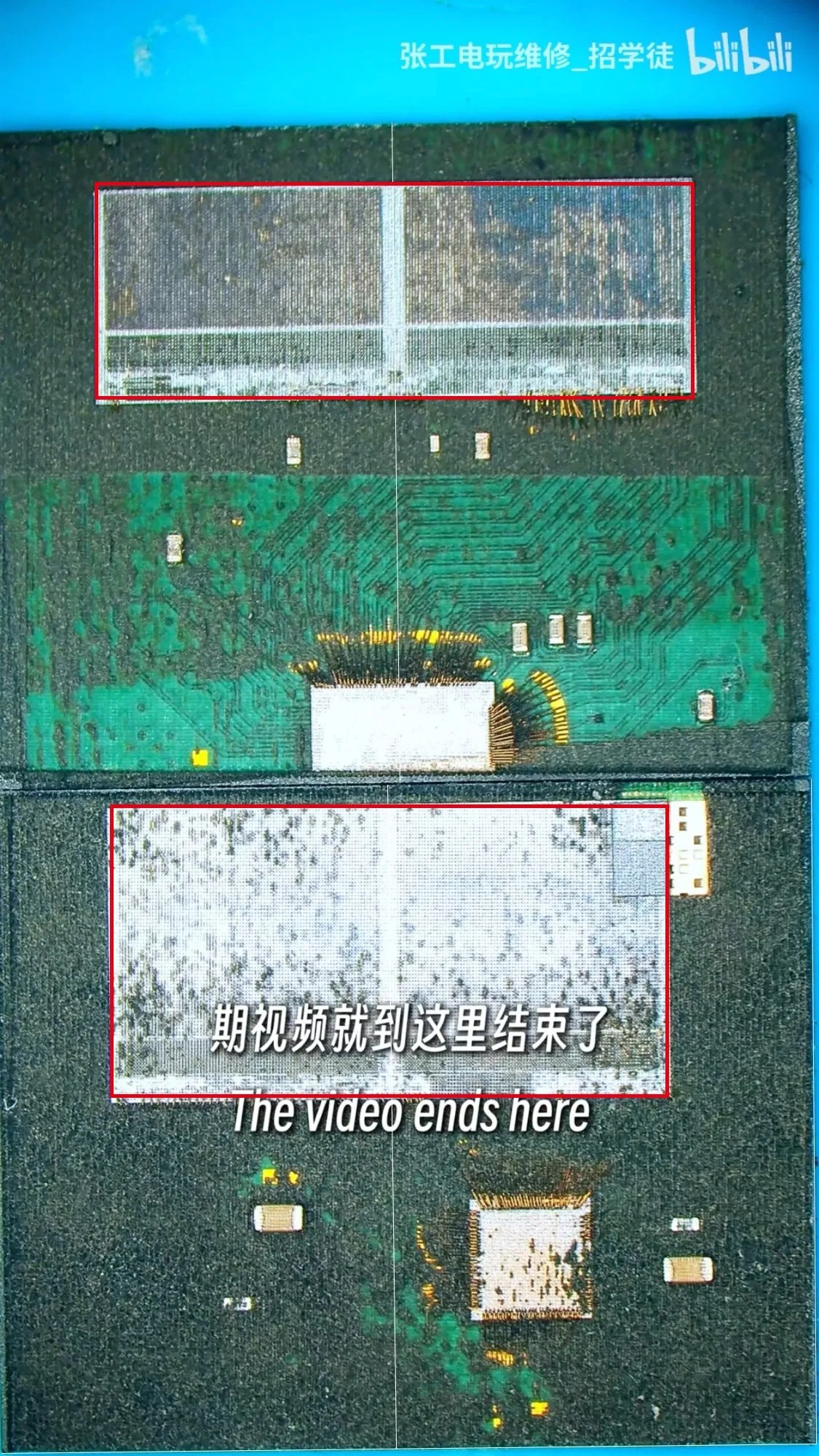
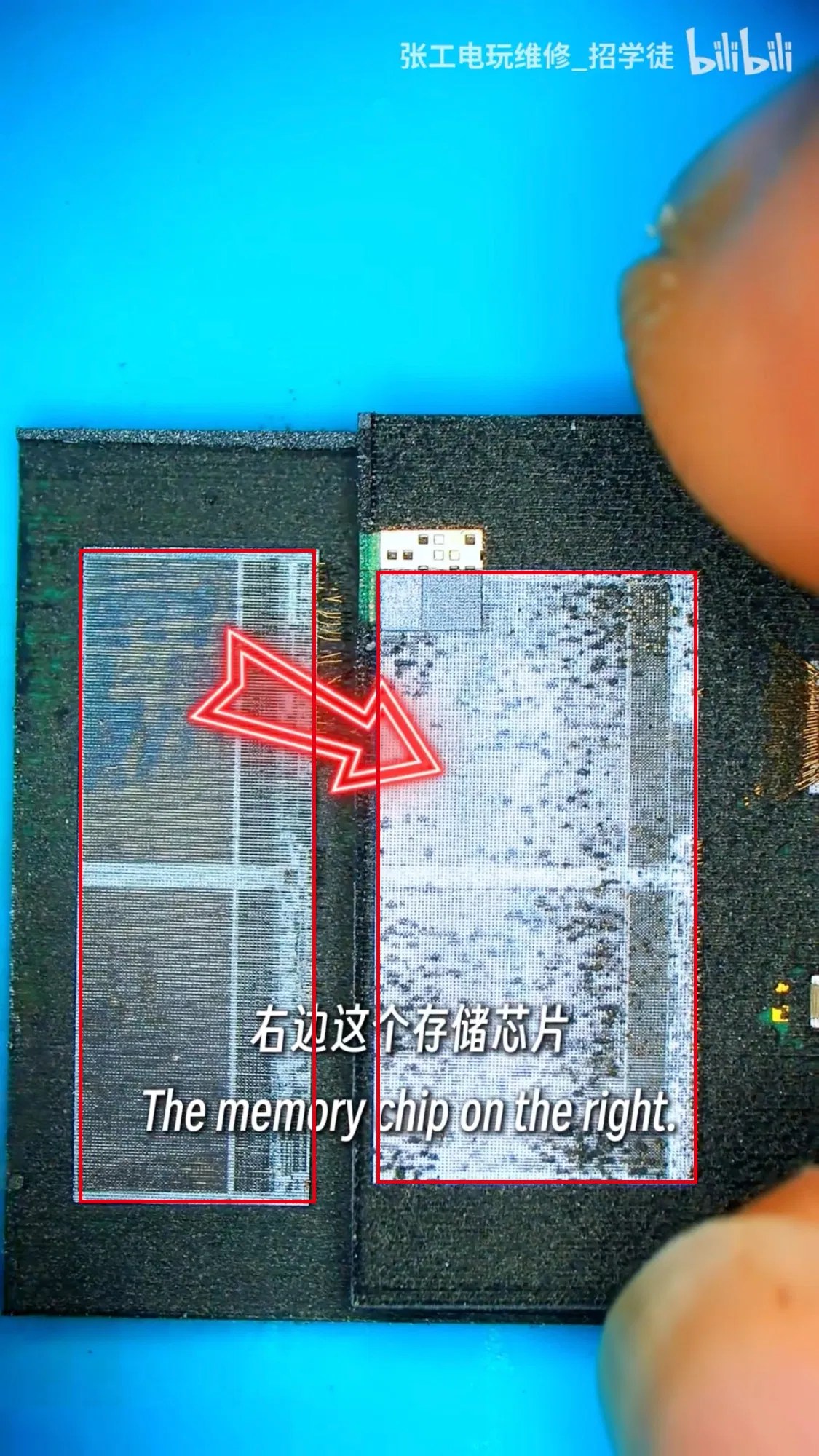
- [Game Card 1] 8GB die → ~60.5 mm² → ~1.06 Gb/mm²
- [Game Card 2] 64GB die → ~75.8 mm² → ~6.75 Gb/mm²
Based on the density ranges, the memory types used in these cards presumably are:
- [Game Card 1] ~1.06 Gb/mm² → 2D (planar) MLC
- [Game Card 2] ~6.75 Gb/mm² → 64-96 layer 3D TLC
If my napkin math is correct, the choice of 3D TLC indicates that Macronix was probably spurned instead of voluntarily quitting “ROM” production for AI-related business. There are several clues:
1. Although these ICs aren’t made by Macronix (TotK by Rohm; It Takes Two by an unidentified company), Nintendo most likely sources the same type of NAND for the same generation of Game Card, regardless of the manufacturer.
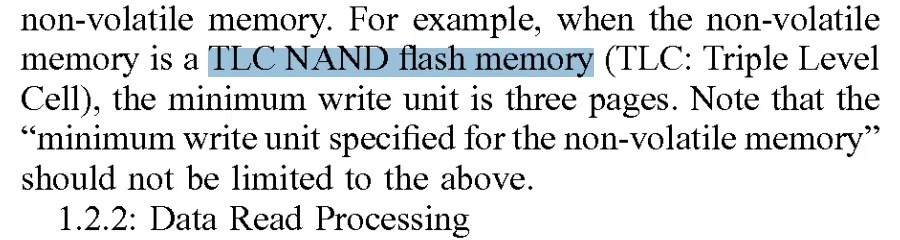
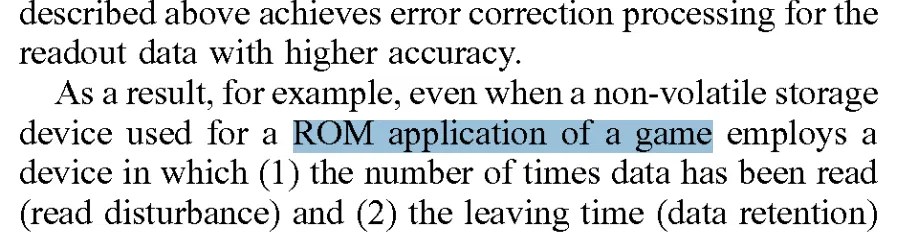
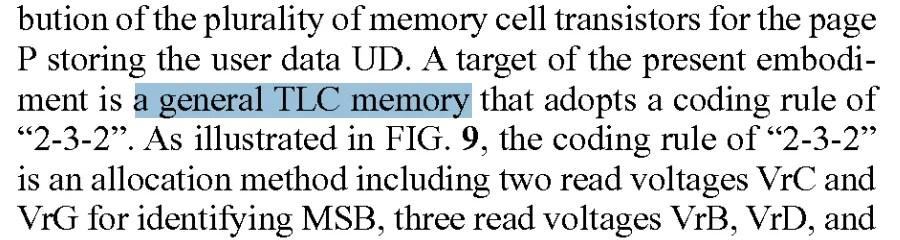
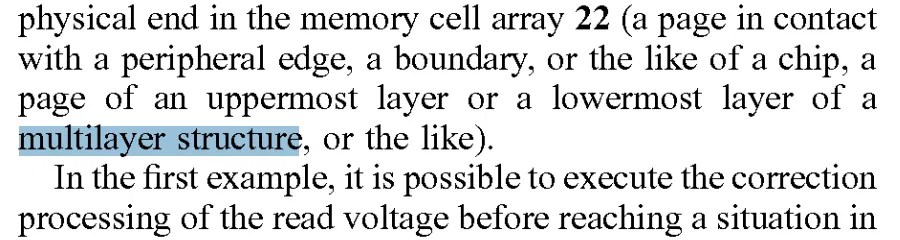
2. There are two patents from MegaChips (former Macronix partner) regarding error correction methods for TLC NAND that serves as read-only storage. One of the patents mentioned “ROM application of a game”, and the other “multilayer structure”. See US 11776652 (imgs 1-2 below) and US 11854638 (imgs 3-4) for details.
3. In July 2025, when Macronix was still aiming to secure a Game Card 2 contract, they disclosed a plan to “use either in-house MLC NAND or procured 3D NAND” to manufacture cards of varying capacities (img below).

4. Macronix specializes in NOR and 2D MLC. Their 96 layer 3D TLC won’t become the main process until some point in 2027. But even then the production volume is expected to be “limited” (img below). That’s why they would’ve needed to procure 3D NAND from other companies if they had won the Game Card 2 business.

To sum up, Game Card 2 requires 3D TLC NAND at a density where Macronix is uncompetitive. MegaChips and Nintendo likely ended the 32+ year relationship with Macronix due to unfavorable economics.
P.S.: MegaChips’ Securities Report claims that their controller for 3D memory with >100 layers can achieve reliability comparable to 2D memory (img below). So it’s a distinct possibility that some future Game Cards may utilize a density higher than 96 layers to lower the cost per GB.

Related: Macronix Exits Switch ROM Business—So What?
[Originally posted on 2026-11-23 Pacific Time]
