A while ago I wrote about a joint paper by Game Freak and The University of Tokyo, regarding a more efficient method of advanced Fluid Simulation. A follow-up paper was presented earlier this month.
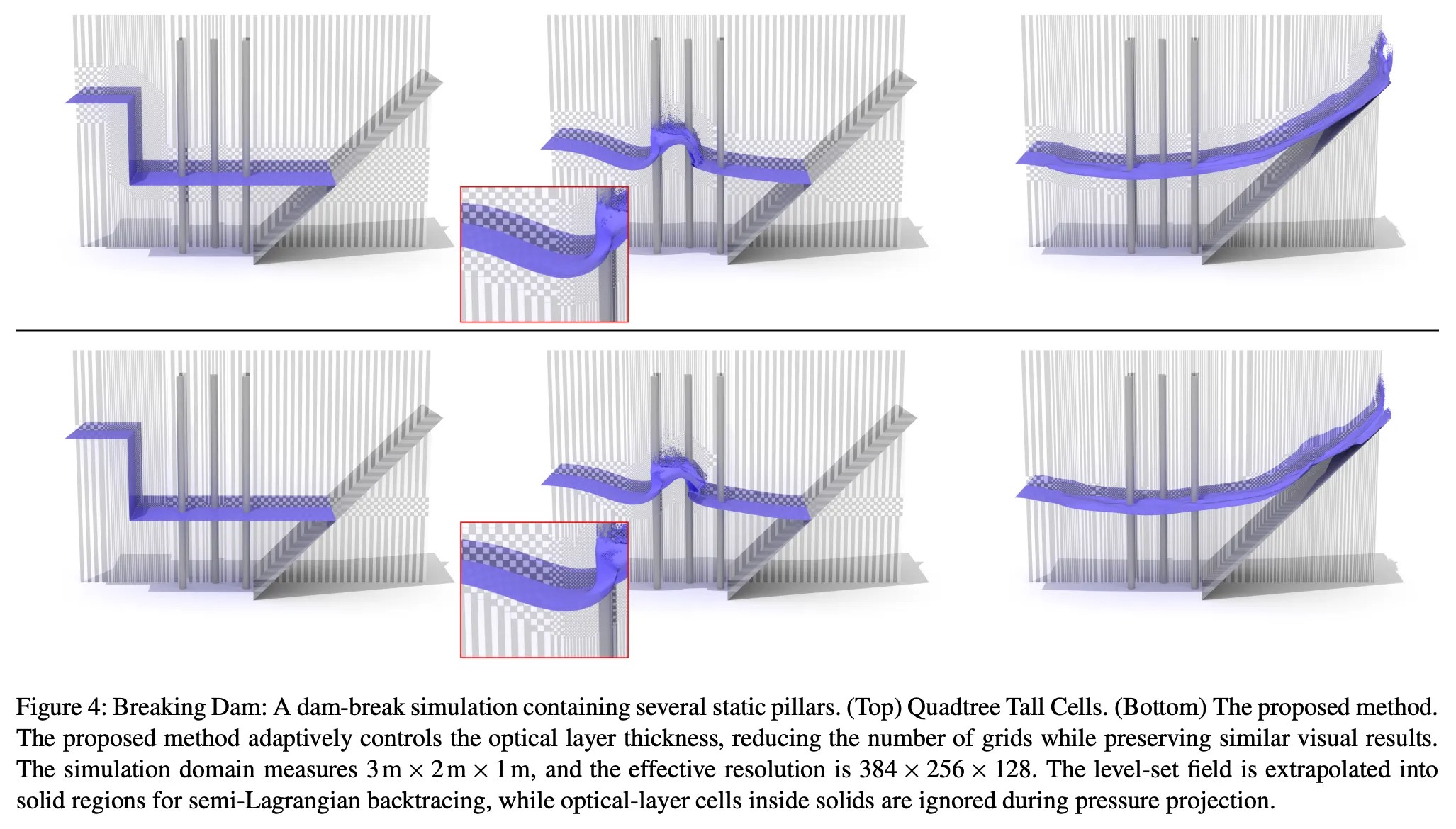
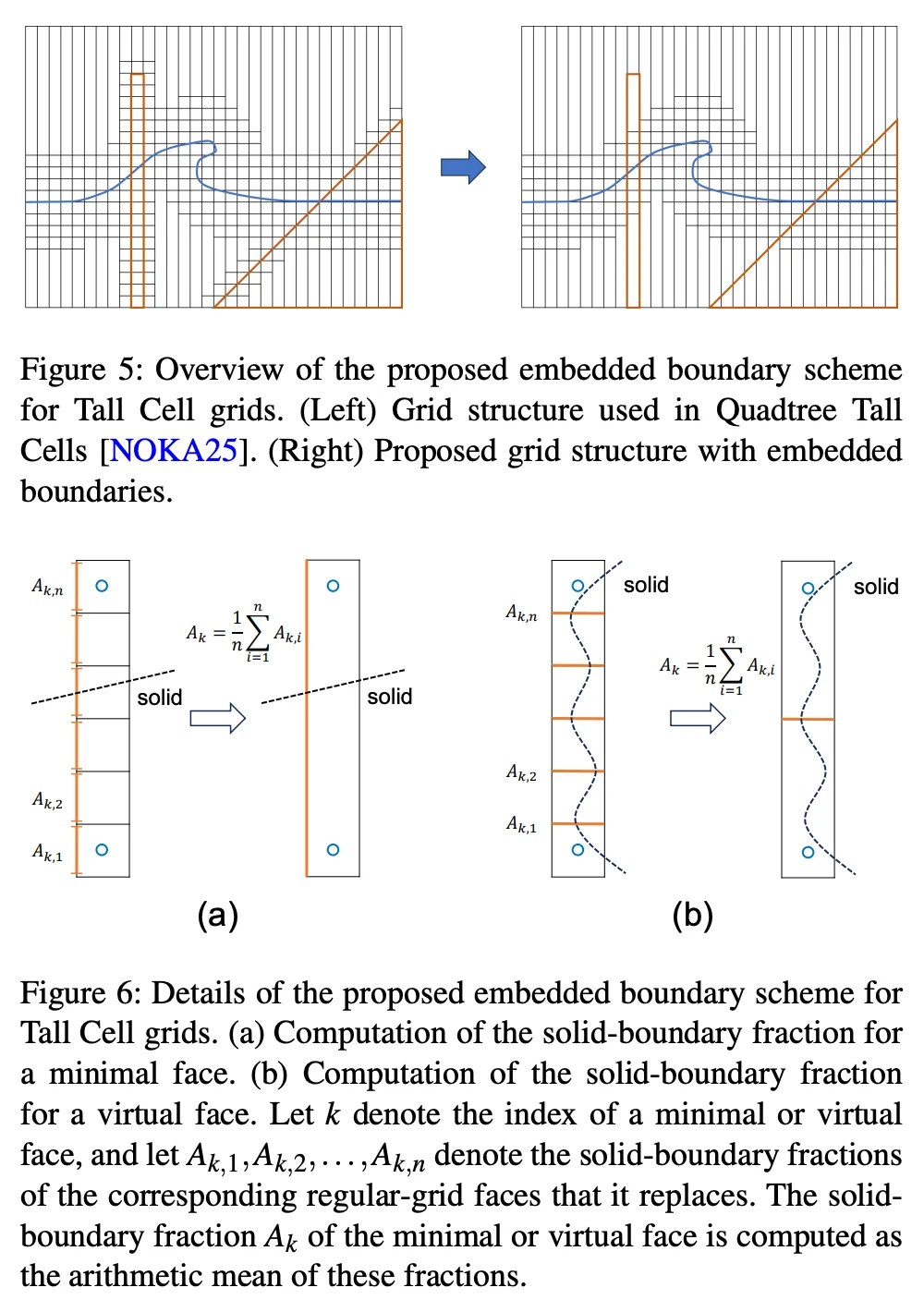
Last time, the researchers proposed vertically extending quadtree (a data structure) with variable cell sizes to simulate deep water faster while using less memory—read more here. To evolve it further, their new proposal incorporates “adaptive optical layers” in the aforementioned quadtree grid method, thus adding vertical adaptivity. Simply put, this updated proposal reduces the number of cells around the water surface (img 1) and in-water objects (img 2); compared to the previous method, it shortens rendering time but at the expense of more memory usage.
Refer to the paper for detailed descriptions such as height field smoothing and motion-aware cost function.
[Originally posted on 2026-10-22 Pacific Time]
