In Mario Kart World, lighting can change quickly due to the time of day and terrain features such as a tunnel. The game dynamically corrects pixel luminance to reduce washed-out highlights and crushed shadows.
- Placing a number of light probes in virtual space
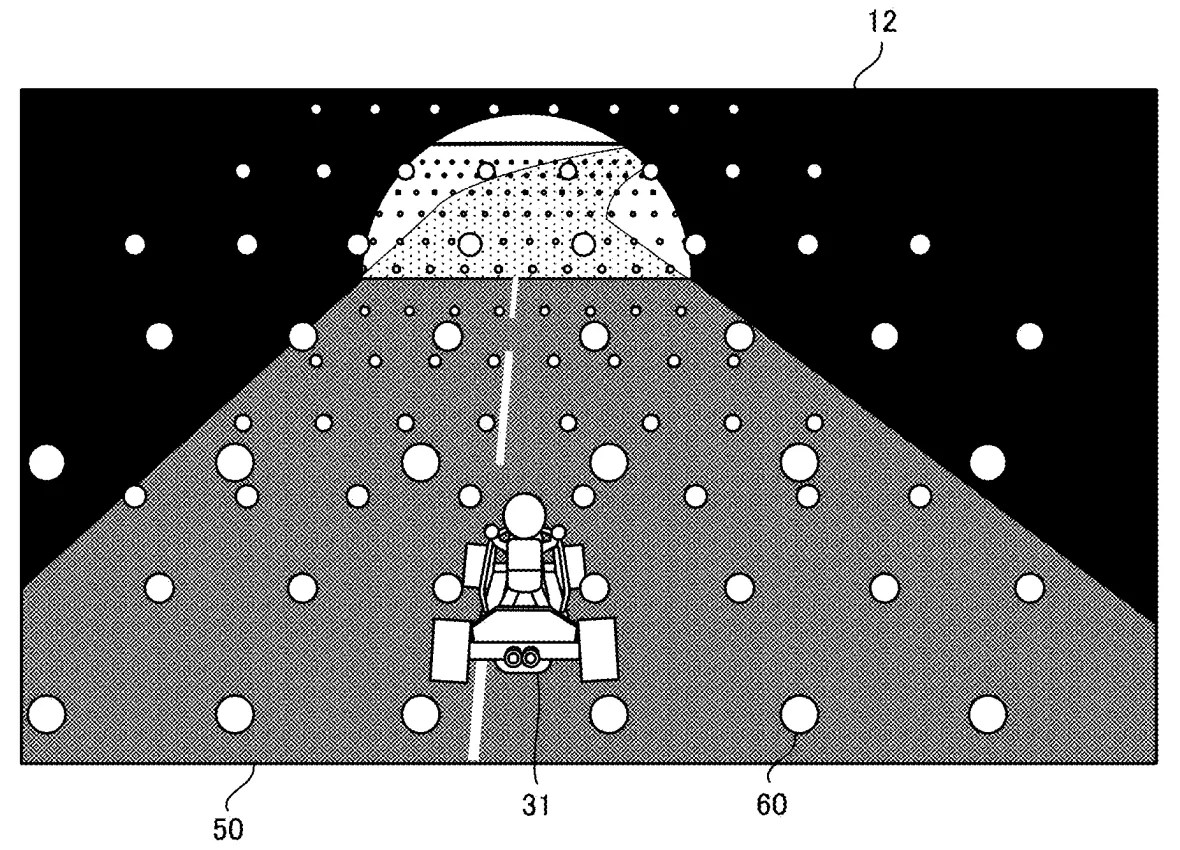
- Casting rays from user’s gaze point
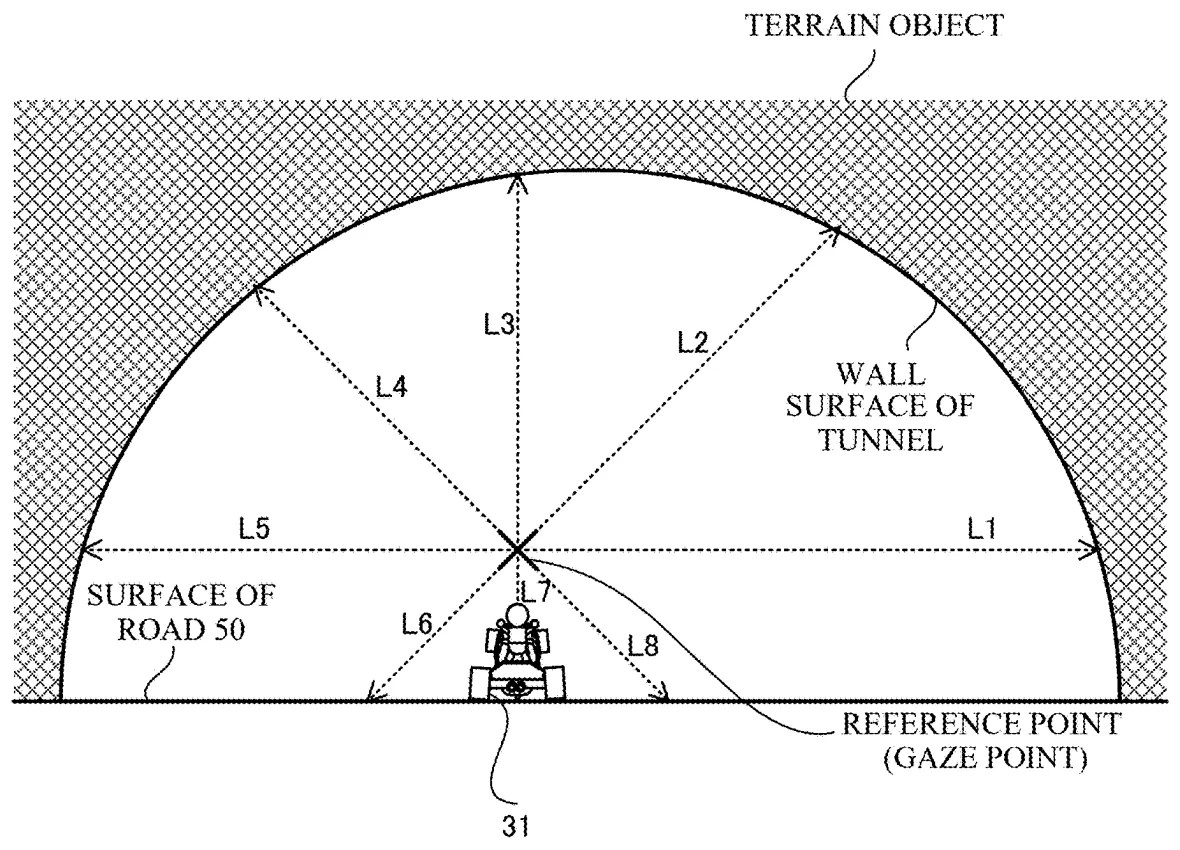
- Sampling light probes to determine scene brightness
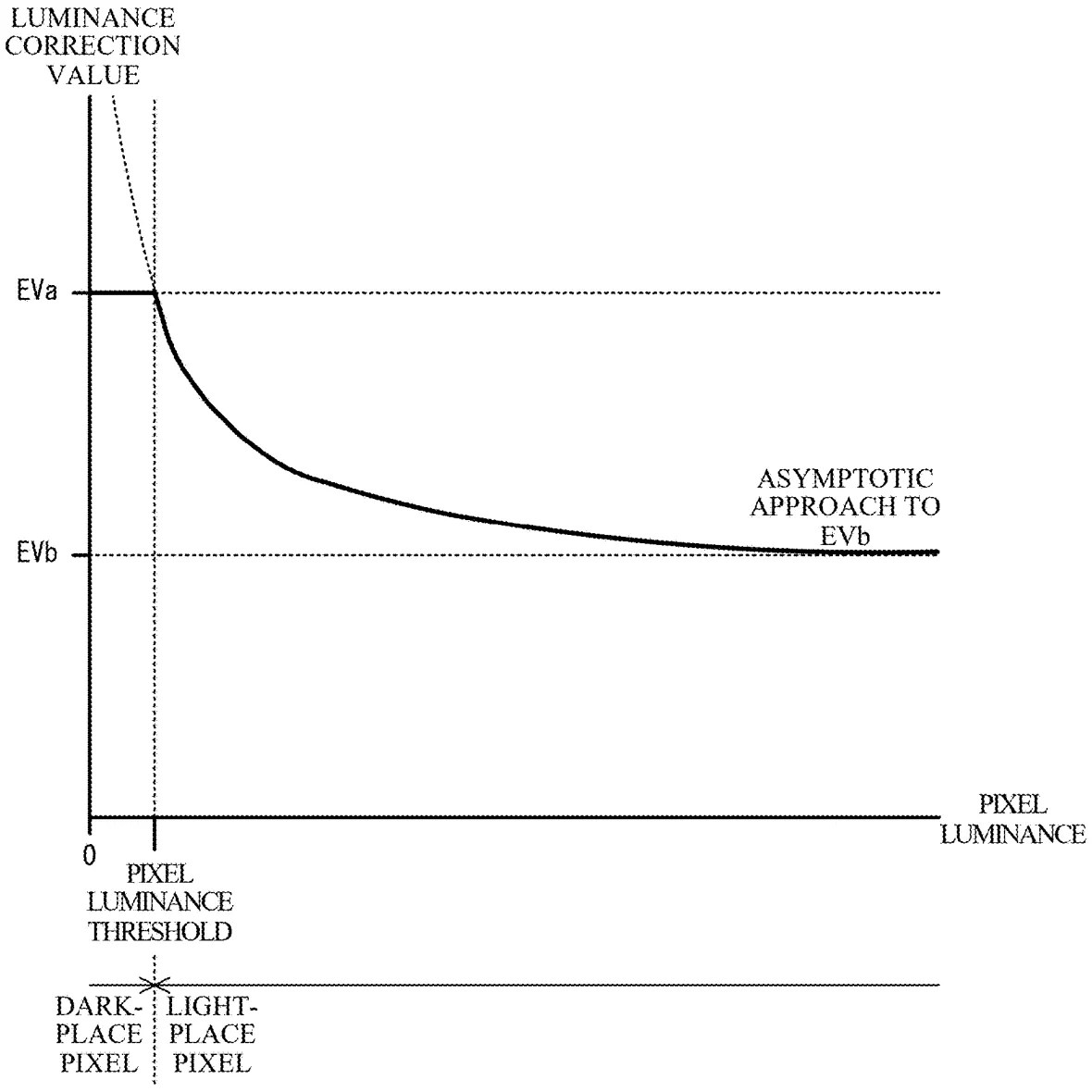
- Calculating correction value for dark pixels based on scene brightness and time of day (image below is the correction table)
- Calculating correction value for light pixels (same method)

- Blending dark and light corrections smoothly on a curve
- Rendering pixels with corrected luminance
![Comparison of two drawings from patent application US 20260237150: [Before correction] FIG. 6 is a diagram showing a non-limiting example of a game image displayed during a racing game [After correction] FIG. 12 is a diagram showing a non-limiting example of luminance correction performed on dark-place pixels based on a first luminance correction value EVa, and luminance correction performed on light-place pixels based on the second luminance correction value EVb, for the game image of FIG. 6](https://ninpatentswatch.com/wp-content/uploads/2026/08/bsky-3mtdaz7jzak2e-p3-m1.webp)
Thematically this technique is similar to some TVs’ dynamic tone mapping, but is computationally lightweight. More importantly it is controlled by artistic intent, not just to show off the TV’s dynamic range.
Source: Patent application US 20260237150
Related: Lighting technique in Metroid Prime 4
[Originally posted on 2026-08-17 Pacific Time]
