Since HD Rumble 2 is more precise and powerful than HDR1, the vibration data was upgraded from 8-bit to 10-bit. However, vibrating at/near the full-strength for long isn’t good UX, therefore games typically rumble at lower amplitudes (bars in img below; line is frequency).
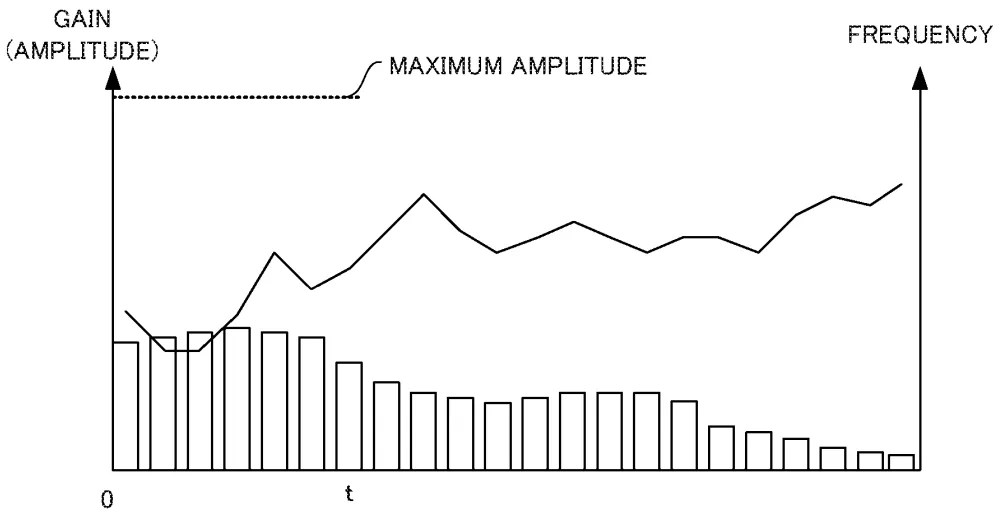
It’s wasteful to use 10-bit when much of the amplitude range is unused. So Nintendo scales up the waveform to the max amplitude segment by segment (“T1” in img 1 below), and saves it using 8-bit; the factor of scaling (“magnification”) for each segment is also saved with the waveform (img 2).
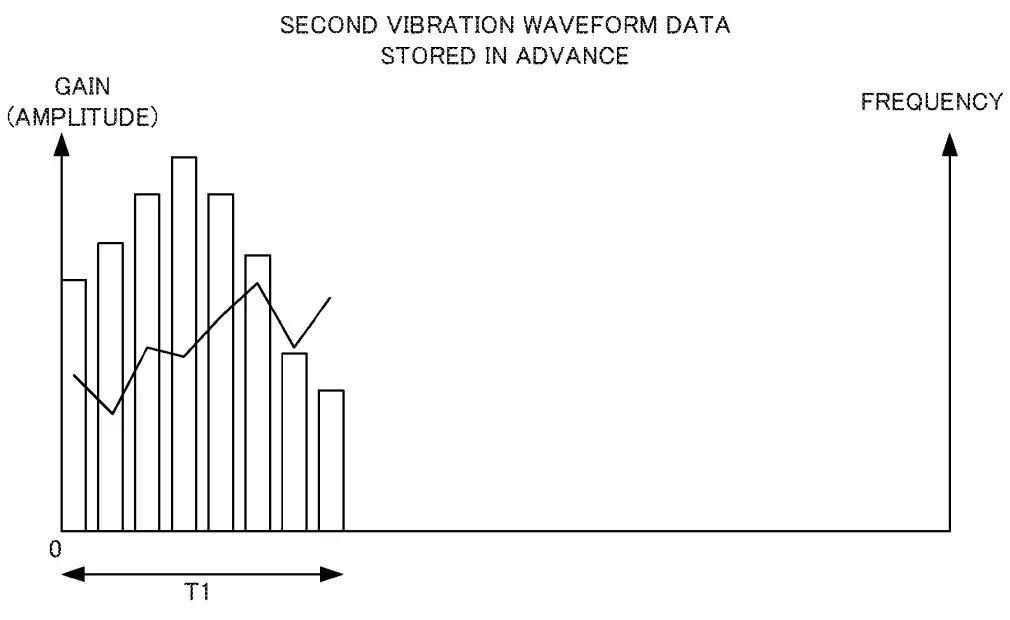
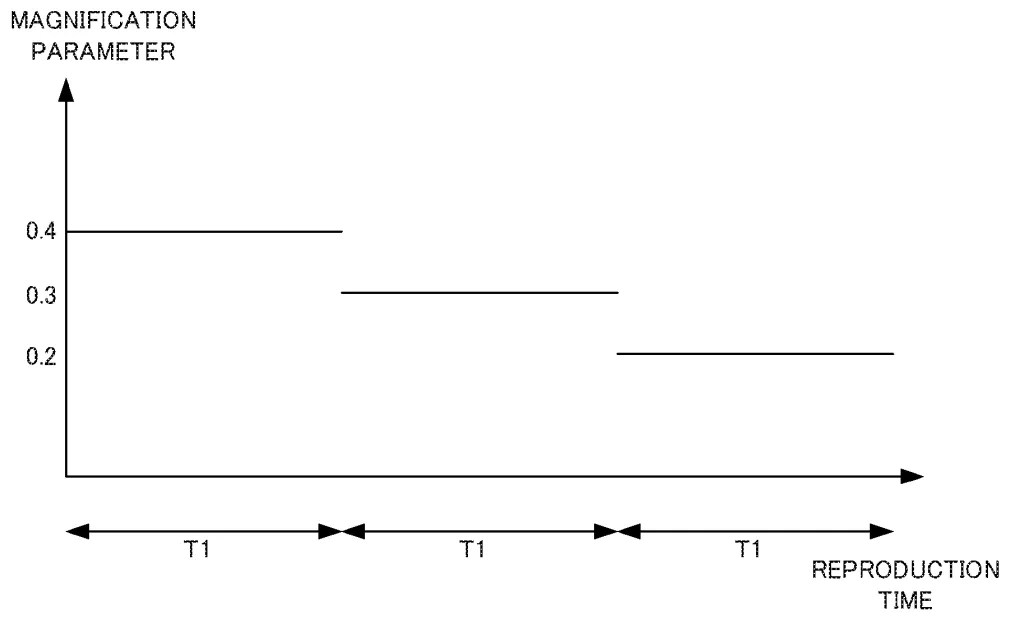
During gameplay, the Switch 2 console restores the vibration amplitude to 10-bit (bars in img below) via multiplying the waveform by the scaling factor. To modify the waveform’s pitch or speed, frequency/speed data can also be saved separately (line in img), instead of storing new waveforms.
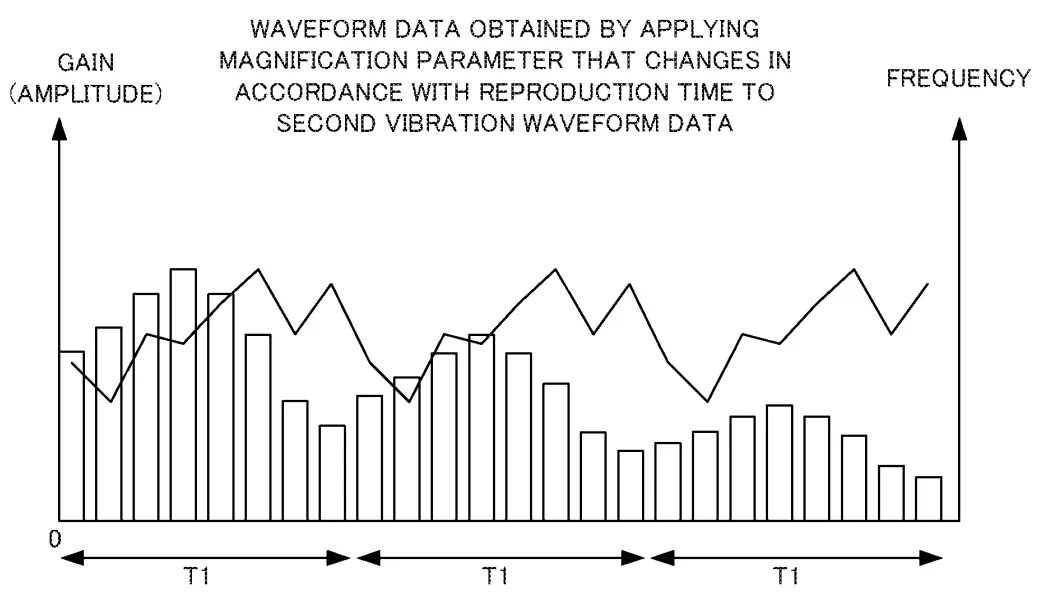
The invention shows that Nintendo’s lauded optimization extends to the rumble data too. I also suspect that this is partly to maintain pipeline compatibility with 8-bit HDR1.
Source:
Patent application US20260249173
Related:
Four vibration types of HD Rumble 2
Equalizing HD Rumble 1 and 2 UX
[Originally posted on 2026-08-30 Pacific Time]
