Earlier this year I shared an HD Rumble 2 patent that outlined four types of rumble: vibration instruction (haptic), vibration instruction (sound), streaming PCM, and preset PCM. Four more patents were published recently with further details on those, and the additional “autonomous” controller rumble.
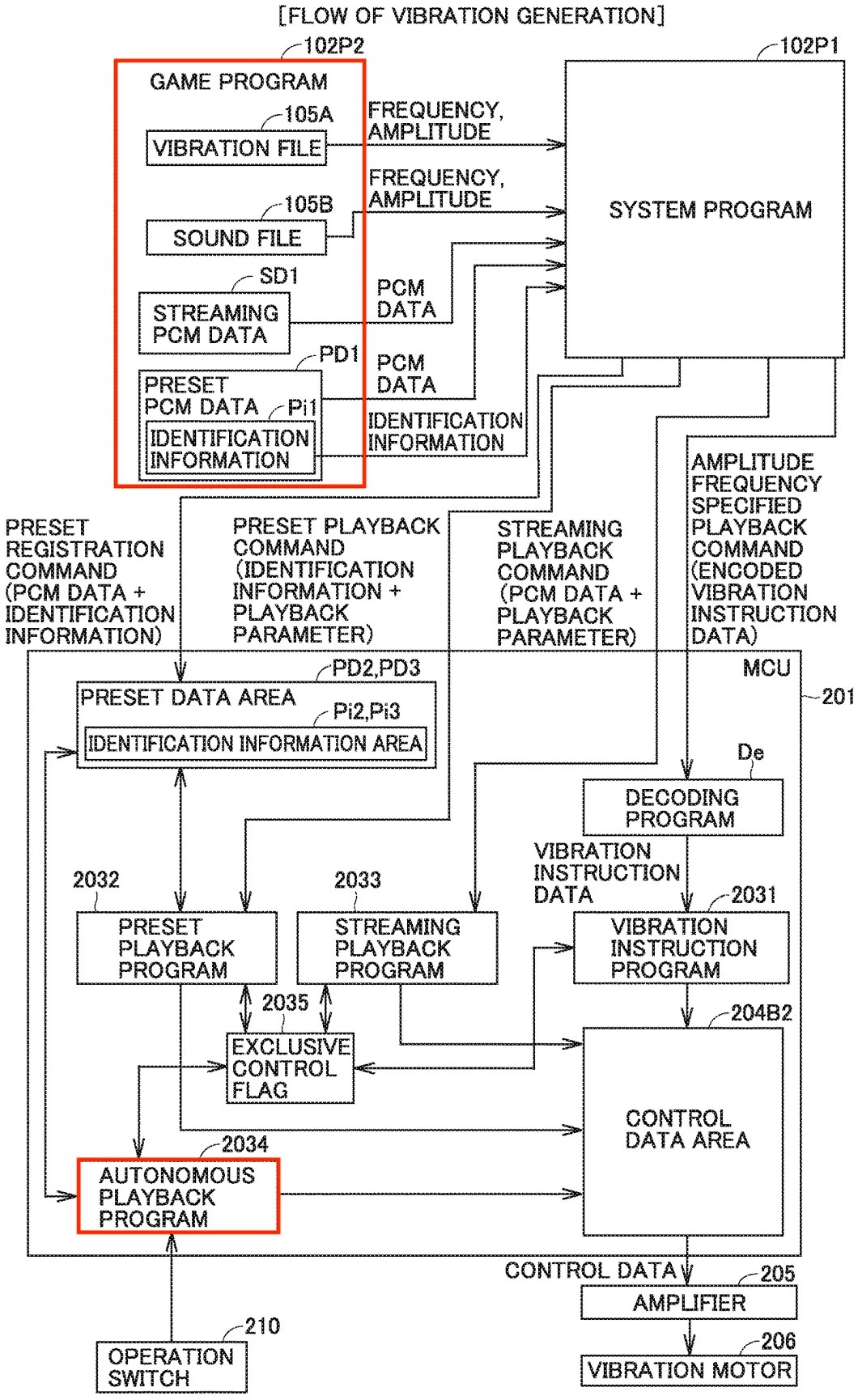
Vibration instruction (img 1 below):
- Two types: tactile (40-400Hz) and audible (400-3500Hz)
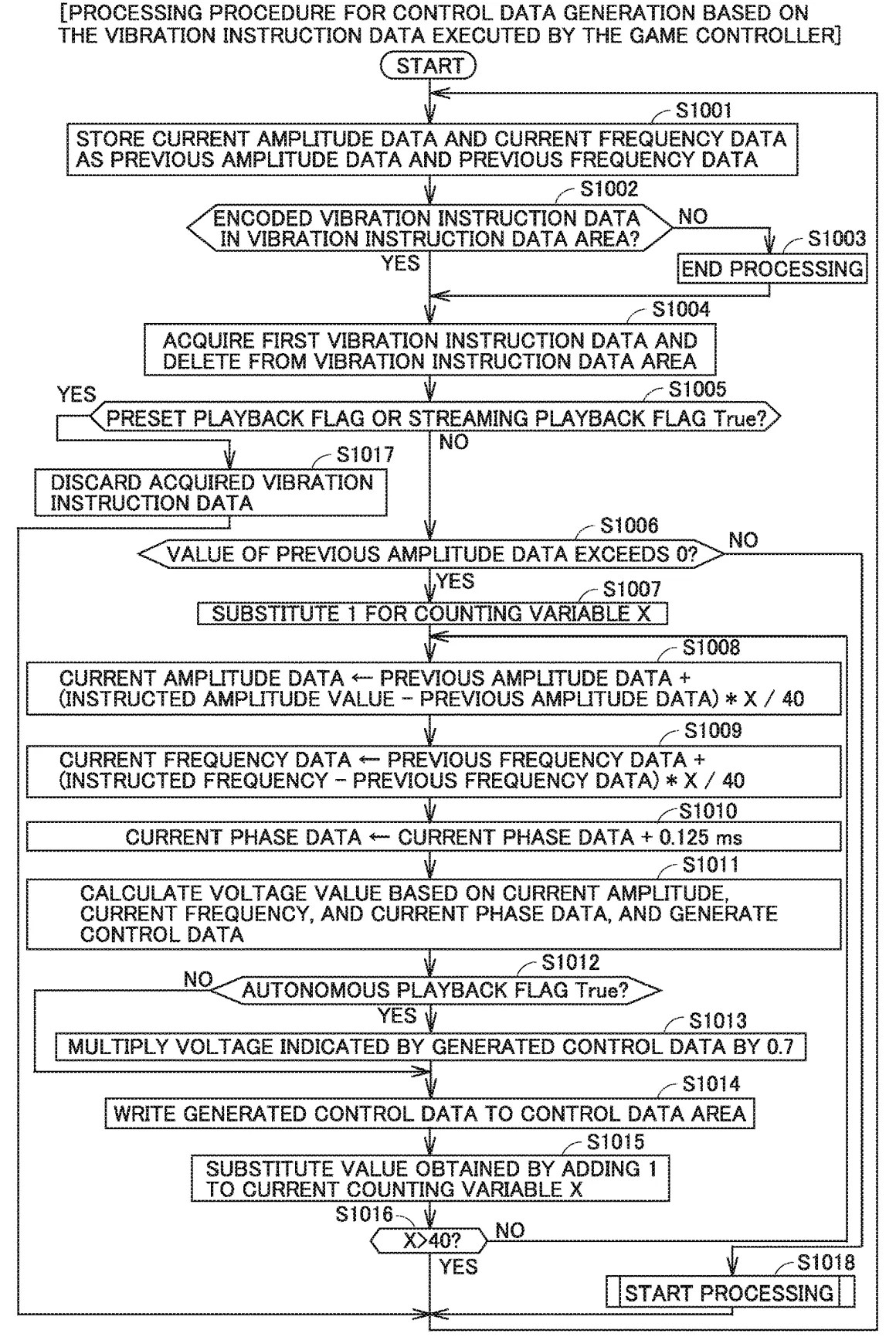
- Game sends 1 frequency & amplitude instruction to controller at 5ms cycle; controller converts it to 40 pieces of motor control data at 0.125ms cycle
- Lower system priority than streaming PCM & preset PCM
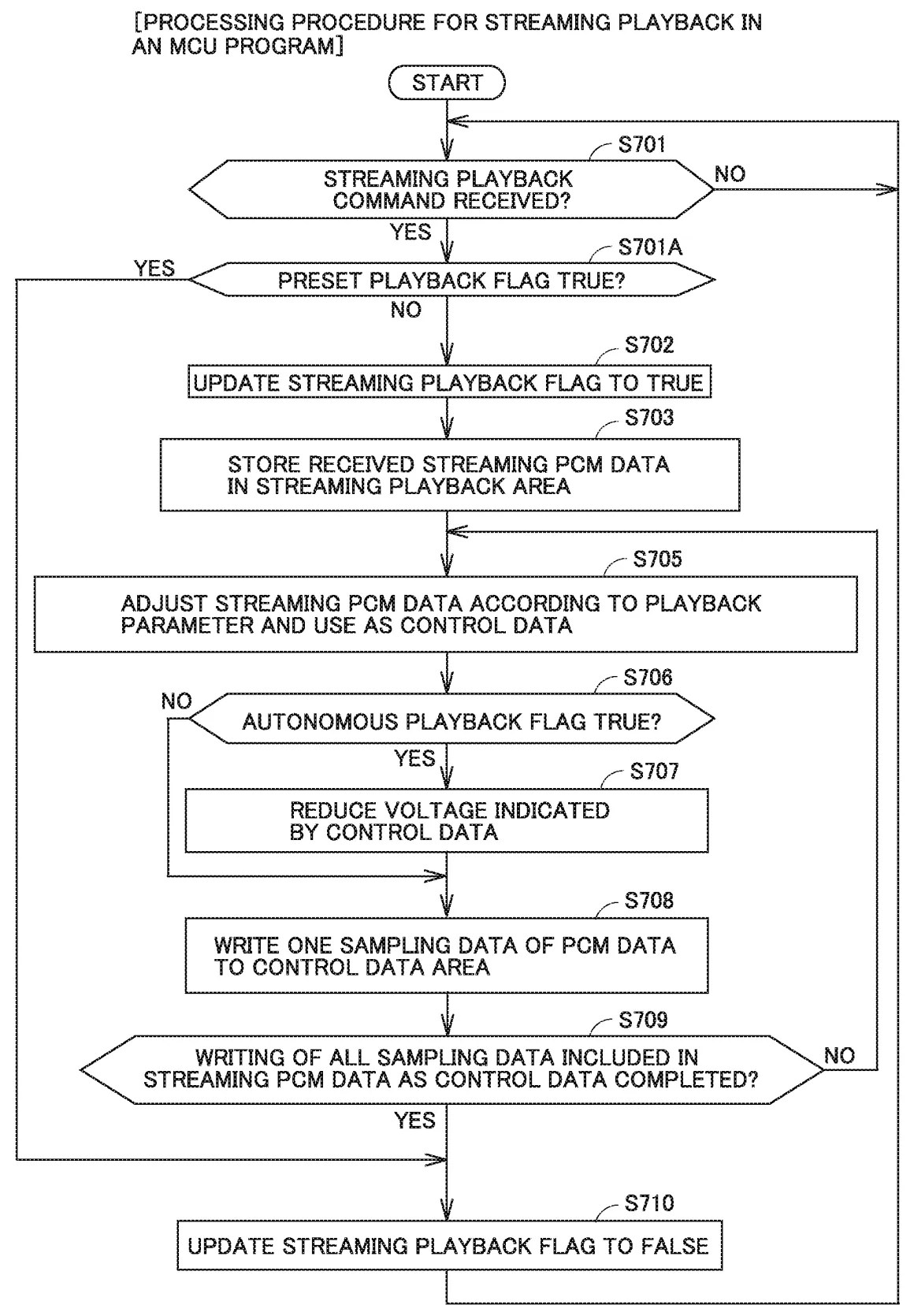
Streaming PCM (img 2):
- Game sequentially sends 20ms of PCM data to controller; controller drives the motor as it arrives
- PCM’s sampling rate is 8kHz, matching the 0.125ms motor control data cycle
- [My read] Used for runtime generated rumble, long waveforms, and events less likely to repeat
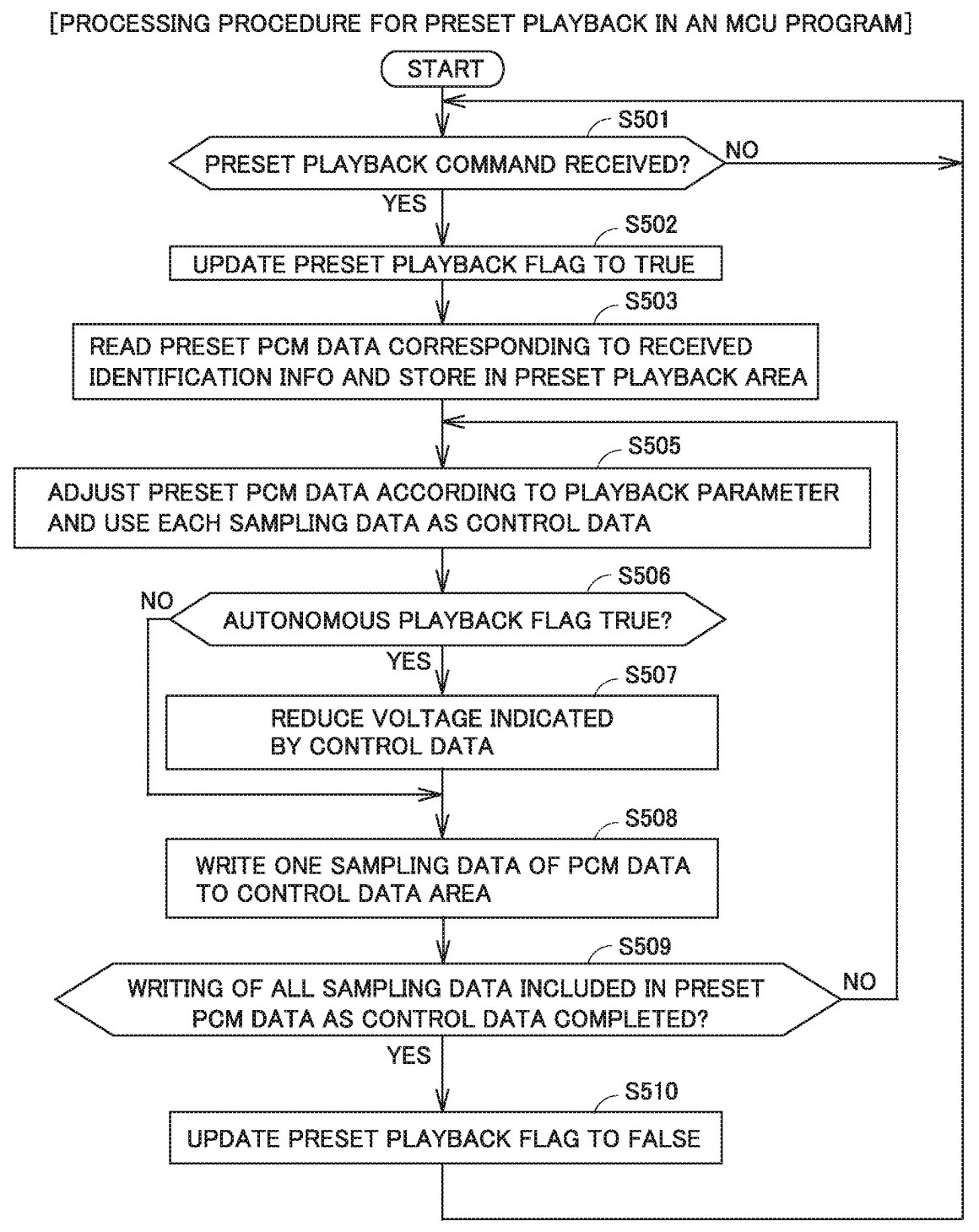
Preset PCM (img 1 below):
- Game sends a PCM file + ID to controller to preload
- To trigger a preset, game send its ID, plus optional parameters such as volume, to controller; controller accesses the preloaded PCM and drives the motor
- Sample rate is also 8kHz
- [My read] Suited for short, frequently used effects requiring low latency
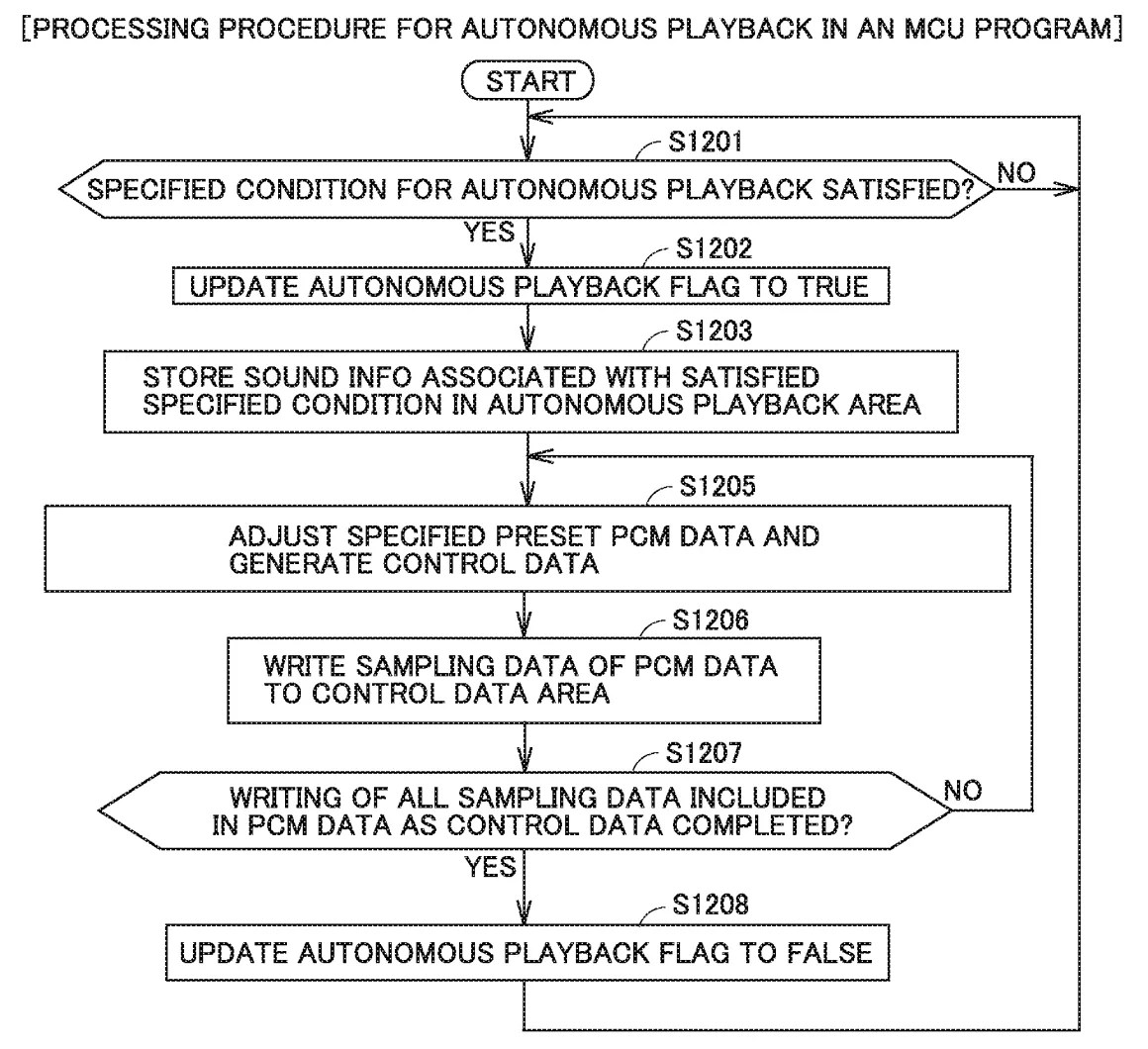
Autonomous playback (img 2):
- Controller has built-in program that can automatically trigger a preloaded PCM or vibration instructions when a condition is met: button press, mouse operation, gyro value, etc.
- Game sets conditions and parameters beforehand, no intervention after
- If an autonomous rumble occurs while a game-triggered rumble is still playing (and vice versa), the former is capped at 30% voltage and the latter scaled to 70%
- [My read] Best for zero latency input feedback w/o game logic
[Note] A PCM file may cover both the tactile and audible bands.
Sources: US 20260295388, 20260295389, 20260295390, 20260295391
Related:
[Originally posted on 2026-10-28 Pacific Time]
