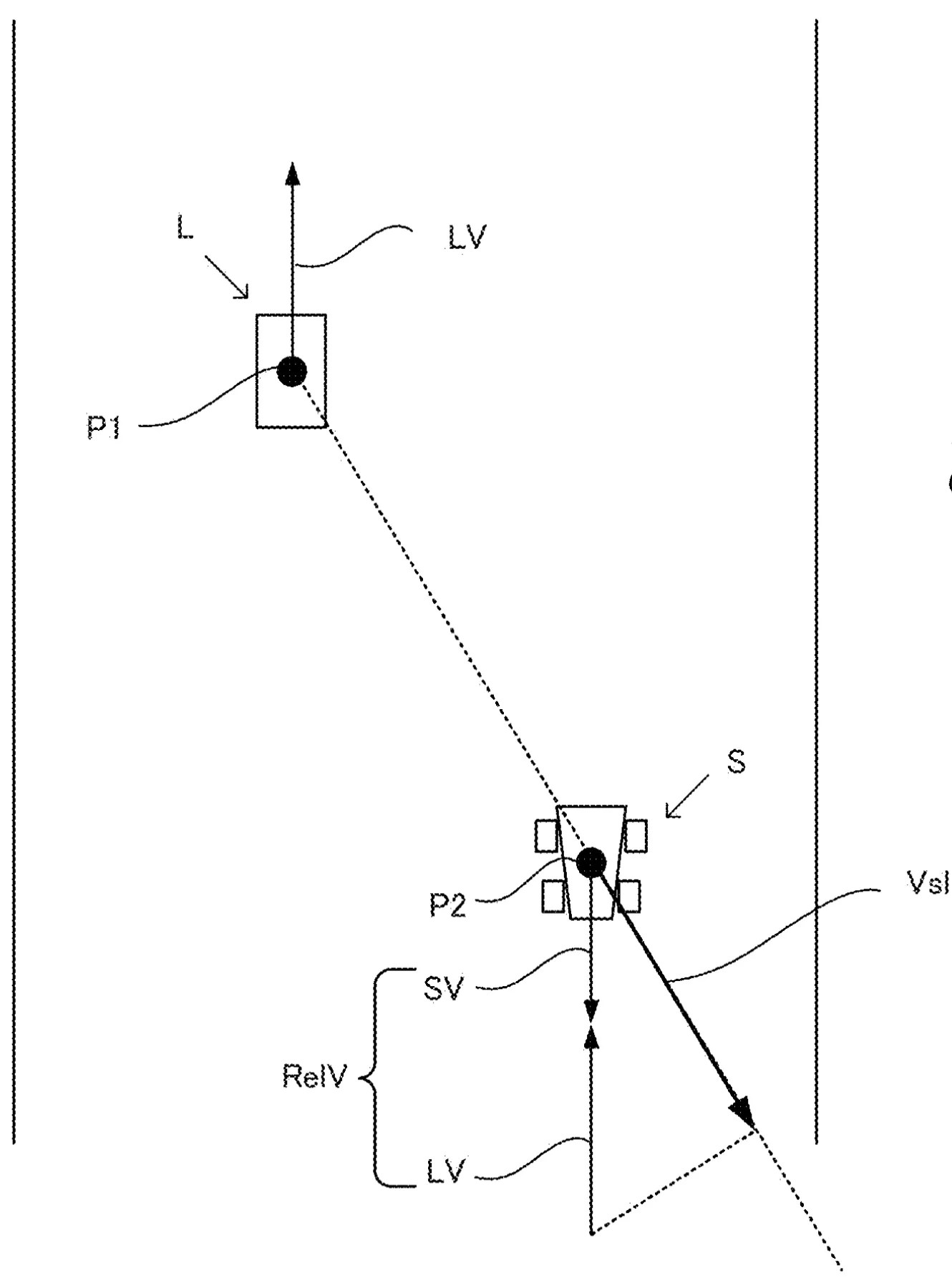
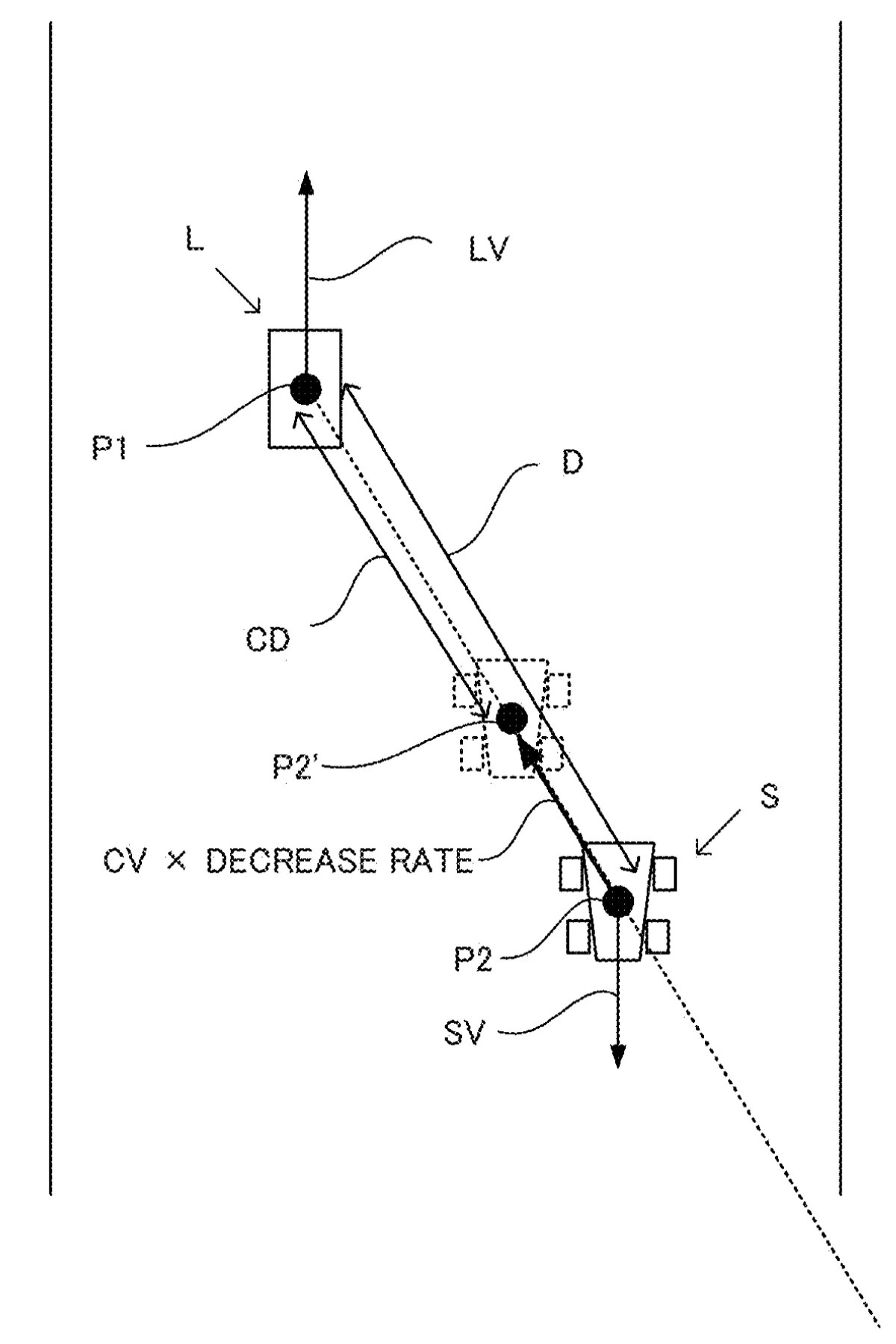
In the real world, when an object speeds away from you, its sound lingers a bit in your ears (human perception, not real). To mimic that in Mario Kart World, the game calculates the relatively speed between you and another kart (img 1), and places the sound source closer to you (img 2).
The faster the other vehicle drives away, the more distance reduction is applied to make it sounds closer—hence the lingering perception. Since the formula (img below) takes into account the beginning distance between you, it won’t overcorrect and make a distant kart sounds unnaturally close.
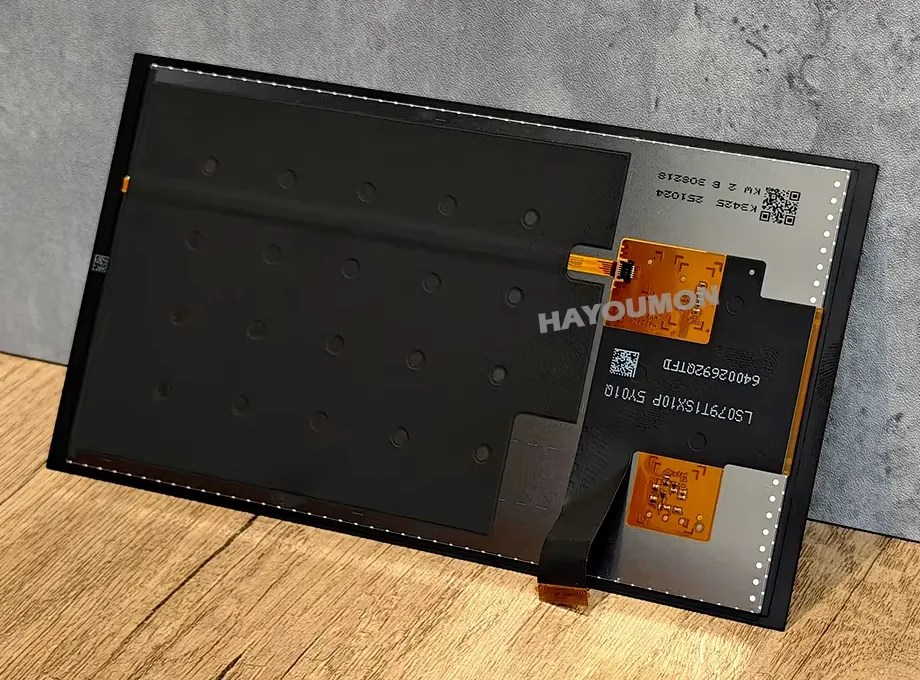
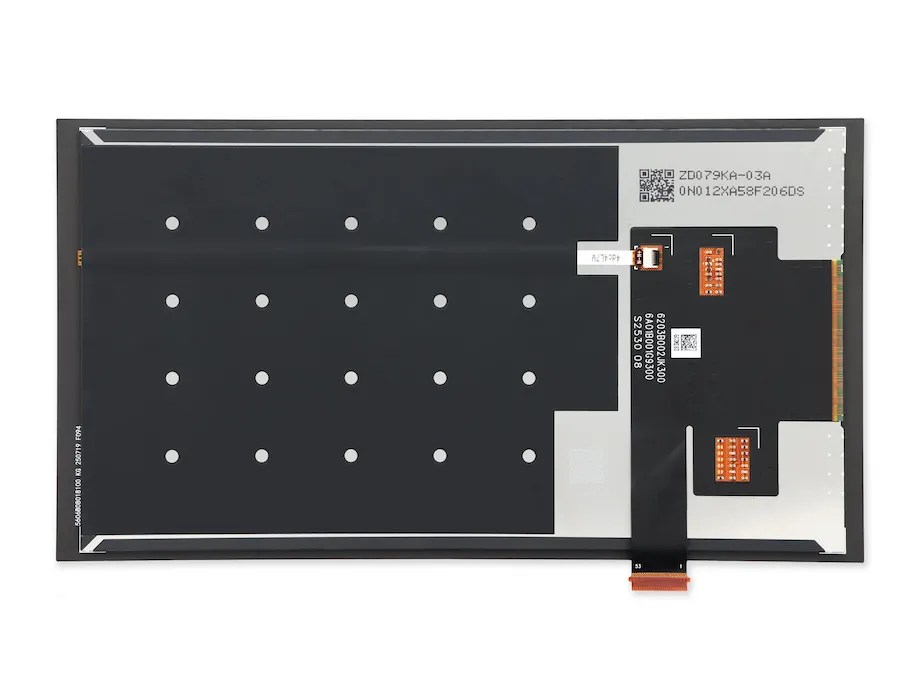
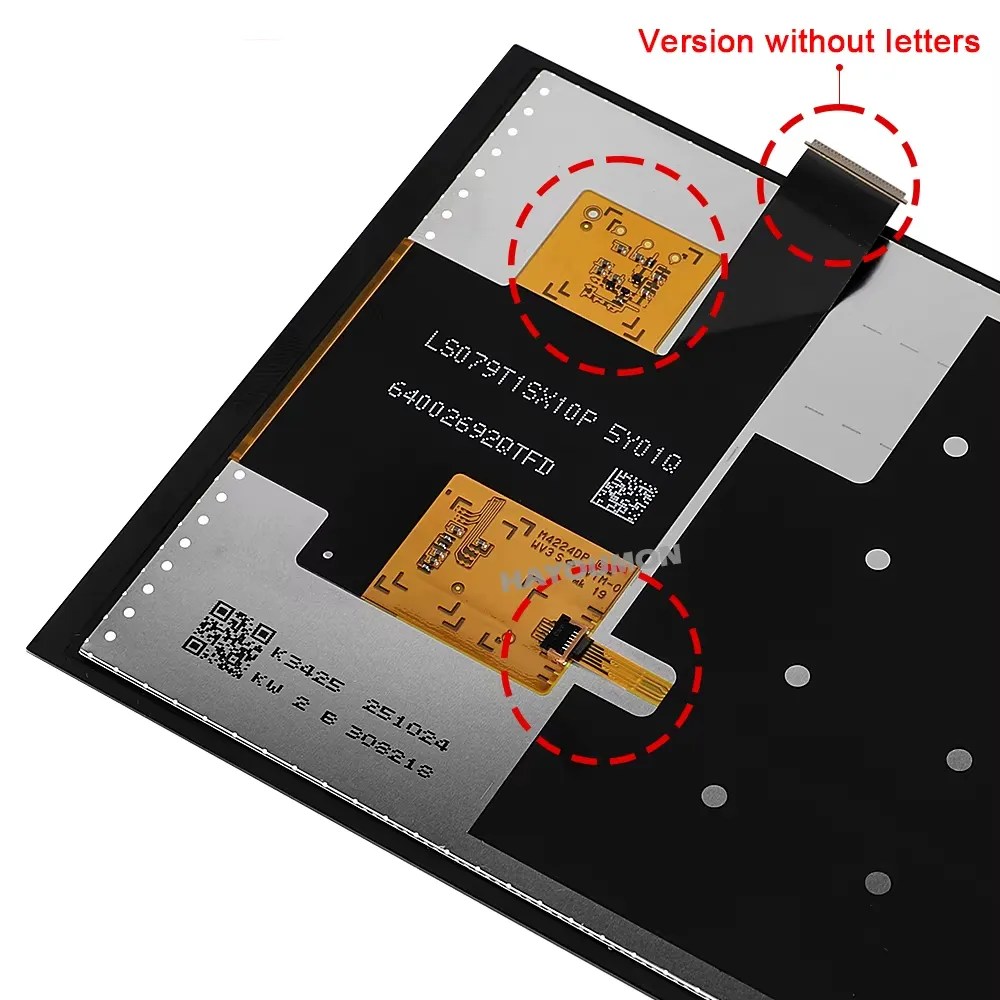
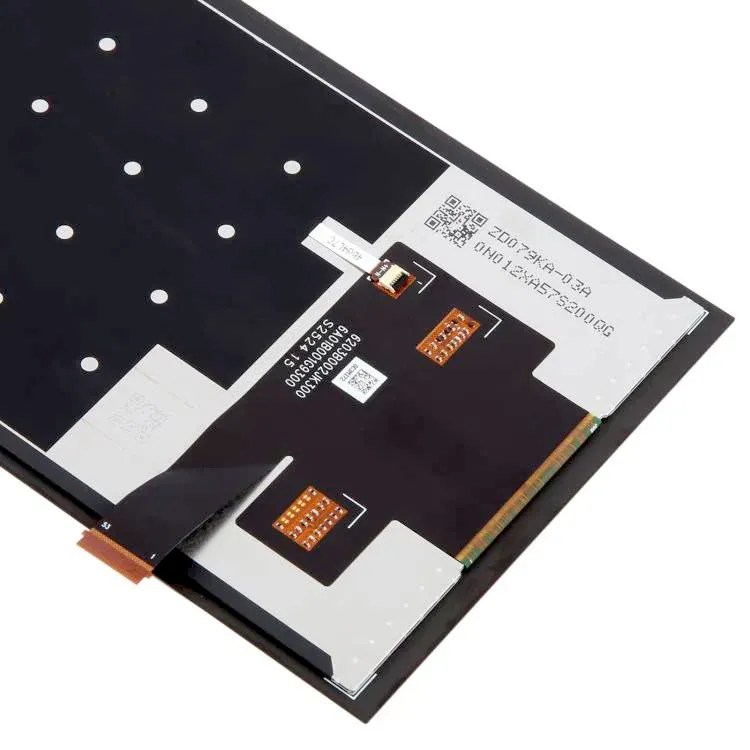
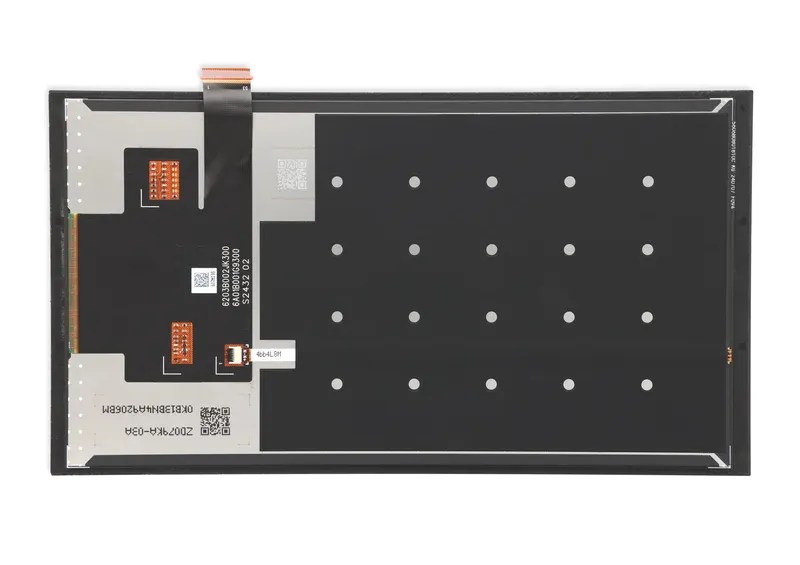
A new model of Switch 2 LCD panel, most likely by Sharp, has surfaced on a Chinese resale site (img 1). Compared with the launch model from Innolux (img 2), the exposed circuit, connector, and cables are significantly different (imgs 3-4), indicating an updated design—not merely a minor revision.
The model number is LS079T1SX10P. From what I can gather:
LS = Sharp LTPS
079 = 7.9”
T = 1080p
(unsure about the rest)
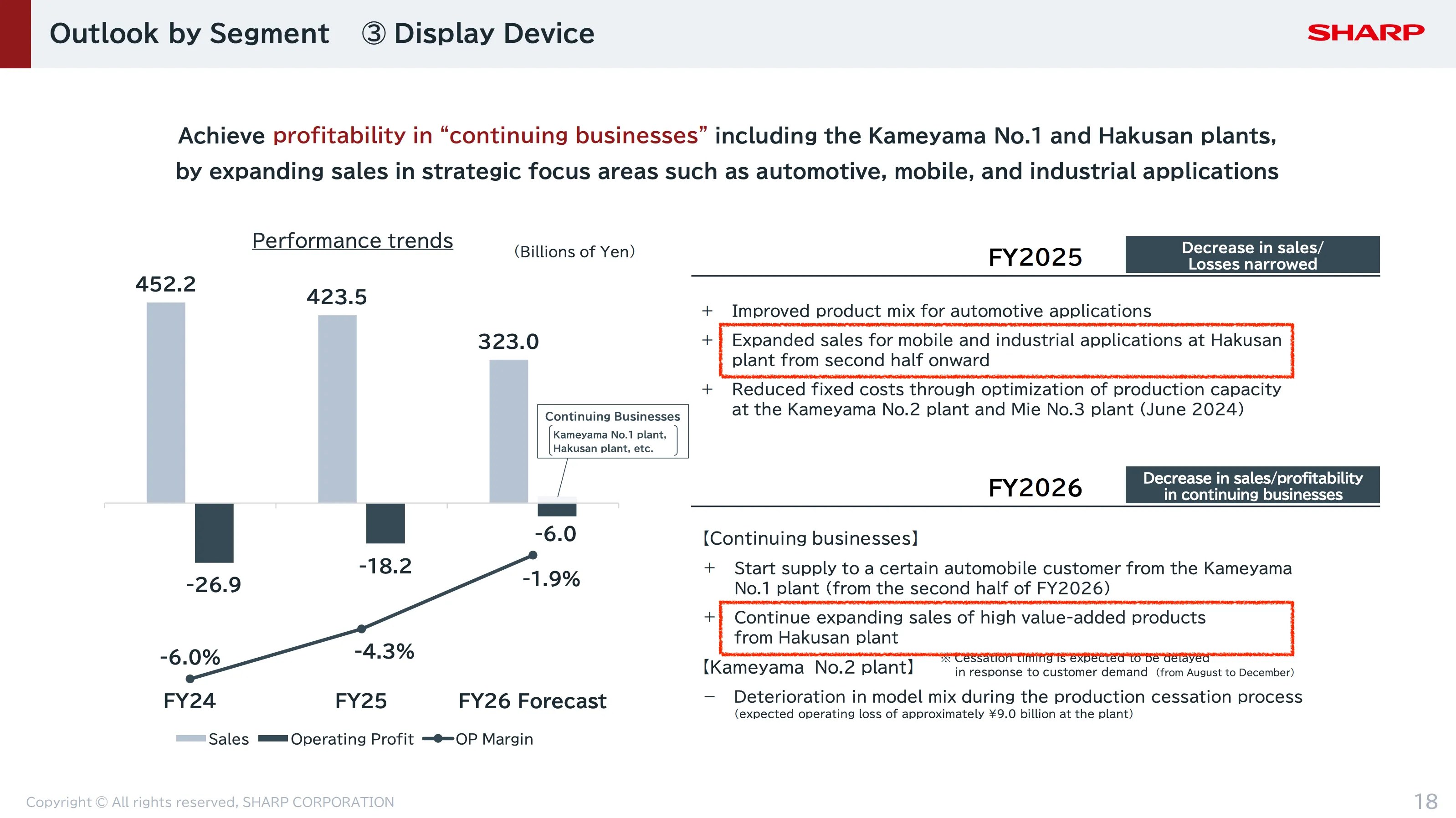
Another supporting evidence is Sharp’s financial disclosure that its Hakusan plant “expanded sales for mobile […] applications” from 2025-09 onward (img below), echoing what a customs data watcher kindly informed me.
Based on my earlier research (links below), the launch LCD panel was assembled by Innolux with an LTPS glass (a.k.a., open cell) fabricated by Sharp already. So I don’t know how much of a quality improvement this Sharp assembled panel can bring. Addressed the ghosting issue at least?
It isn’t clear at the moment whether the launch model has been phased out, or Nintendo is now dual sourcing. So don’t rush out to buy a new Switch 2 yet. And since I don’t know the legality of the aforementioned resale listings, I won’t share the links here.
[Update 1] So some of you found the original listings, since I left enough clues. Regarding the reference to different Switch 2 versions in the item description: Many resellers of these murkily sourced parts don’t fully understand what they have. To make matters worse, these English listings are mostly done through machine translation. So I wouldn’t recommend you to take every word literally.
In this particular case, I’m fairly certain that the “V1” and “V2” panels don’t correspond to different console versions, and they should be interchangeable. The seller is being extra cautious with the item description to avoid consumer disputes or returns. This reminds me of the “Switch 2 OLED prototype” listing from last year, another case of inaccurate description by the seller
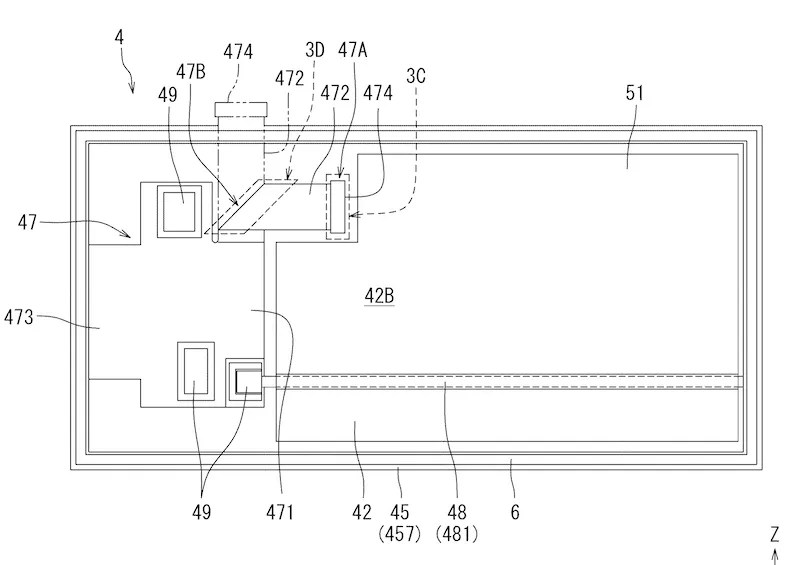
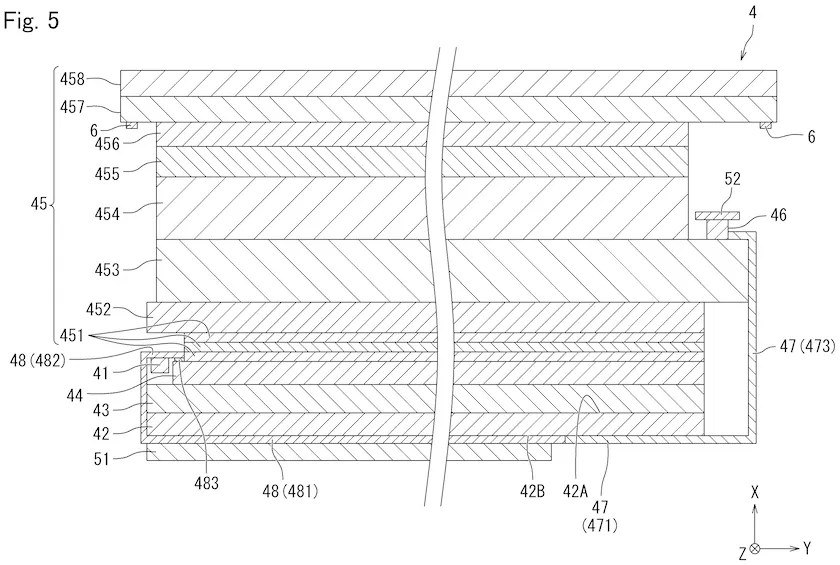
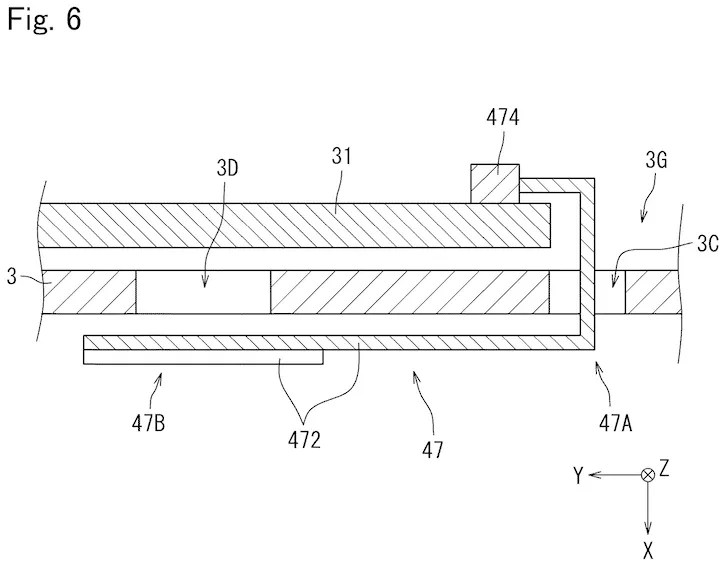
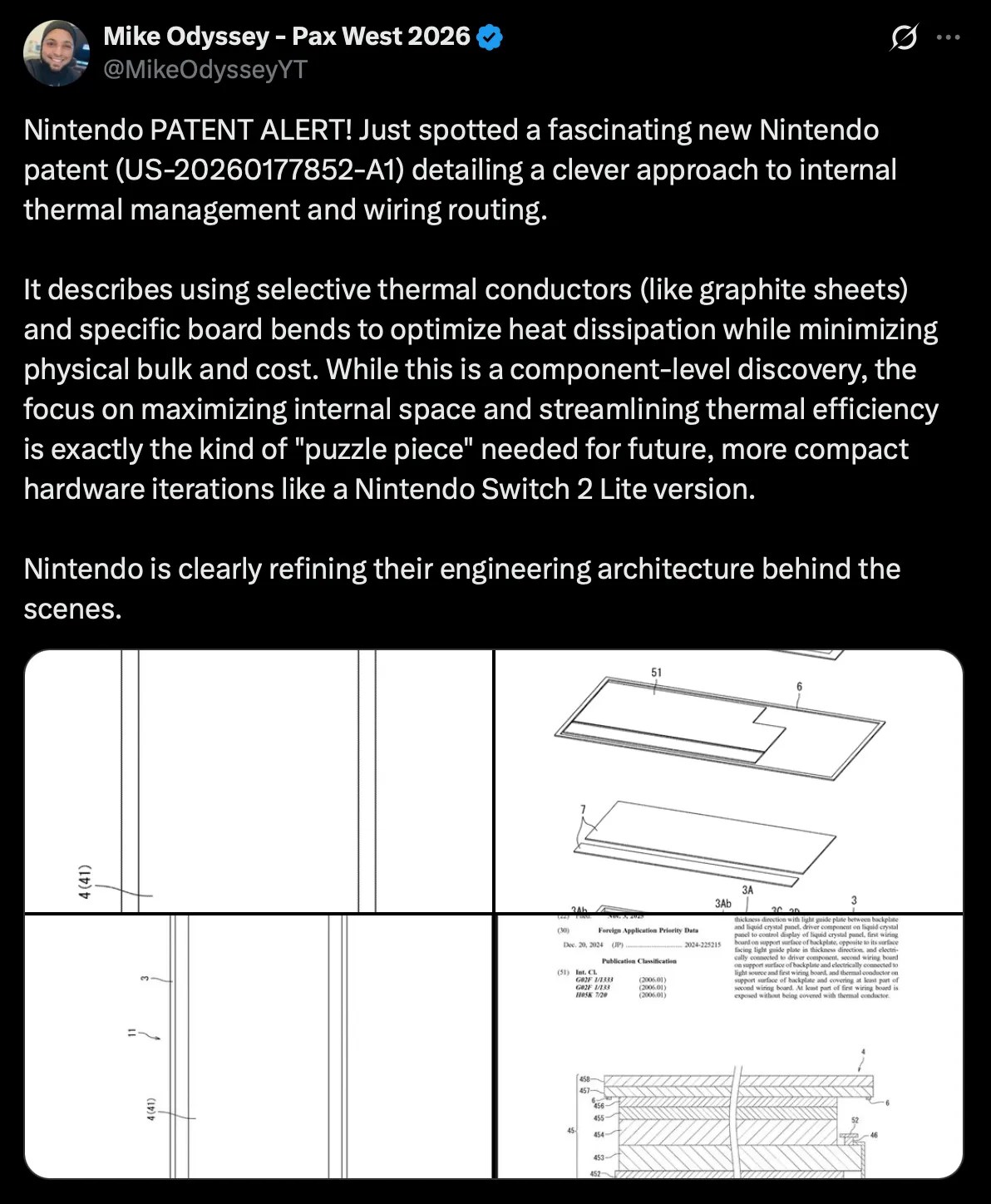
Patent application EP4764680 describes the Switch 2 LCD panel’s thermal management via its component and wiring configuration (imgs 1-4 below). The barely interesting part is that in order to control cost, the graphite sheet only covers the heat-generating backlight and driver components instead of the full backplate.
I didn’t plan to write about this unremarkable patent until I saw Mike Odyssey’s remarkable BS linking it to the development of Switch 2 Lite (img below).
The official NYXI account on RedNote (Xiaohongshu) revealed that the company has replicated the Joy-Con 2’s mouse mode and HD Rumble 2—the first 3rd party to do so. The controller is being fine-tuned and will be released later. NFC will also be supported.
Up until now, unlicensed 3rd parties were only able to reverse engineer the Switch 2 controller’s C button, 9-axis motion control, wake-from-sleep, and GL/GR buttons. Any so-called “Switch 2” controller that features HD Rumble 1, NFC, and 6-axis motion control is just a Switch 1 controller faking it. Now that NYXI has cracked open the rest of the features (sans the audio jack), other manufacturers may follow suit. Hopefully it can lead to more diverse controller designs.
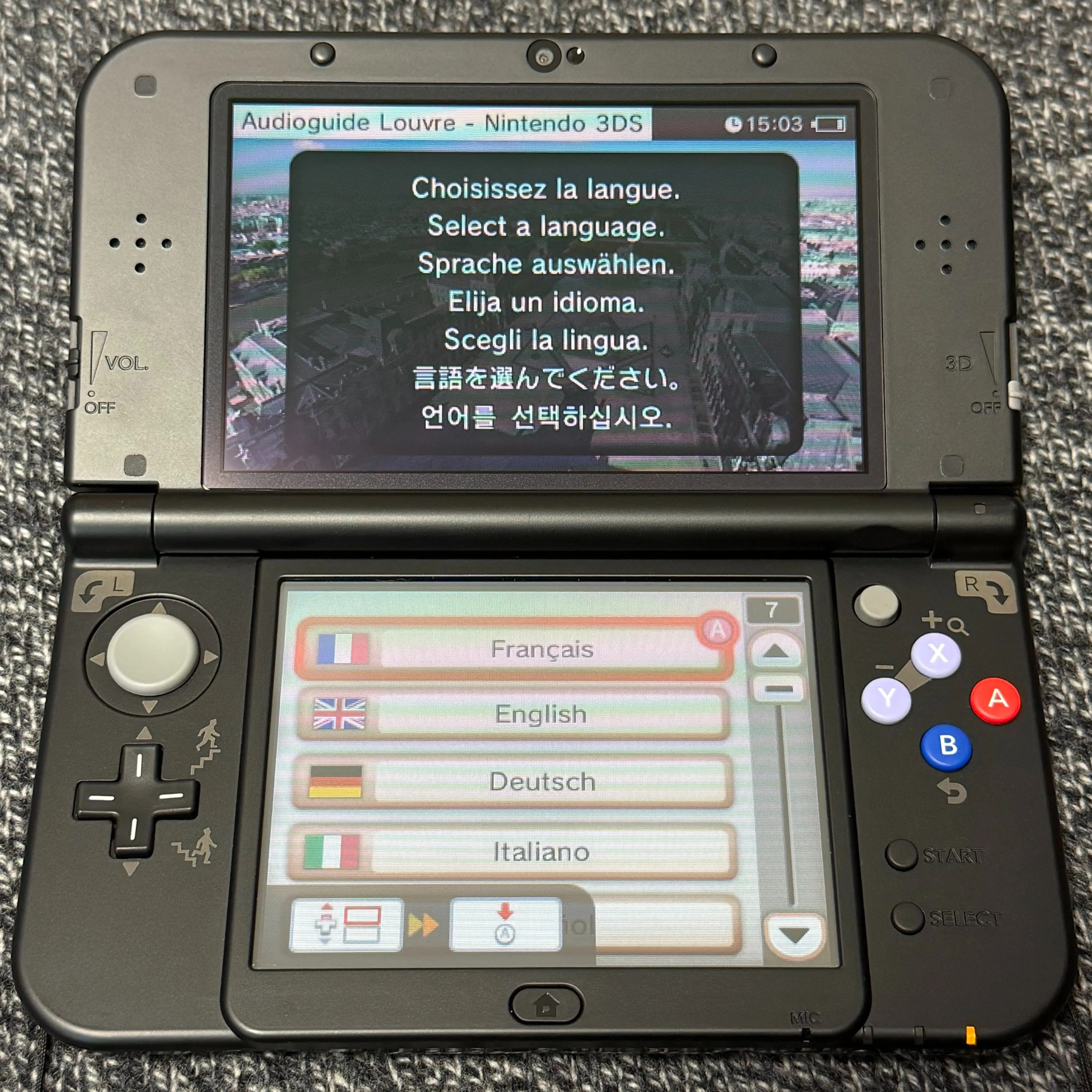
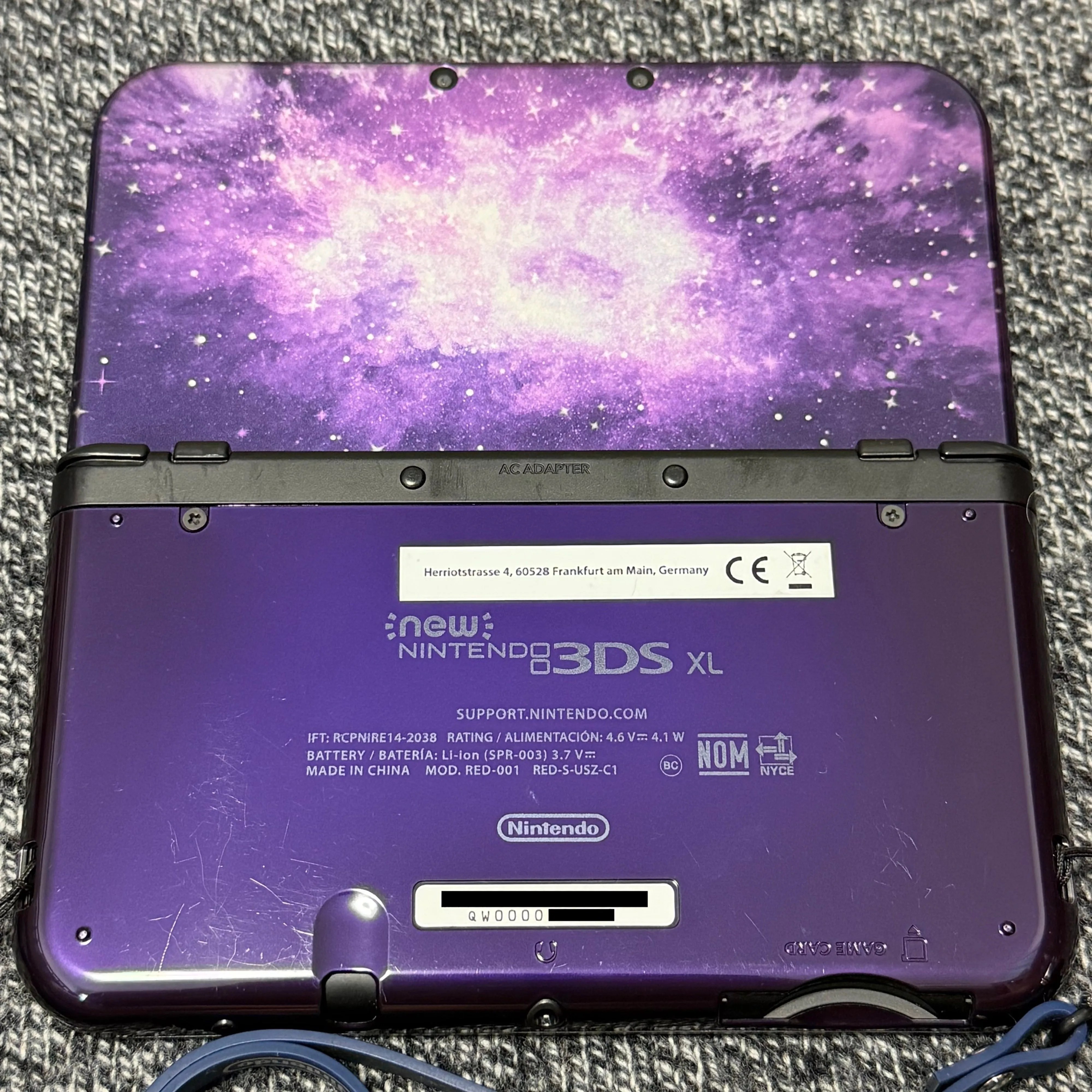
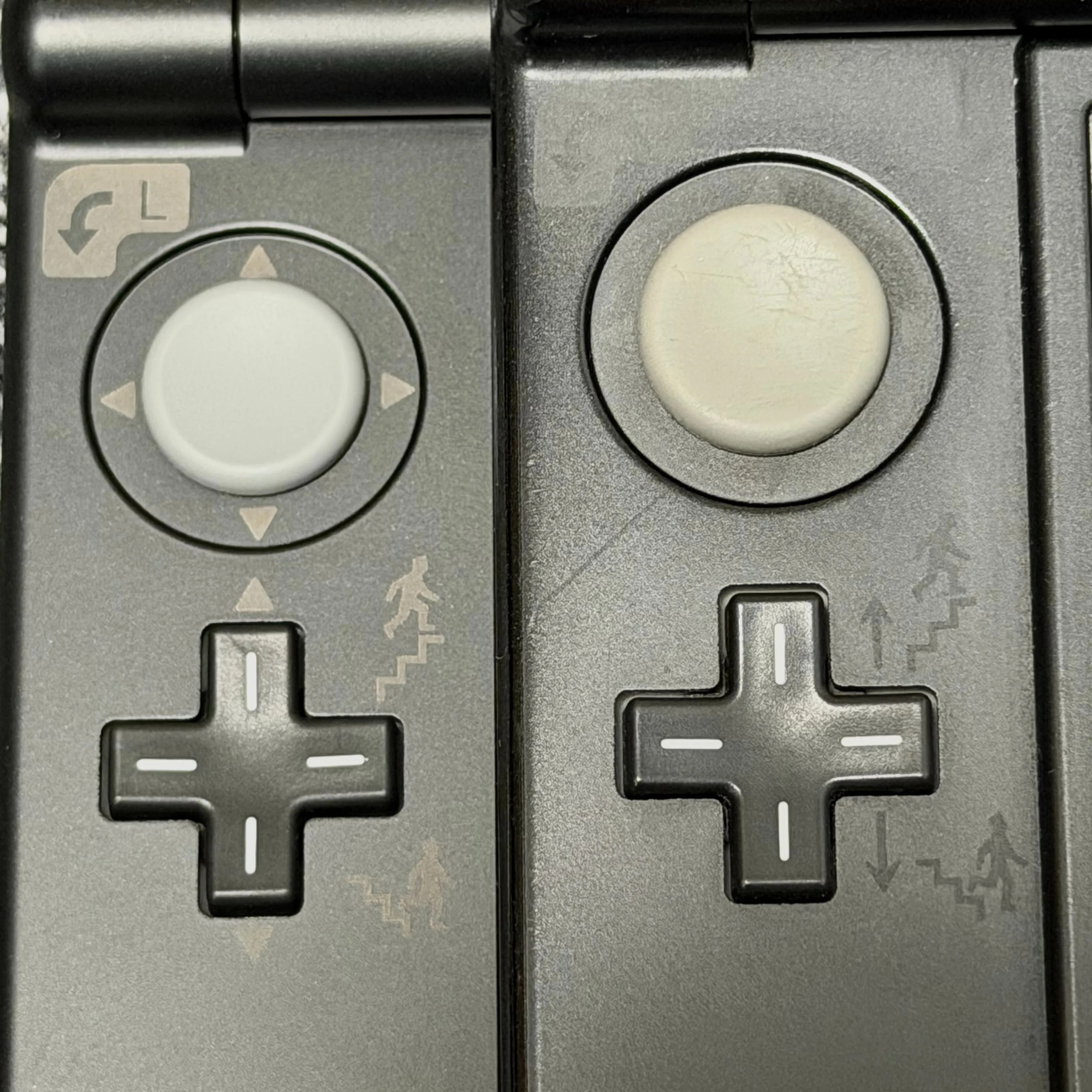
A Japanese collector acquired a v3 prototype of the Louvre Audio Guide 3DS (imgs 1-2). The main difference to the production unit is the icons for going upstairs and downstairs (img 3); the final design on the right appears easier to understand than the prototype version on the left.
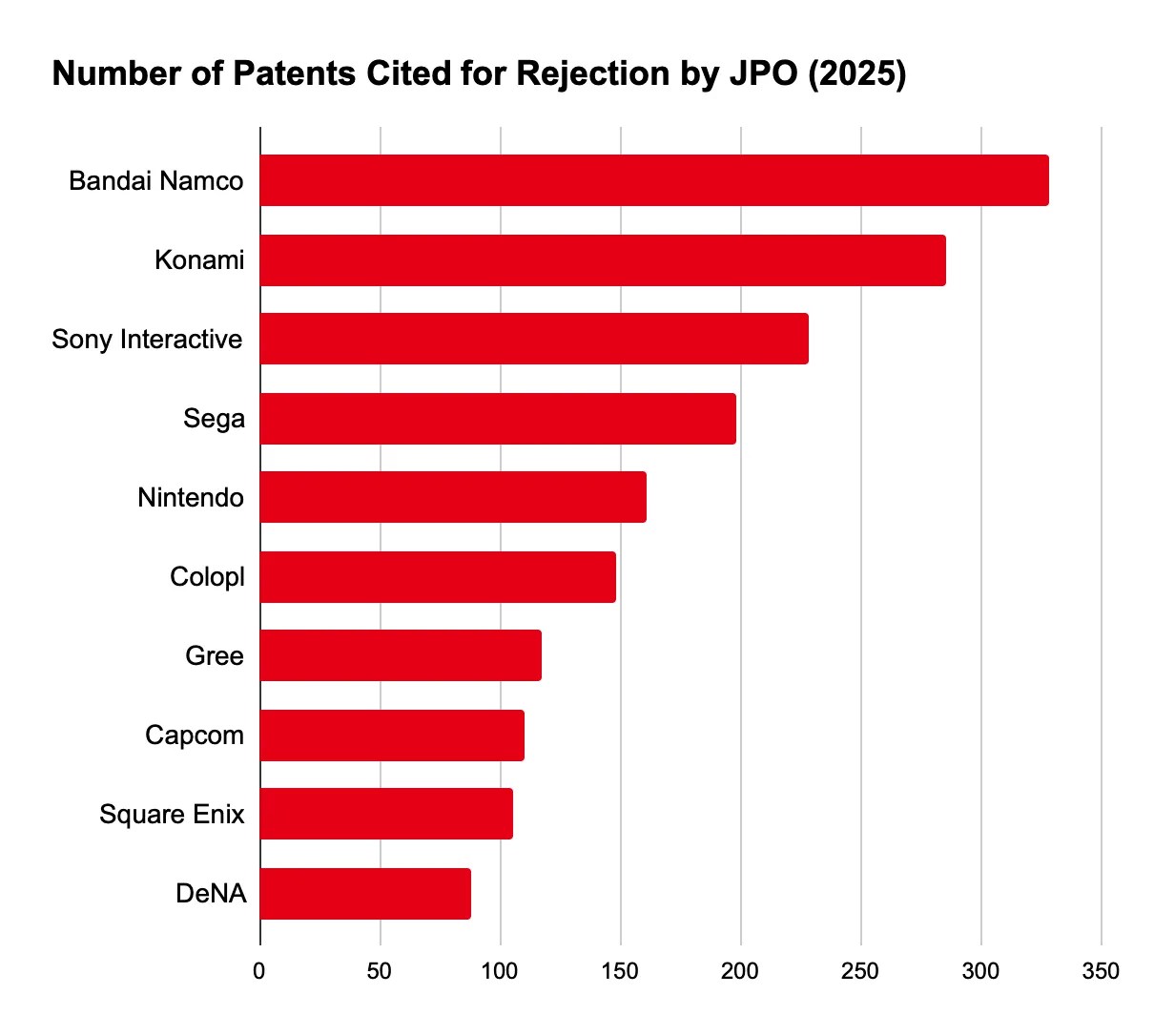
Patent Result, a research firm, tallied the top 10 game & entertainment companies whose patents were cited by Japan Patent Office to reject new applications in 2025. Contrary to the common misconception, Nintendo ranked only #5. Bandai Namco’s patents, ranked #1, were cited twice as often:
The ranking demonstrates each company’s IP moat to prevent others from filing the same or substantially similar patents. More info in the press release.
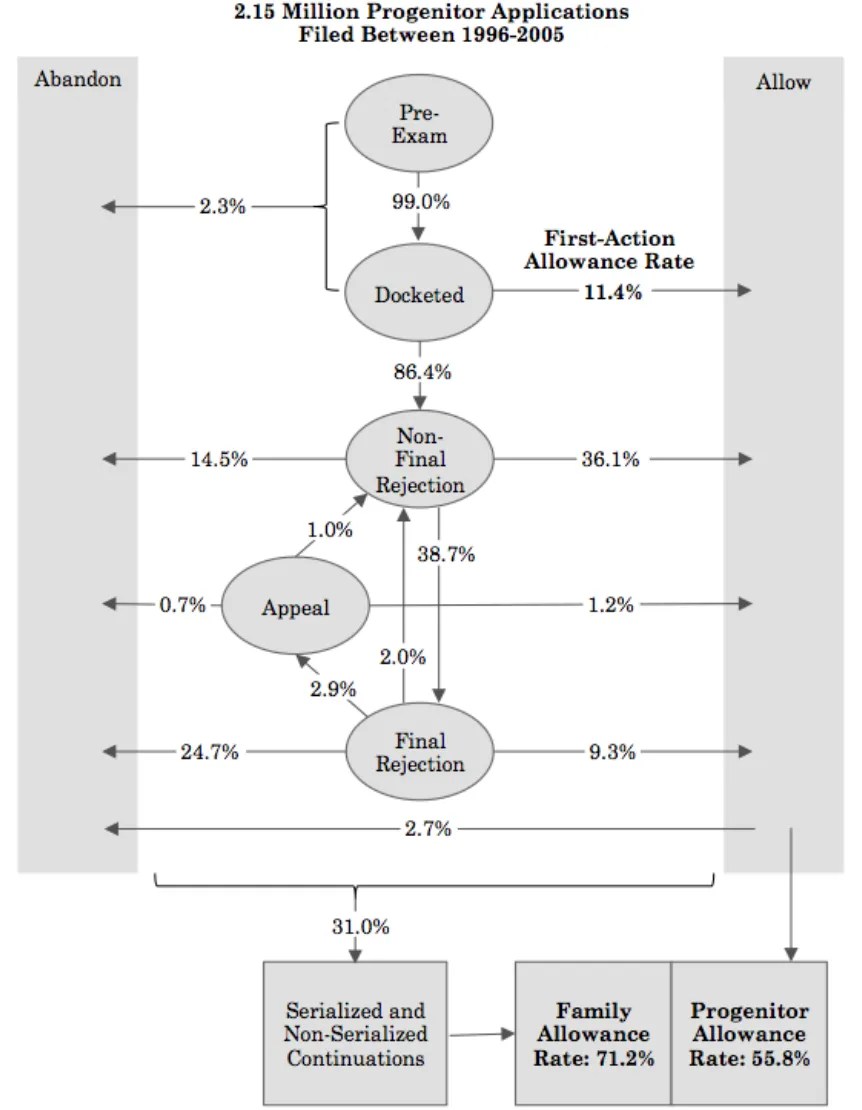
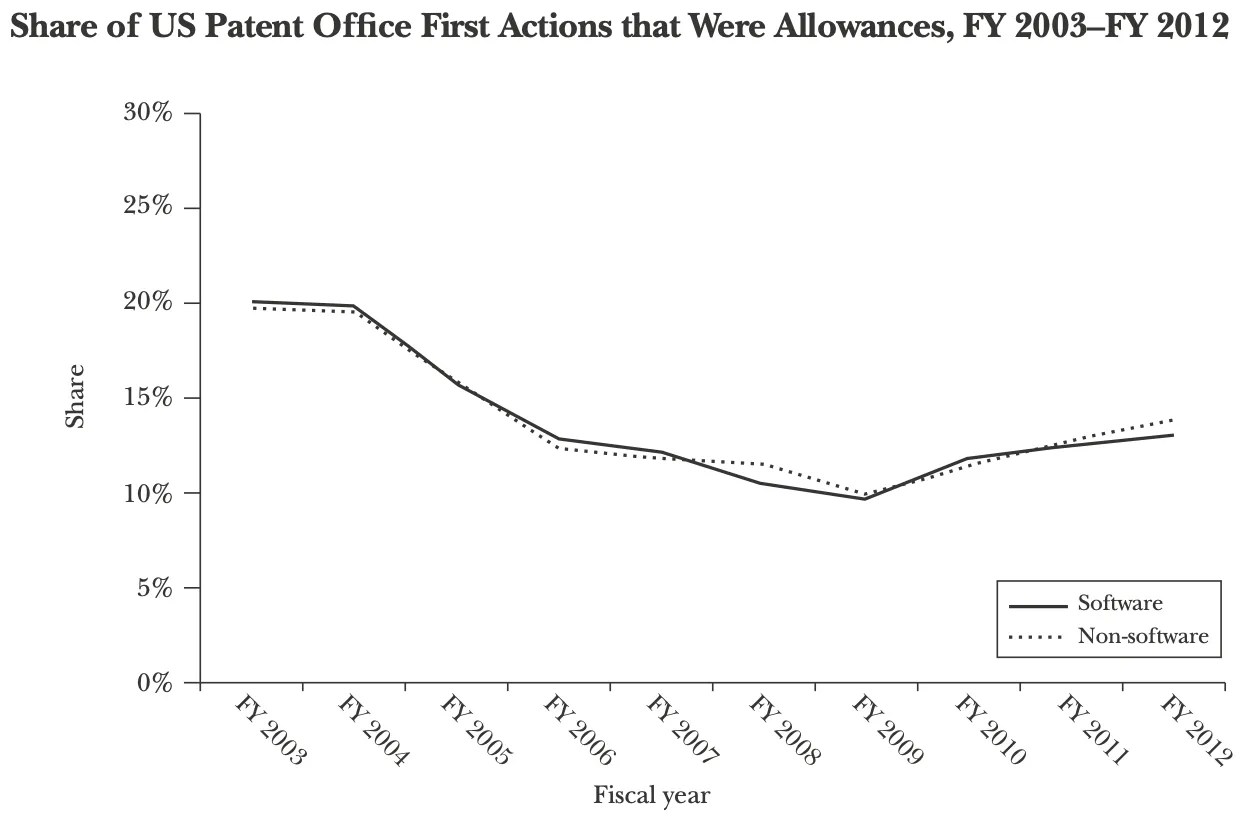
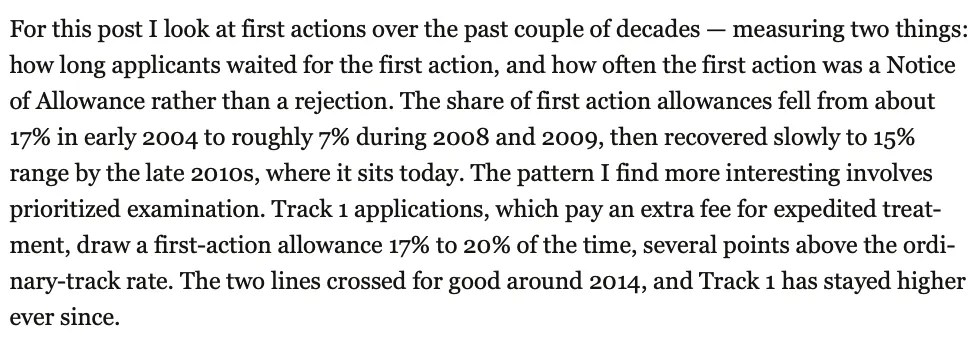
P.S.: As mentioned before, ~85% of patent applications are temporarily rejected. Most “just change it up a bit” and are later granted. The reports of patent “monopolies” are greatly exaggerated. ICYMI, I analyzed certain patent misinformation here.
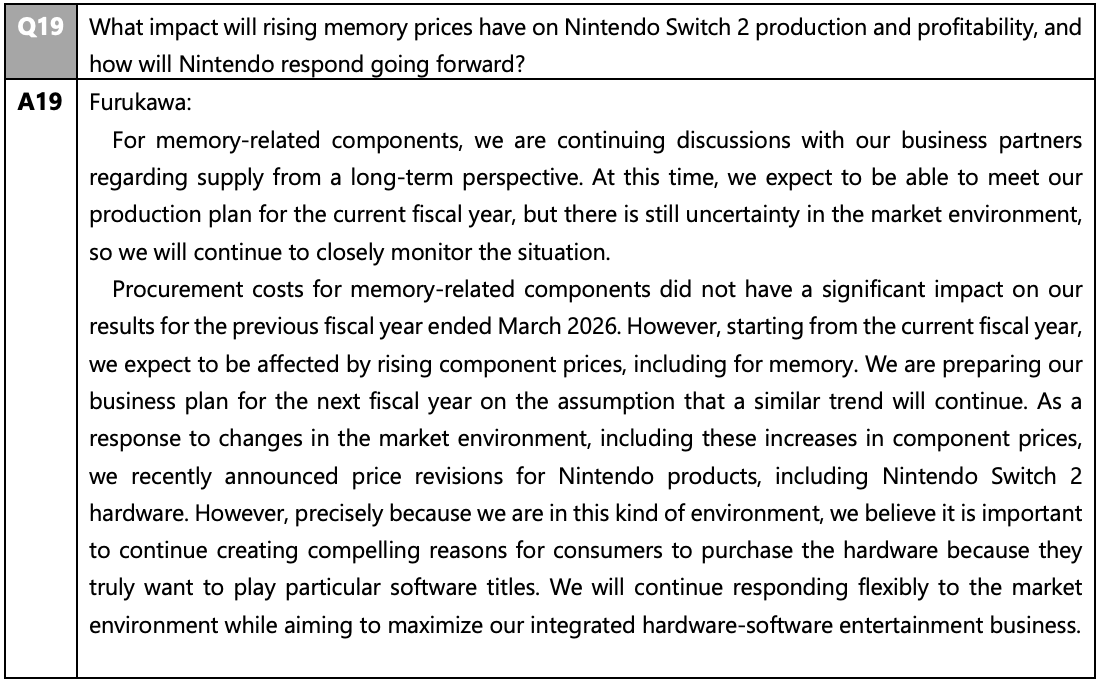
An investor asked Nintendo about the impact of memory price at today’s shareholders meeting (image below). The gist is that they’ve secured enough for this fiscal year’s production target, but the higher cost will affect this FY’s financial performance.
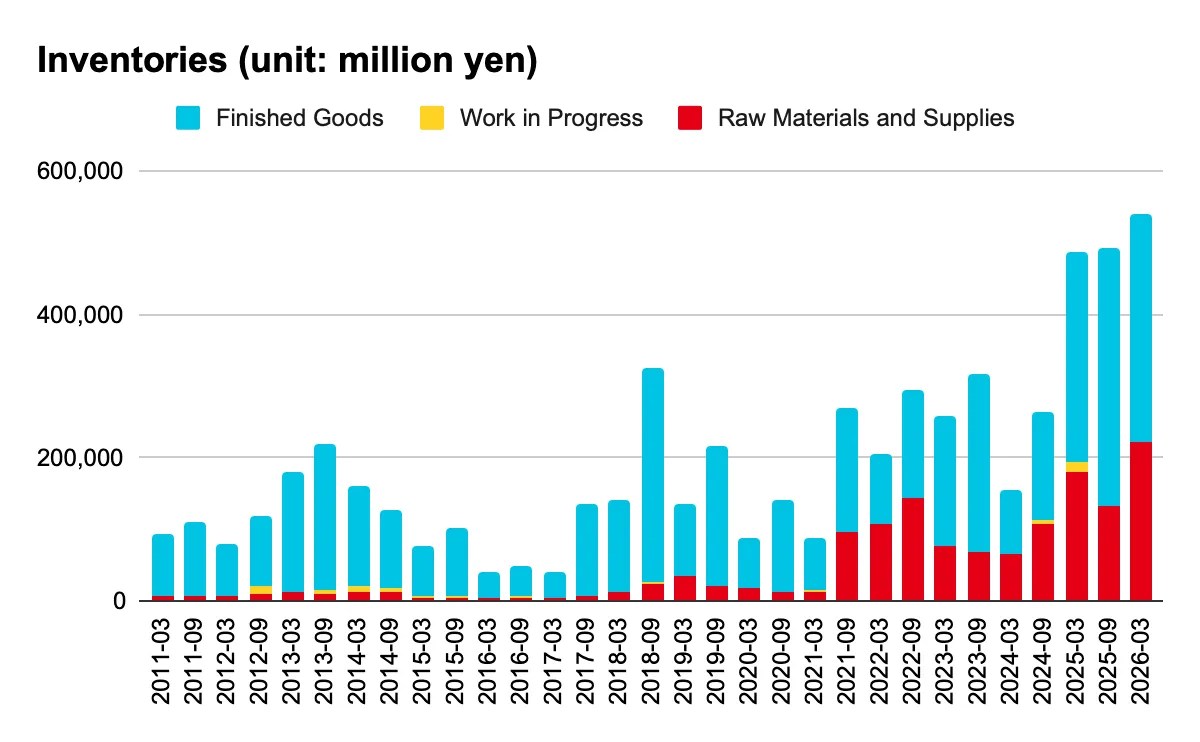
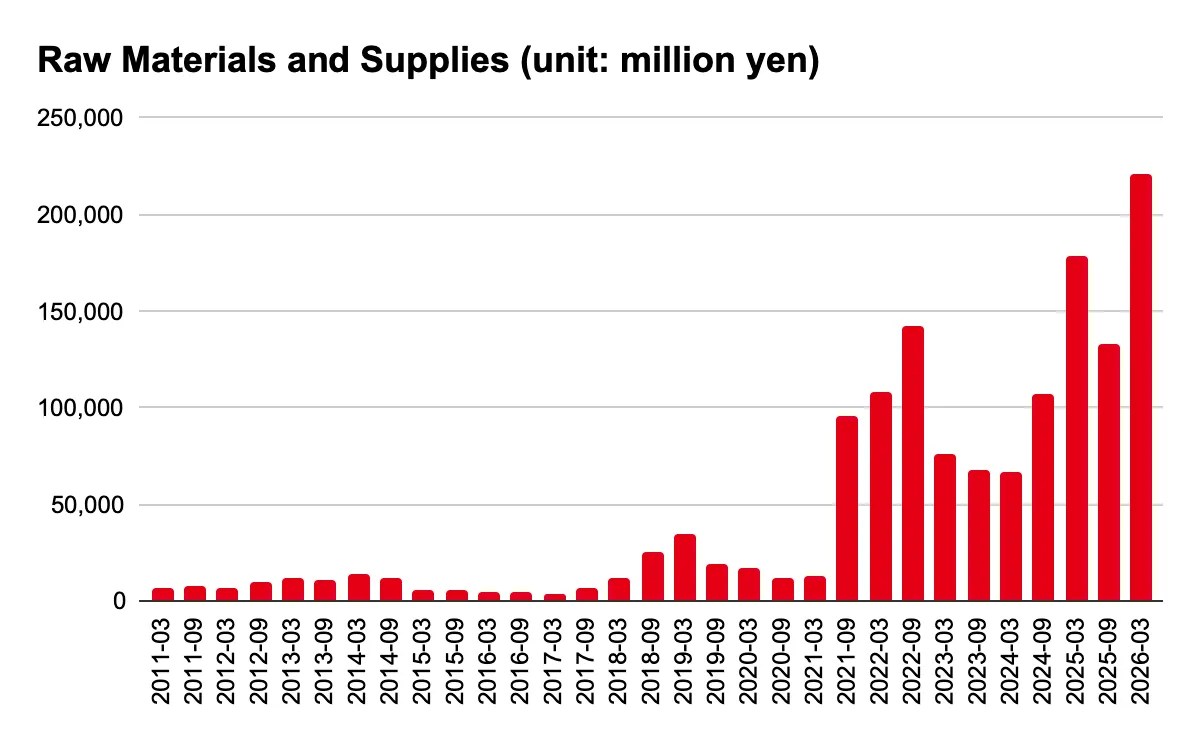
Nintendo’s inventory data bore that out (img 1 below). At the end of March, they held ¥221B/$1.37B of raw materials (img 2). I only track this from 2011, but believe that it’s the highest in company history. Considering that Nintendo forecasts to sell less hardware units this FY, this much raw materials isn’t just for production but also to ensure cost stability.
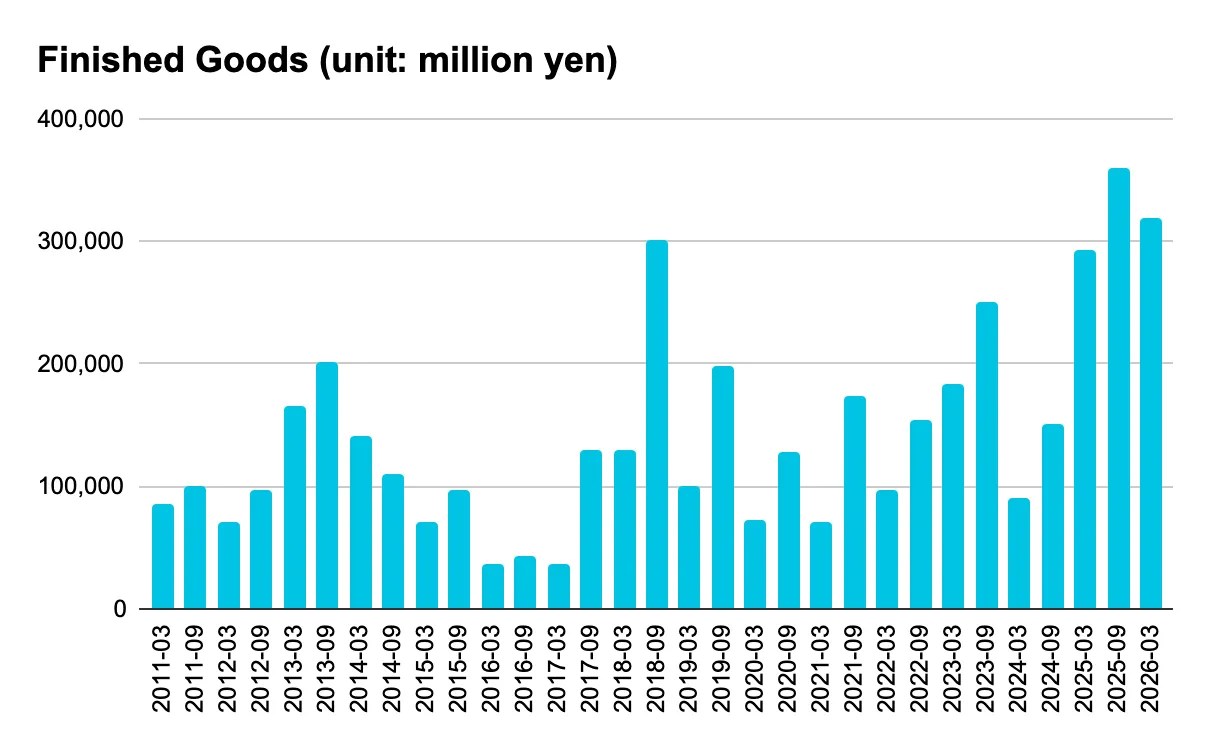
The company also kept a massive amount of finished goods for 18 months straight (img below)—first stockpiling for the Switch 2 launch, and then hoarding likely to front-run further component price increases.
[Originally posted on 2026-06-26 Pacific Time]
[Update on 2026-07-03] Replaced unofficial Q&A transcript with the official version published today.
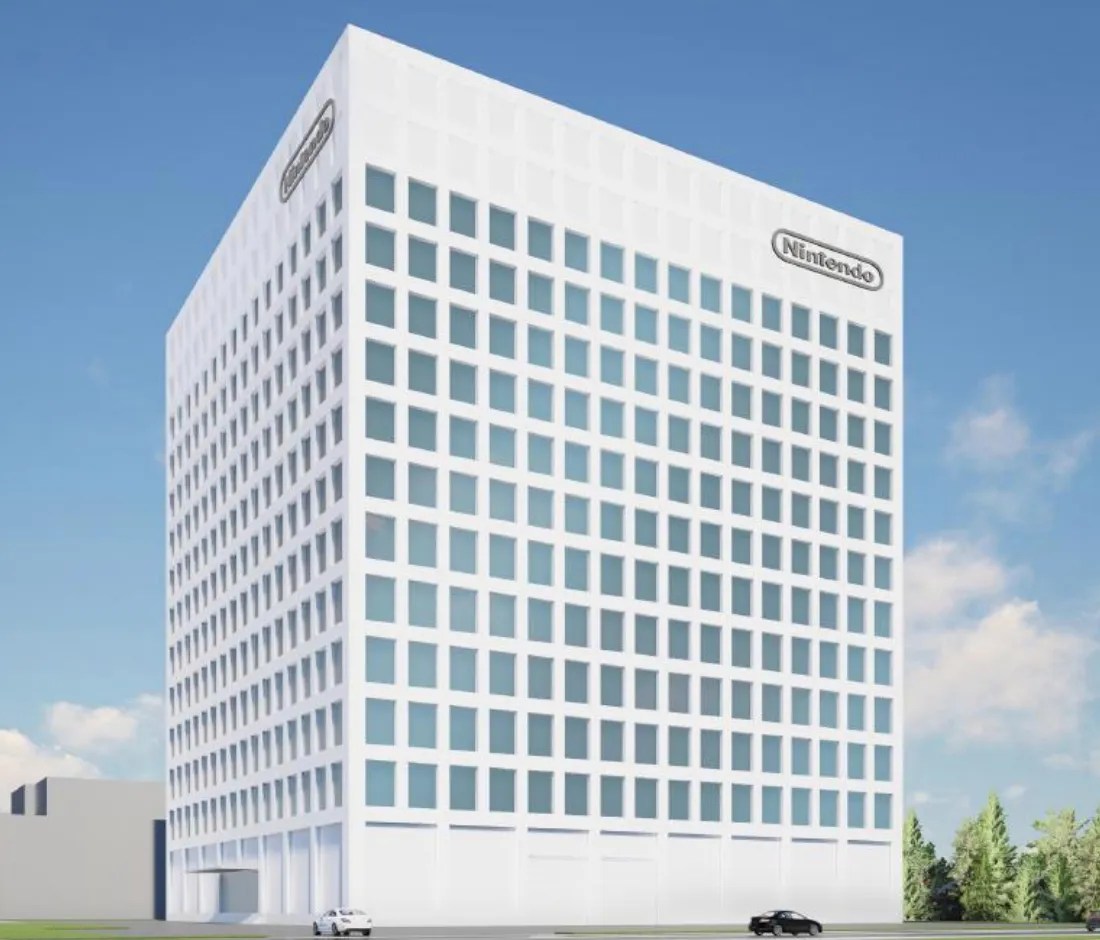
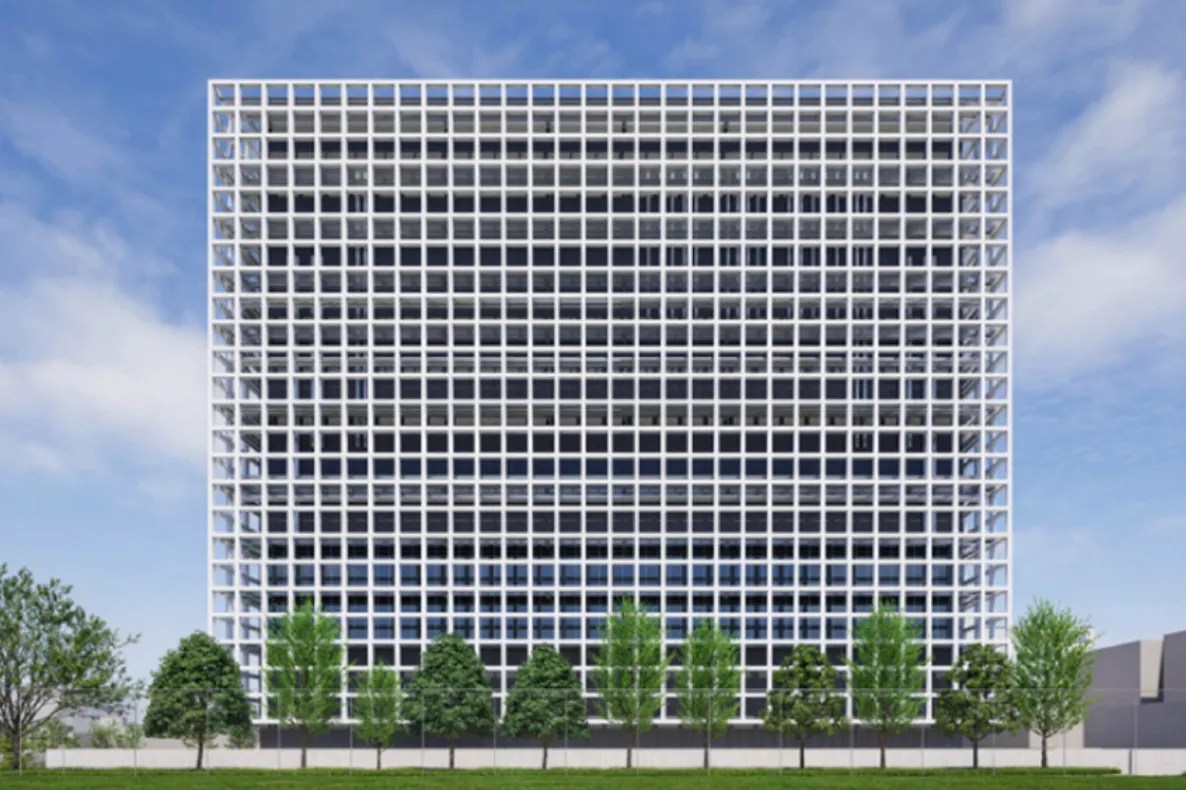
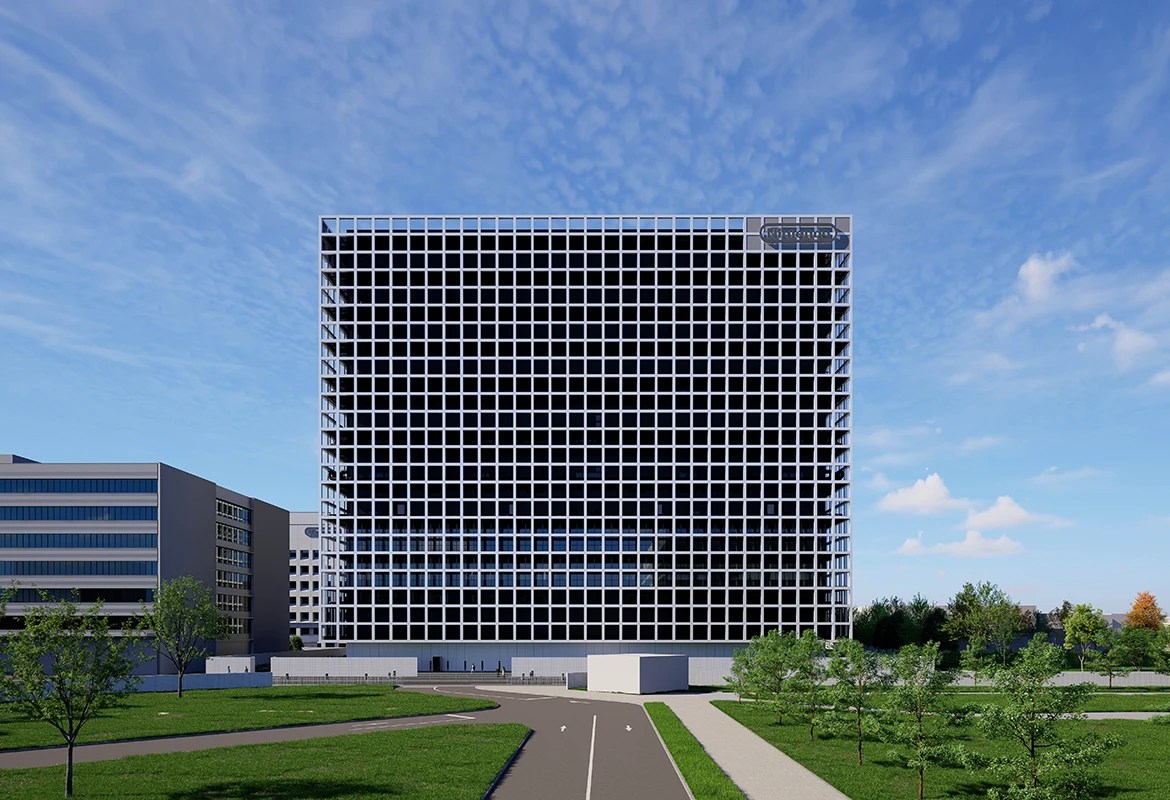
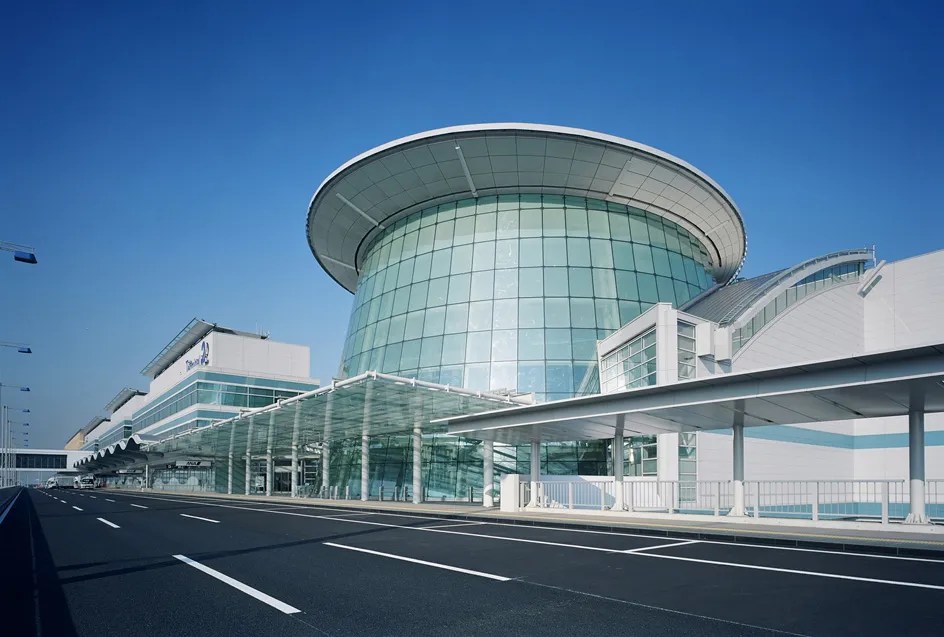
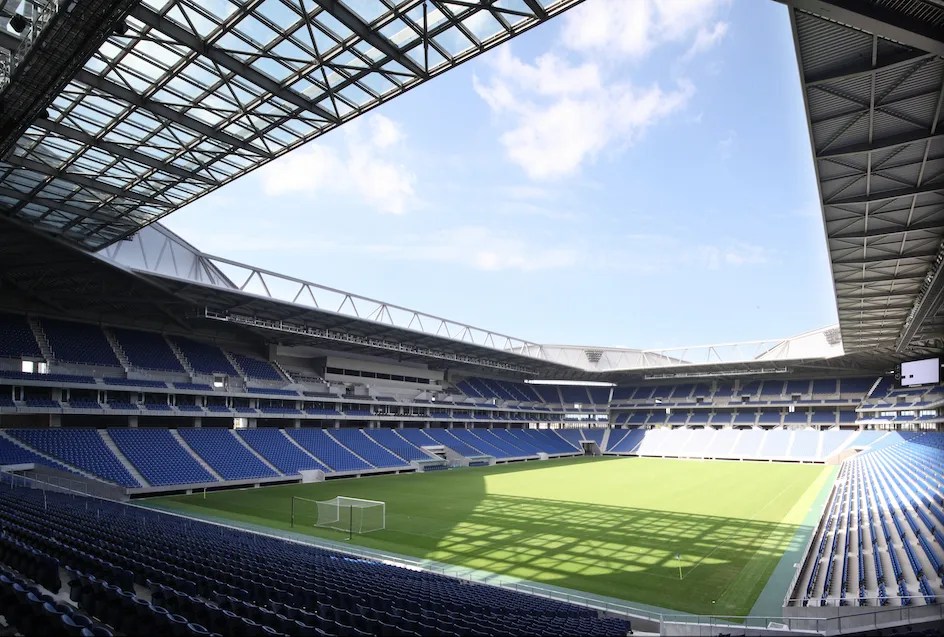
Nintendo provided an update on the construction plan of its new R&D building, located next to its Kyoto headquarters. This is the 3rd incarnation that’s been publicly announced: v1 in 2022 (img 1 below), v2 in 2025 (img 2), and v3 just now (img 3).
Name: Development Center, Building No. 2 → (unchanged) → Technology Development Center
Floor area: 38,000㎡ → 51,000㎡ → 49,306㎡
Stories: 12 → 13+ → 9 above ground and 1 below
Completion: 2027-12 → 2029-03 → (unchanged)
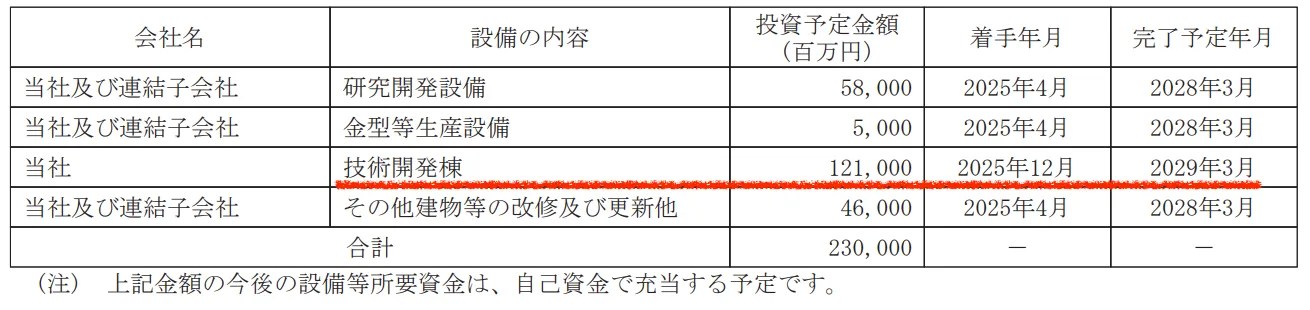
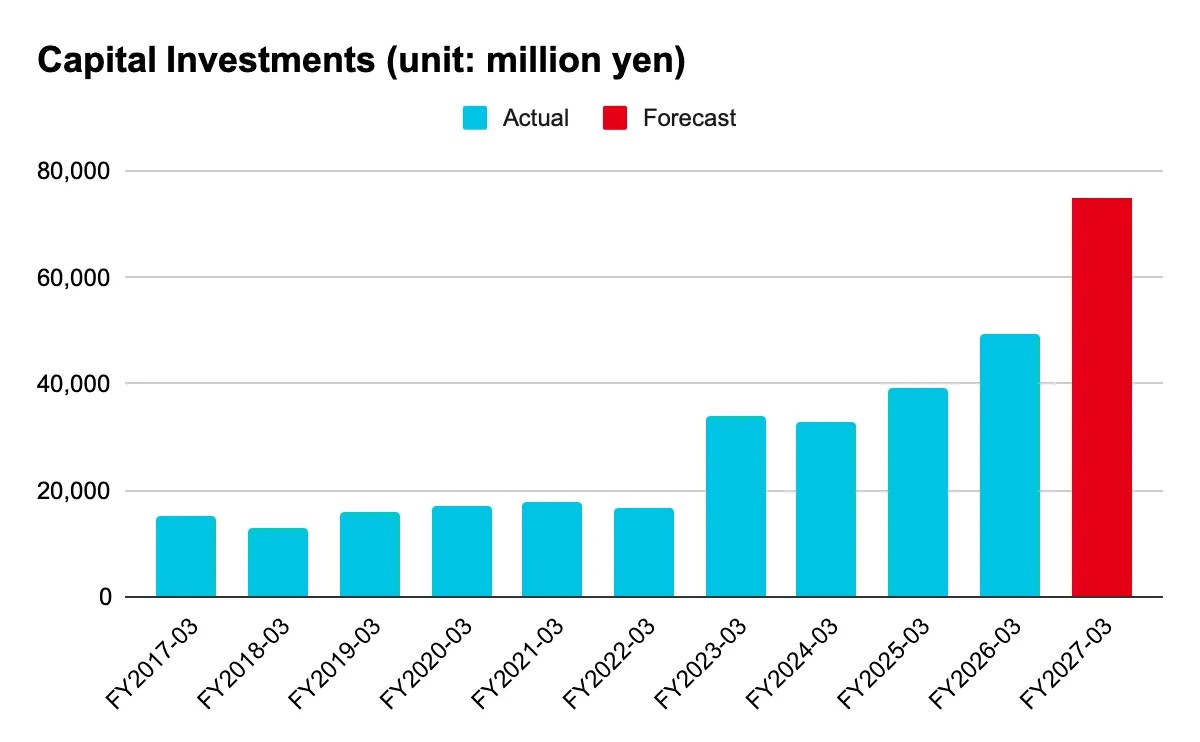
The estimated construction cost is ¥121B from 2025-12 to 2029-03 (img 1 below), funded fully by Nintendo itself. Judging by the annual capital investments data (img 2), the pre-construction work (such as demolition) began in 2022. Construction kicked off last December and continues this year.
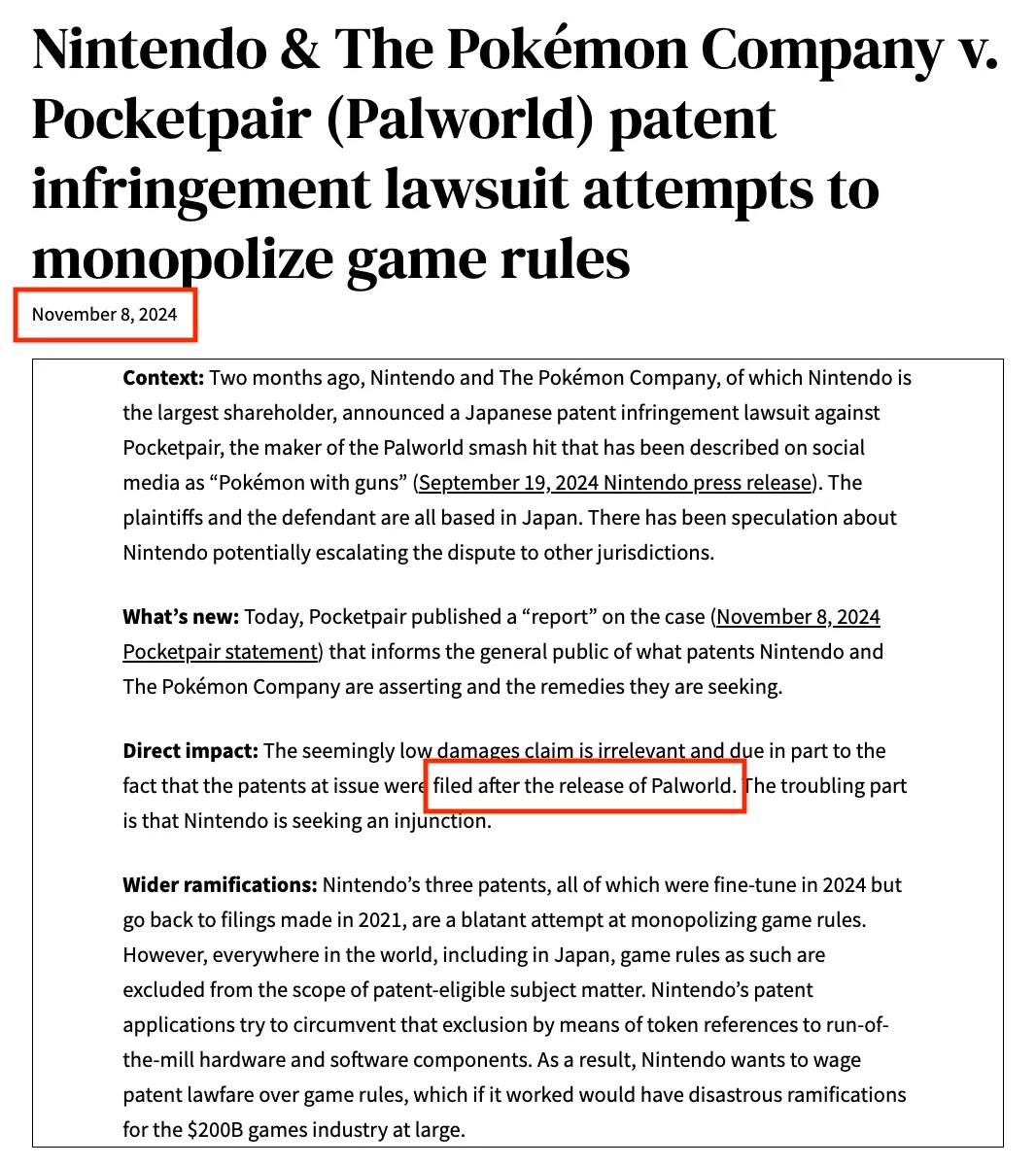
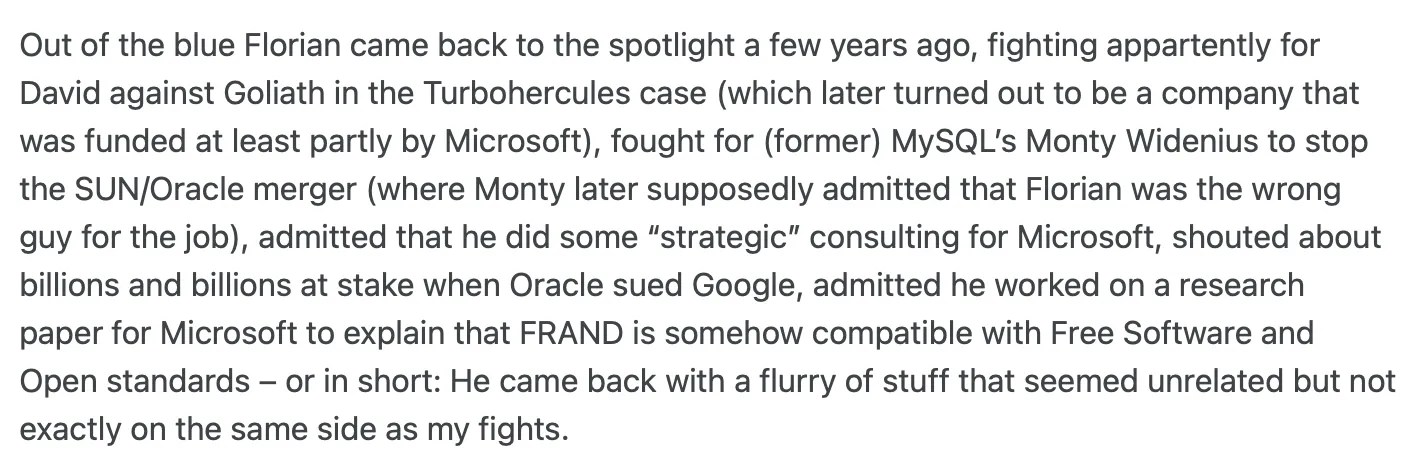
[Update on 2026-06-25] Context of the article for those who didn’t follow the Palworld lawsuit closely: In late 2024, Nintendo and The Pokémon Company filed a lawsuit in Japan, accusing Pocketpair’s Palworld infringing upon three Pokémon patents. A string of extremely negative and misleading coverage of the case and patents began to appear in English media (soon translated and retransmitted by foreign press); their source of misinformation consistently traced back to Games Fray, ostensibly a legal info site for the game industry. In this post I examine who’s behind the website, the disinformation they perpetrated, and what their objectives may be. Original text below.
It appears to be a setup from the get-go.
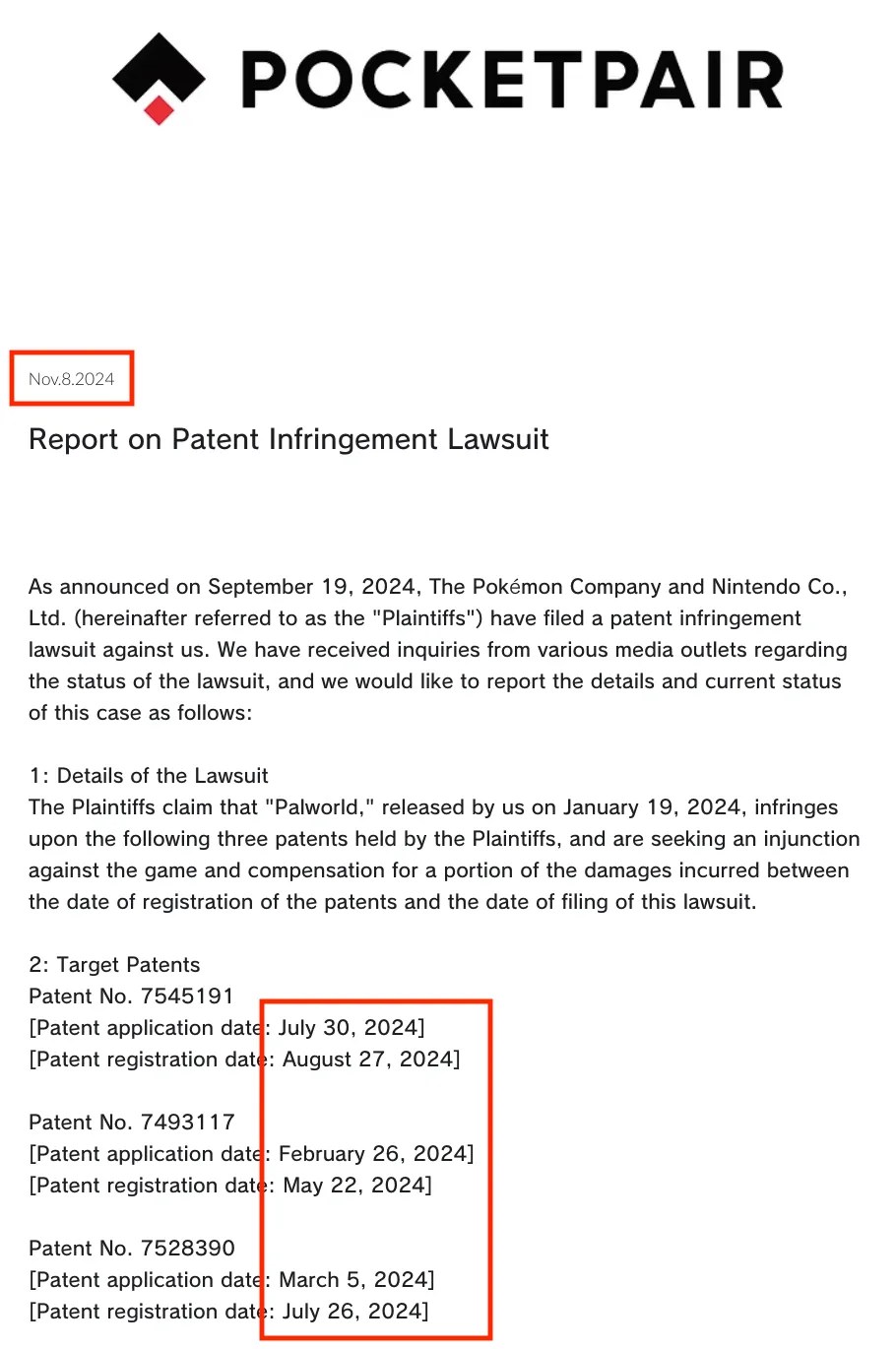
On the very same day that Pocketpair published its press release regarding the lawsuit (img 1 below), Games Fray just happened to have a 2,568 word article ready to go (img 2). The PR curiously highlighted the patent dates without elaboration, which also happened to be a linchpin in Games Fray’s disinformation campaign (more on that below).
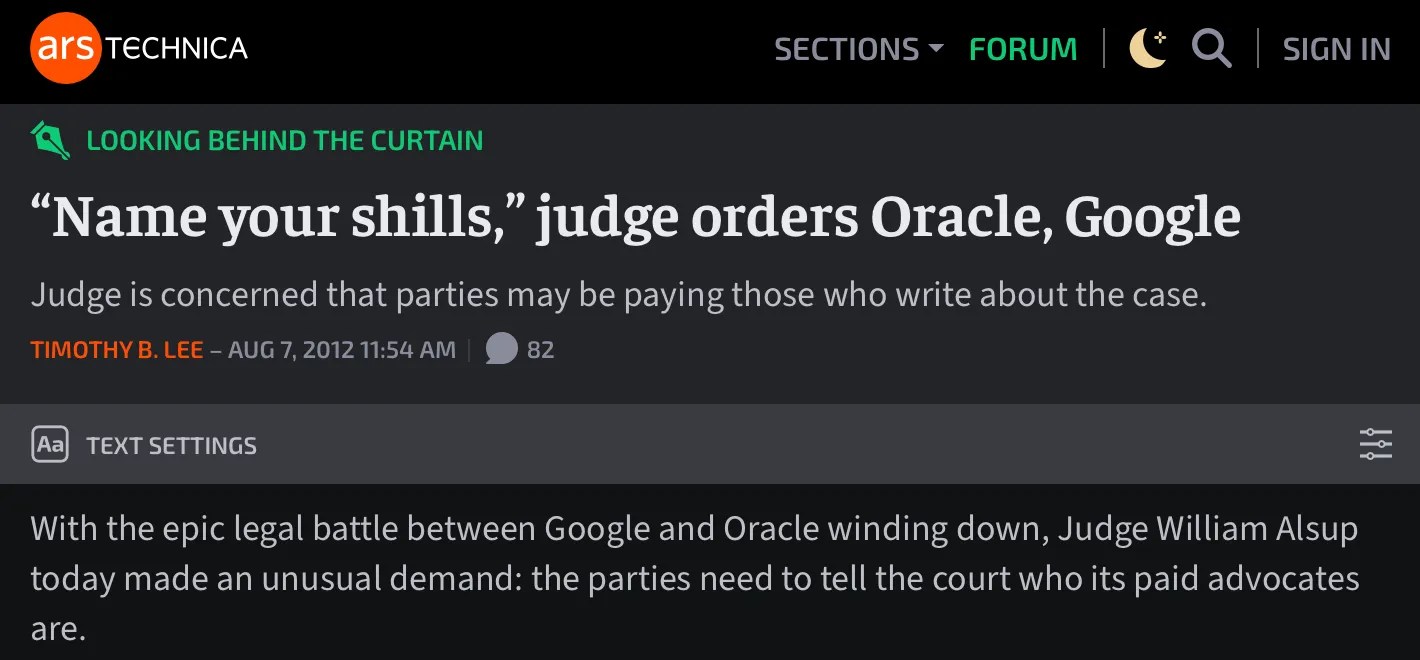
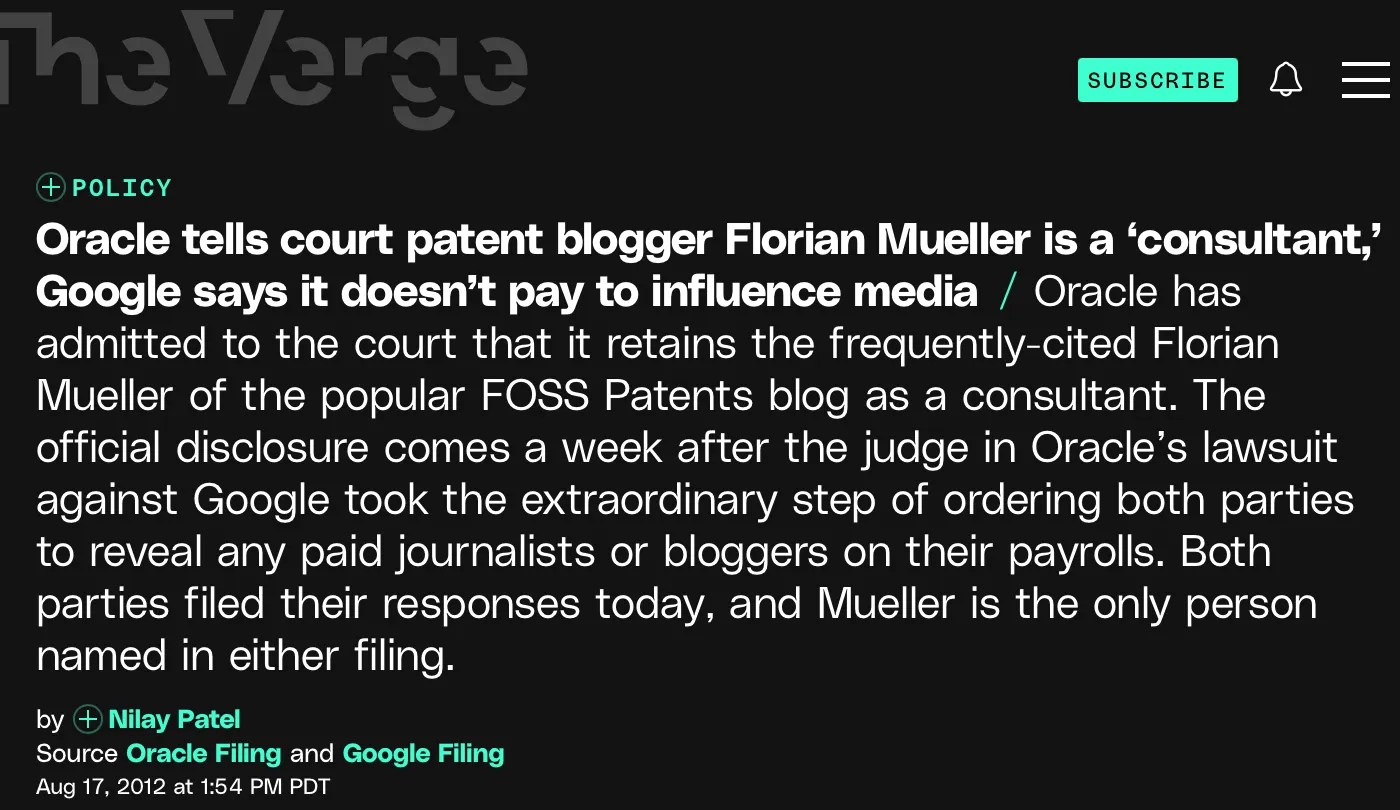
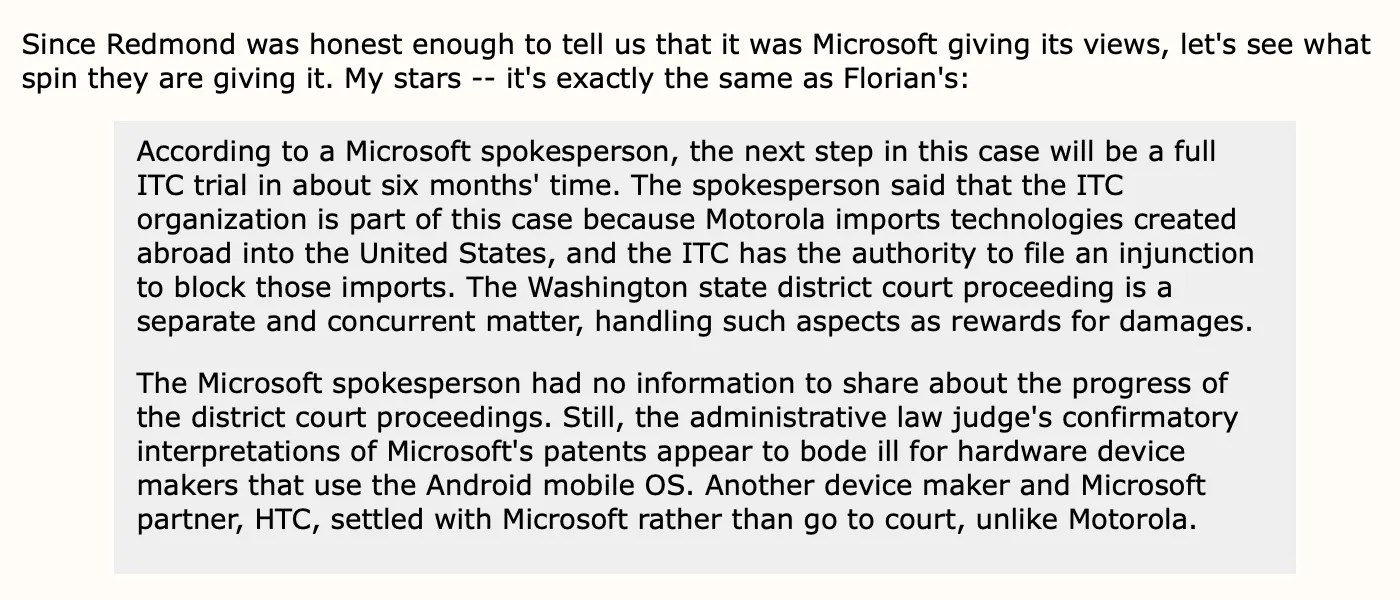
Before we go further, let’s remind ourselves that Florian Mueller, operator of Games Fray, is a blogger-lobbyist who “consulted” for Microsoft (Android lawsuit), Oracle (Java lawsuit), Ionos (EU directive proposal), and more (imgs 1-4 below).
In the following sections, I’ll give a rundown of the disinformation propagated by Games Fray, and explain why its end goal is seemingly to forestall a similar suit being filed in the US. Unlike in Japan, a US patent trial includes a discovery phase—everything relevant, such as the CEO’s ChatGPT history (see: Krafton), may be requested or subpoenaed.
Half-truths, falsehoods, and gaslighting
1a. ~85% of patent applications are temporarily rejected (imgs 1-3 below). It’s basically dog-bites-man, and yet Games Fray shouted from the rooftops whenever that occurred, to insinuate impropriety with the Pokémon patents.
1b. Case in point, after Games Fray described a temporary rejection as “overwhelming” in Feb ’25 and another as “embattled” in Oct, both patents passed after being amended. Reject → amend → grant is as routine as it gets.
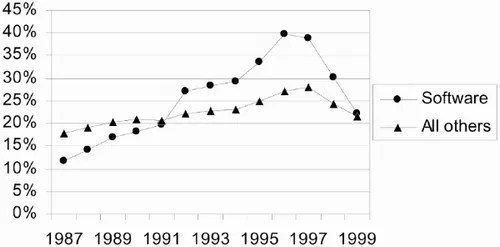
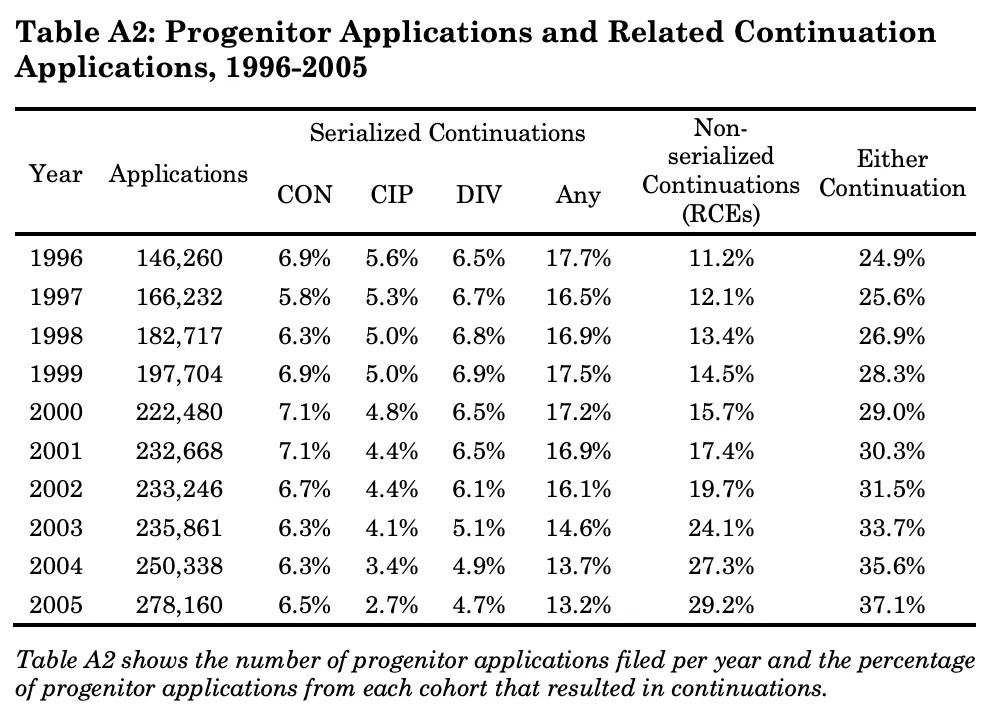
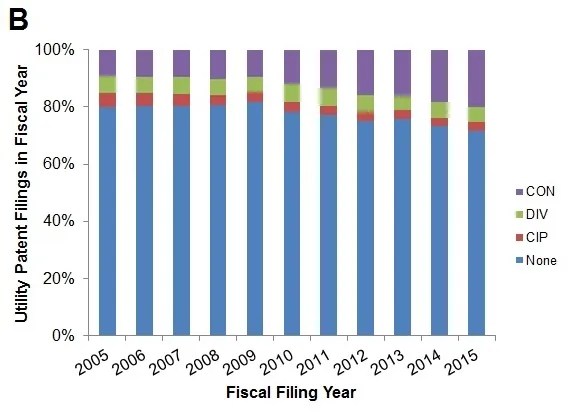
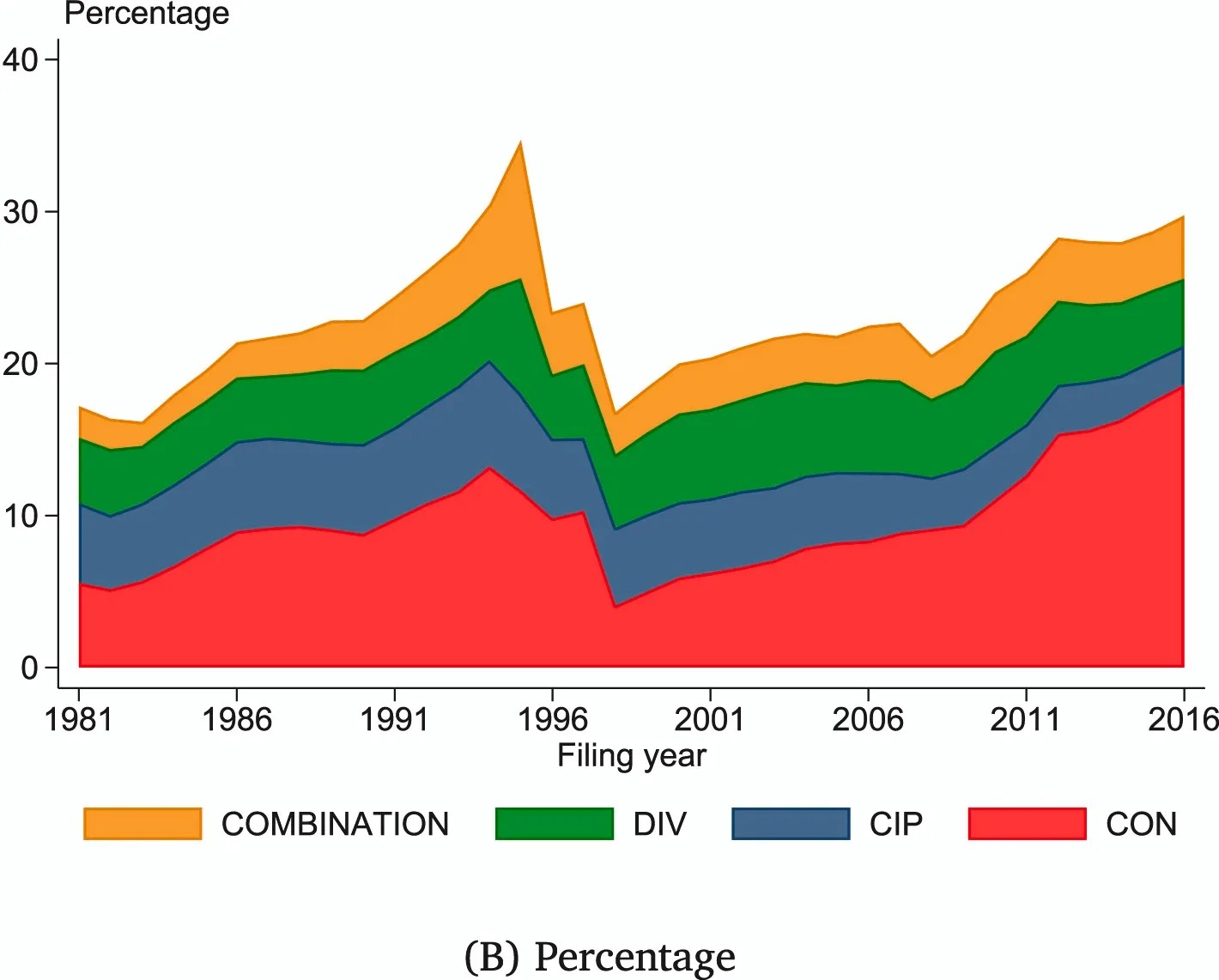
2a. Close to 30% of all patents filed or issued are continuations/divisions based on a parent patent (imgs 1-4 below). These child patents are very common, including the 3 patents in the lawsuit, but Games Fray again reframed them as anticompetitive.
2b. Patent infringement is determined by the parent patent’s filing date (2021 for the Pokémon patents) not the child’s (2022). Games Fray nonetheless persistently played up the later dates to mislead the audience.
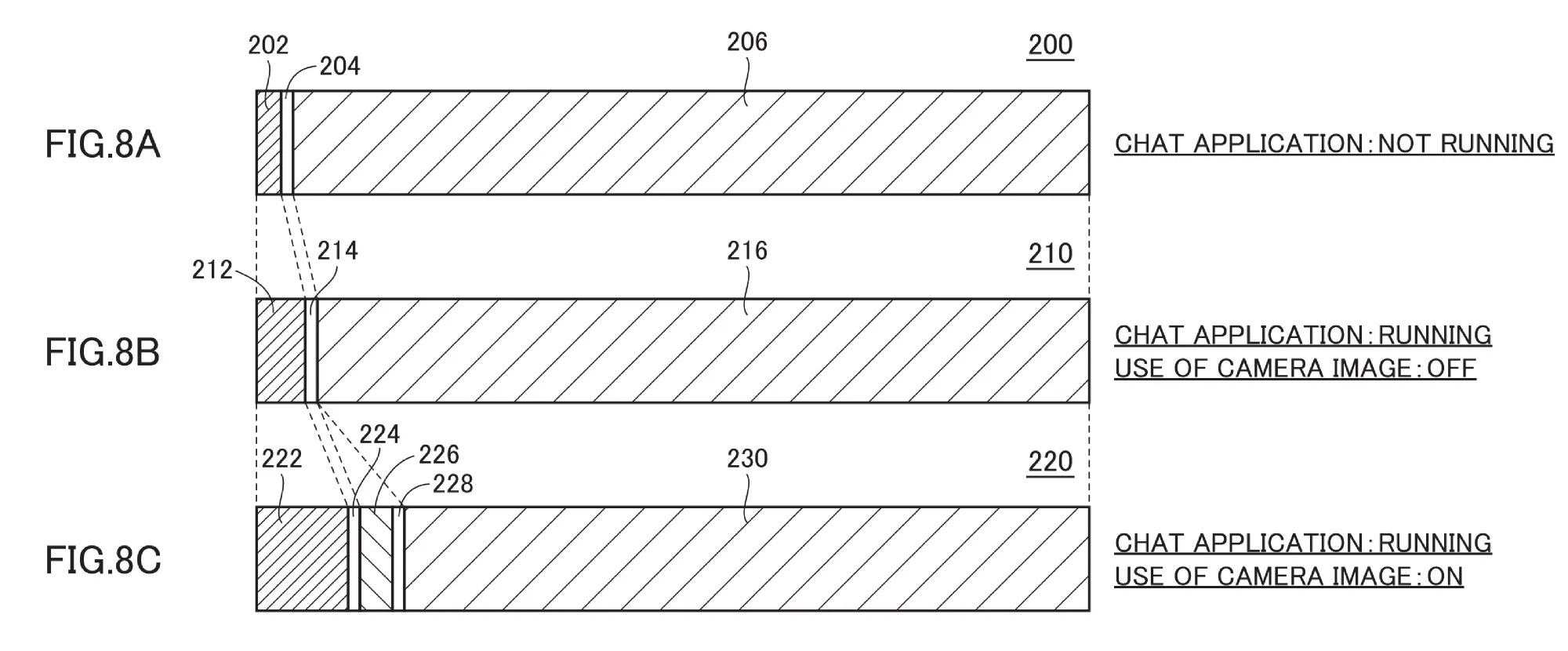
A previous patent application describes how Switch 2 system reserves a small amount of GPU time for system UI processing and why VRR is thus needed. A recent publication further details the allocation of GPU time for game, system, and GameChat:
At the start of a frame period (e.g., 1/60s), some GPU time is reserved for system UI related processing—notification, Quick Settings, etc. (#202 in image above)
The rest of the GPU time is for game rendering (#206), with a brief switching period (#204) sandwiched in between.
When GameChat is enabled without game image sharing, the GPU time reserved for system processing is expanded (#212). When game image sharing is also enabled, even more time is reserved for the system (#222).
If the camera is on, some GPU time is reserved for camera processing (#226).
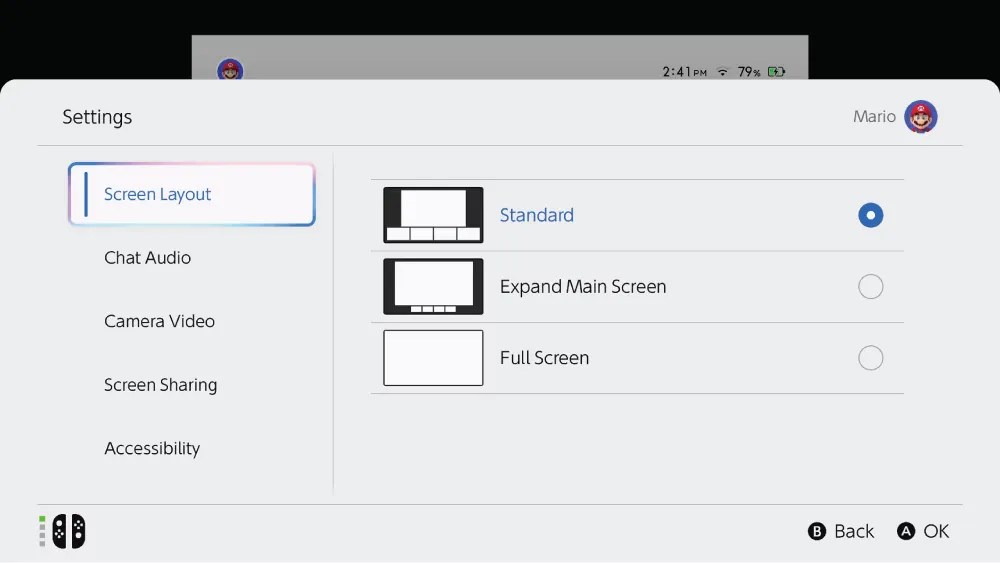
The above is why the game’s resolution is lowered when GameChat is on (less GPU time for game). The user can override this though via a setting (screenshot below).
If the game itself uses camera input (e.g., Jamboree TV), the camera processing can share the game’s GPU time.
When the console is battery-powered, GameChat resolution is reduced.
The game rendering and system/camera processing are running on different GPU cores.
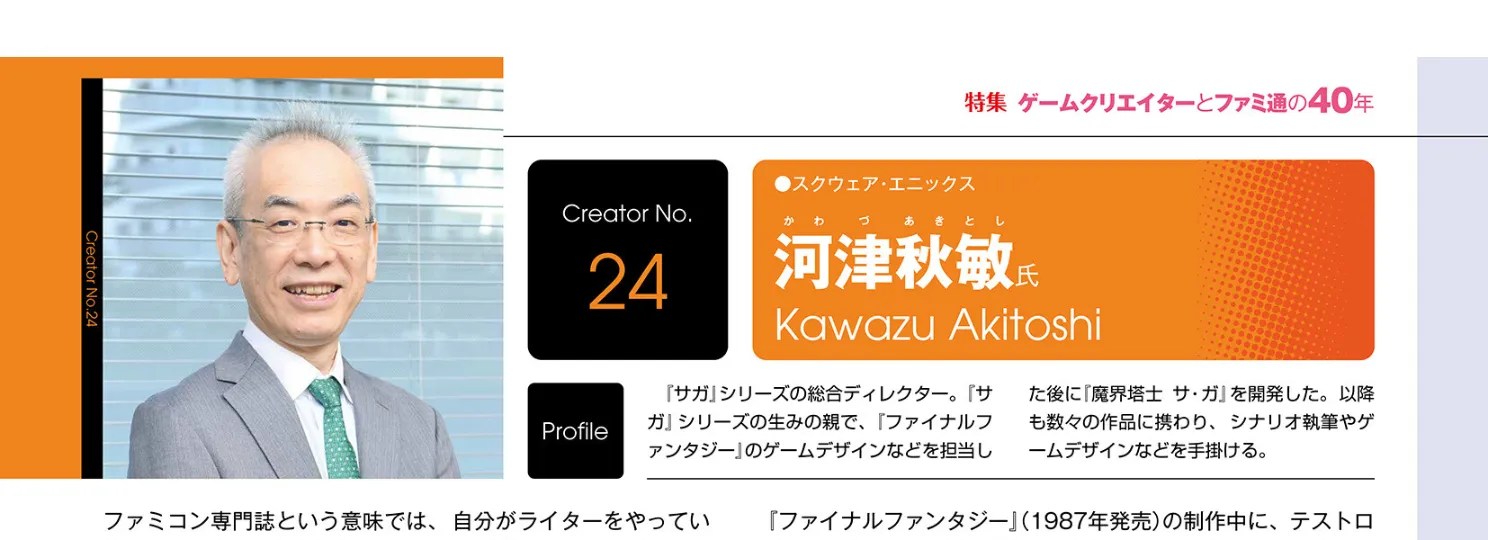
The breakup and reconciliation between Nintendo and Square (now Square Enix) around the turn of the millennium is the stuff of VG legends. In the latest Weekly Famitsu, a feature with Akitoshi Kawazu (SE executive; creator of SaGa series) provided another piece of the historic puzzle.
[Context] In 2001, Final Fantasy: The Spirits Within bombed in the box office, losing Square ~¥140B. The precarious financial situation caused Enix to suspend the merger talk, and investors demanding them to “kowtow” (土下座) to Nintendo in order to repair the relationship.
Yoichi Wada, then COO (soon CEO), recounted that Nintendo approached a Square “core creator” to offer Hiroshi Yamiuchi’s personal investment fund. The creator told Wada, who suspected it being a test to see if he had his subordinates’ support. After some negotiations, Wada finally met Yamauchi on the top floor of Nintendo HQ; with his silver hair and purple suit, Yamauchi seemed a “final boss” to Wada’s eyes. Long story short, Square later set up a shell company to receive funding from Yamauchi, and resumed developing games for Nintendo platforms.
[New info] In the Famitsu feature, Kawazu confirmed that he was the creator summoned by Yamauchi: “I sit down with him and [Shinji Hatano], who had arranged the meeting, to eat bentos from Tankuma while we talked, or rather, while I listened to Yamauchi-san speak.” He added: “I haven’t been able to return the favor I owe to Yamauchi-san or Nintendo, so I hope I can do something, anything, before I die.”
P.S.: Tankuma is a Michelin-starred restaurant; sample photo of their bento box below.
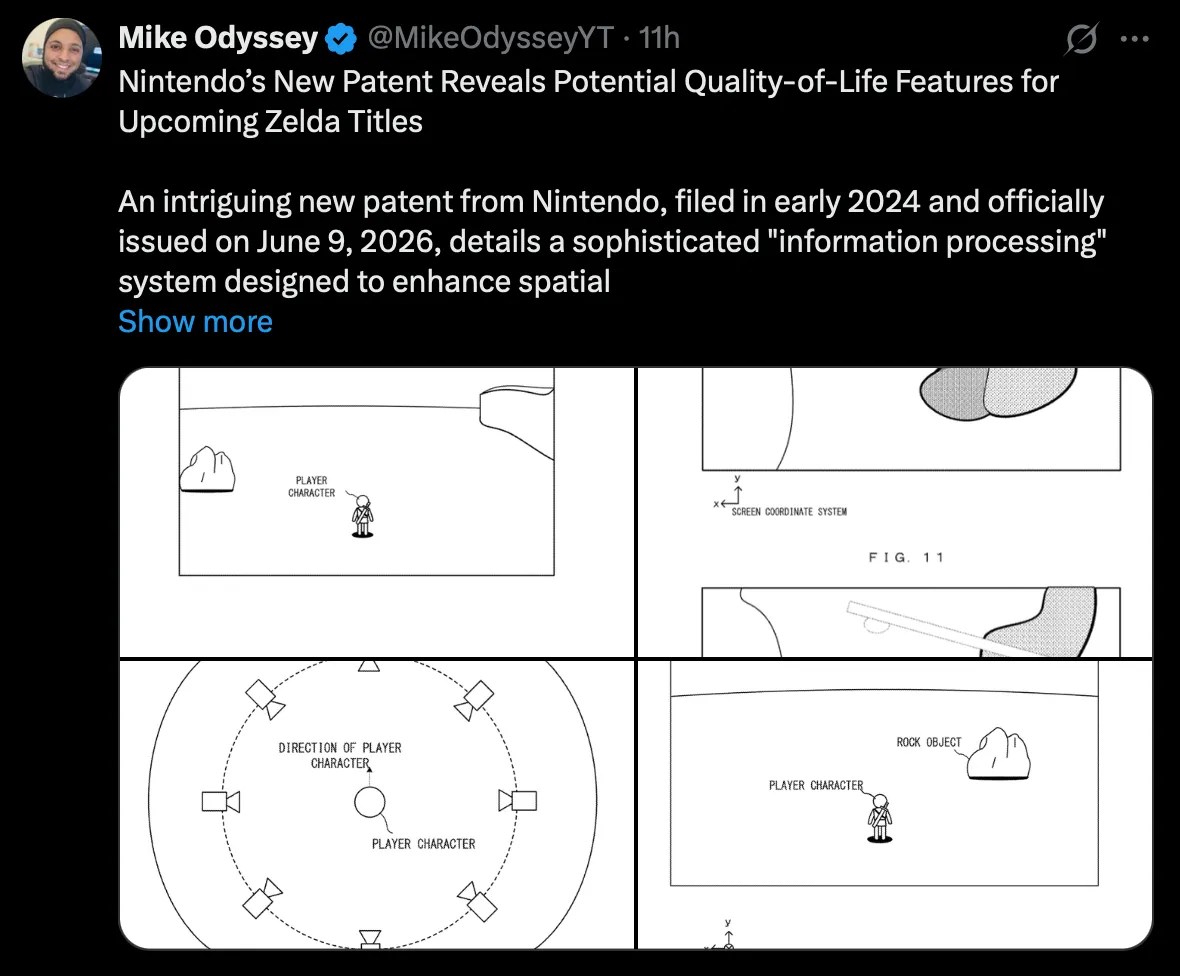
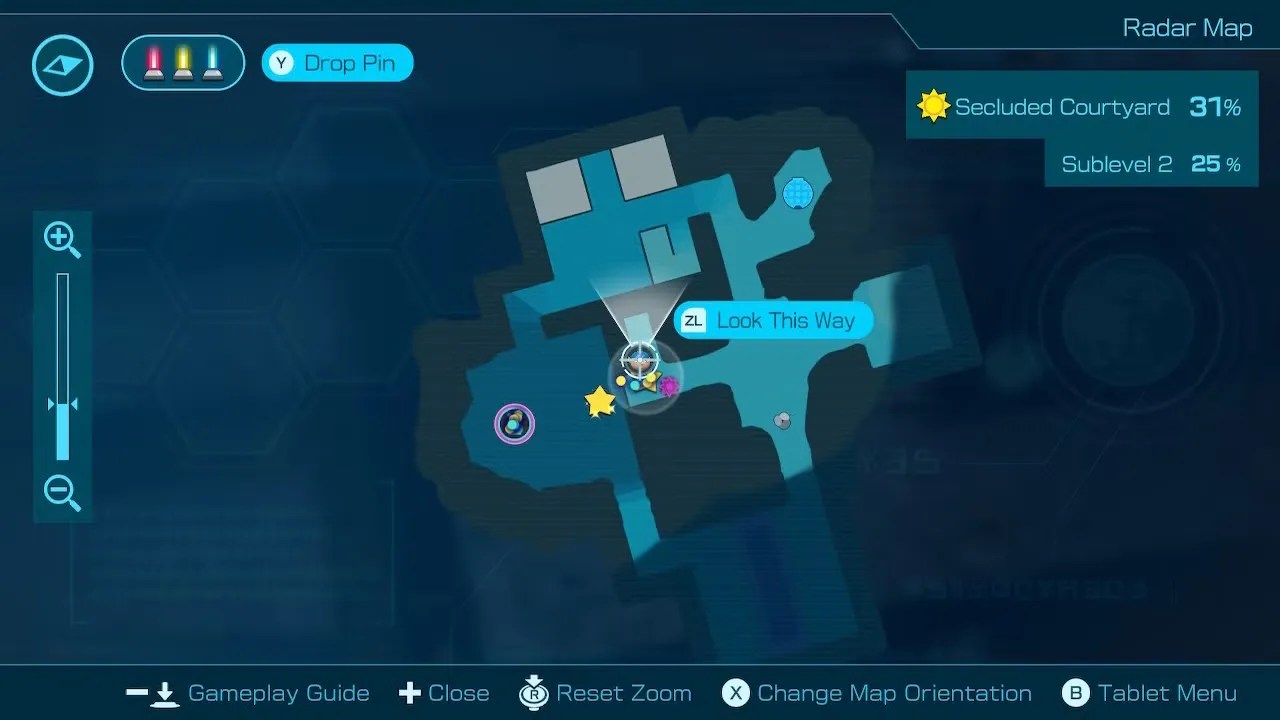
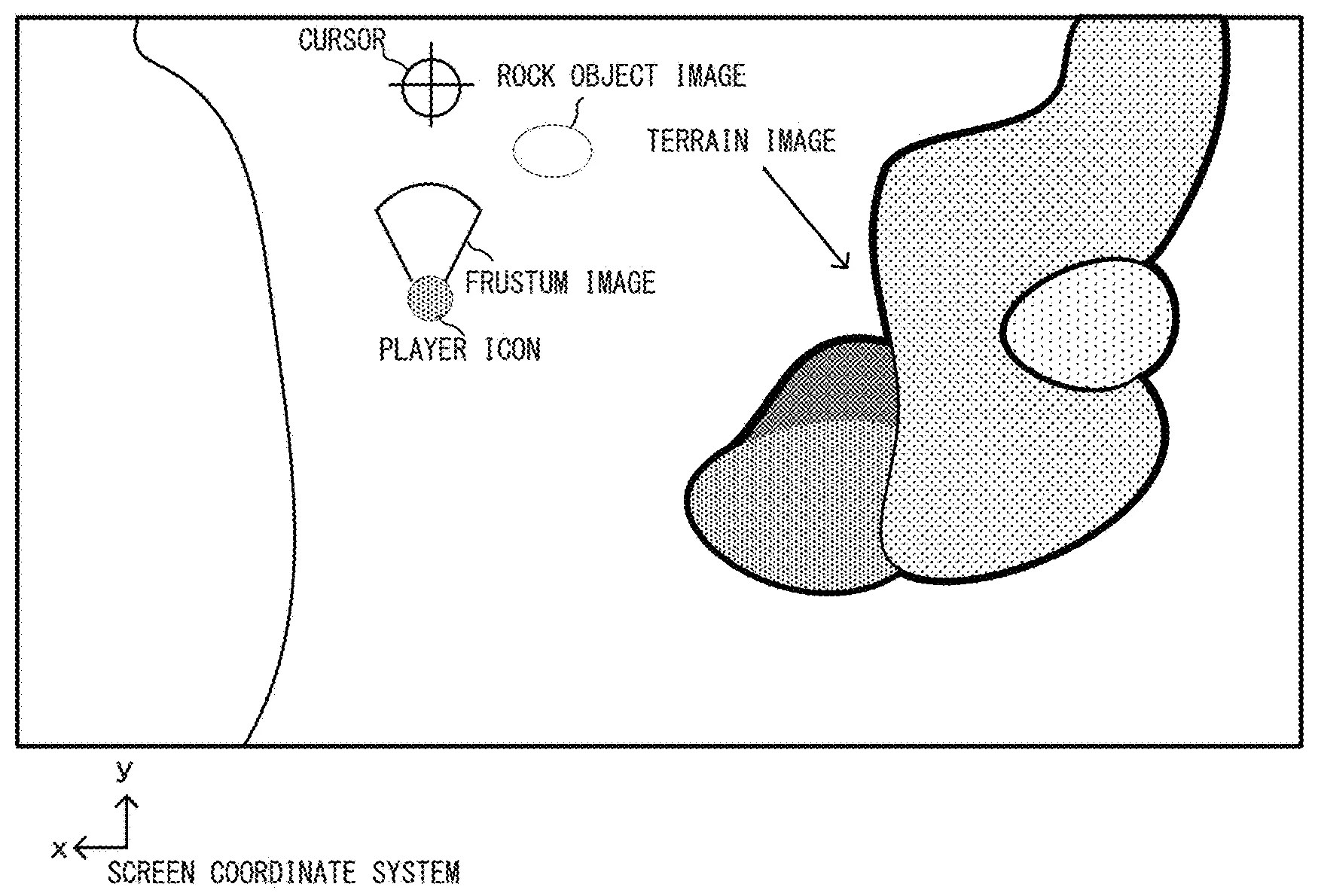
The patent cited by Mike Odyssey (img above) isn’t about the Ocarina of Time remake as he boldly claimed, but Pikmin 4’s “Look This Way” feature (imgs below). It was originally filed in Japan in February 2023—before the game was released—therefore a swordsperson is used in the patent drawings to prevent leaks.
Does Mike Odyssey actually play Nintendo games or only talk about them? He surely kept misidentifying games in patents. His YouTube channel is filled with AI slop, so these patent and trademark fibs are probably AI generated too. Past debunks here.
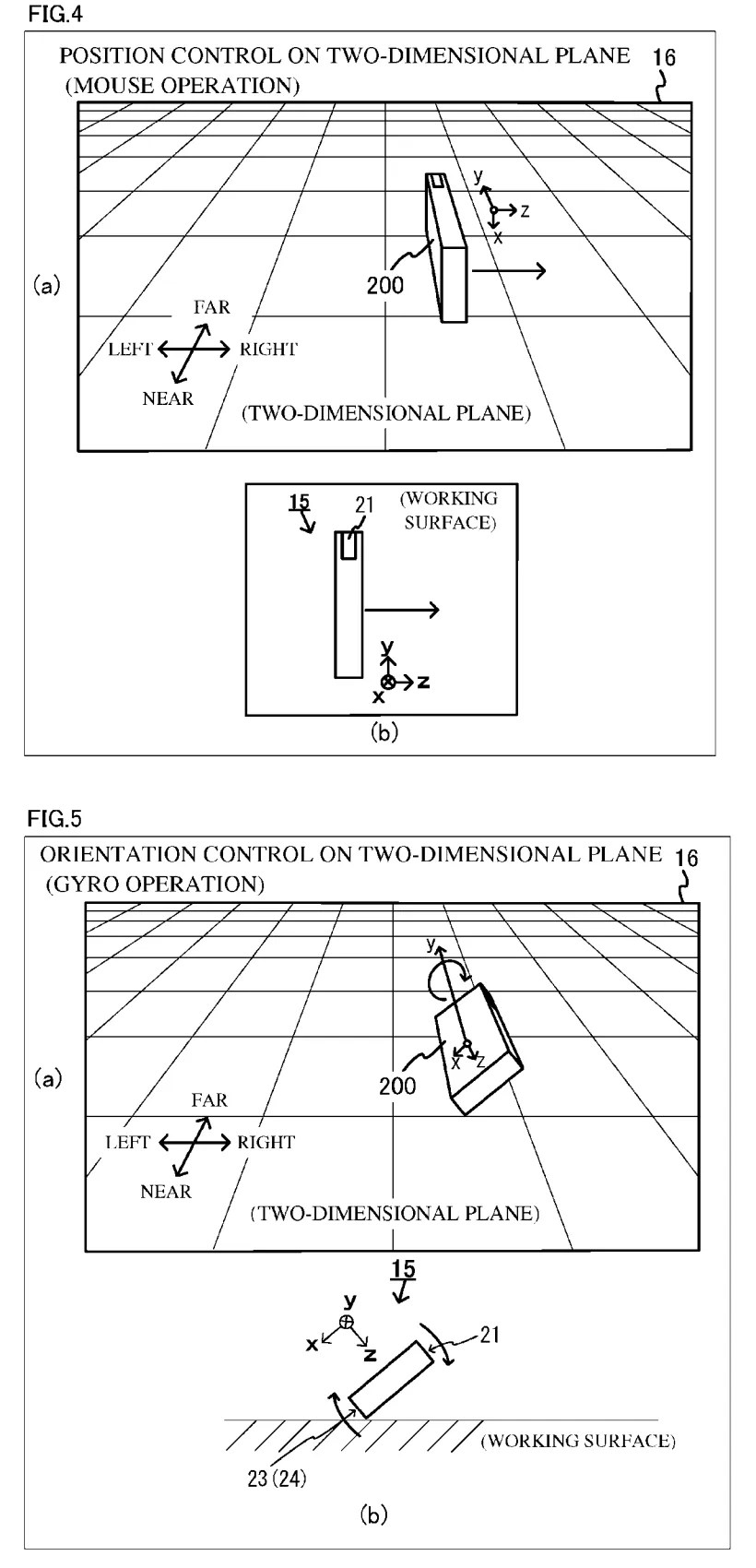
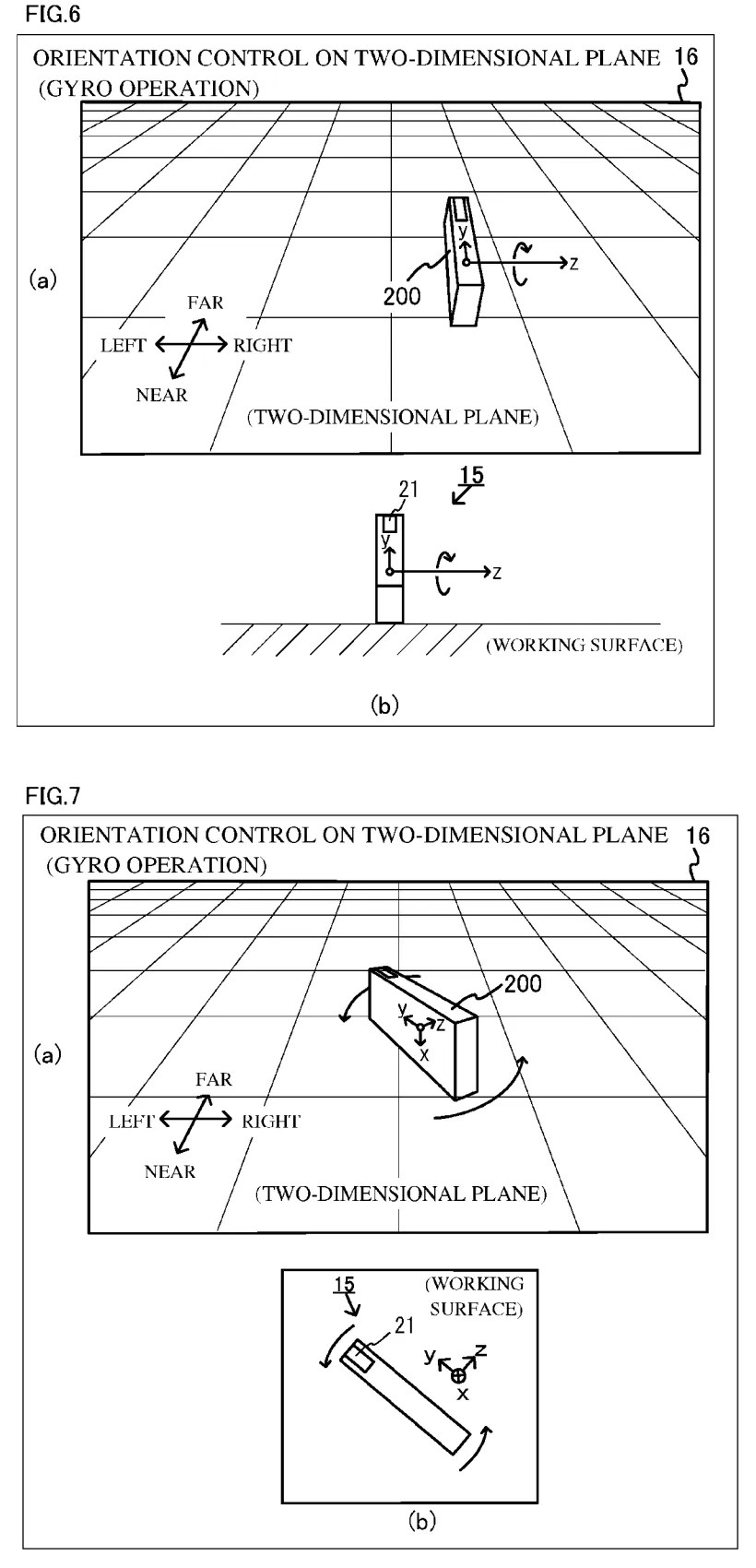
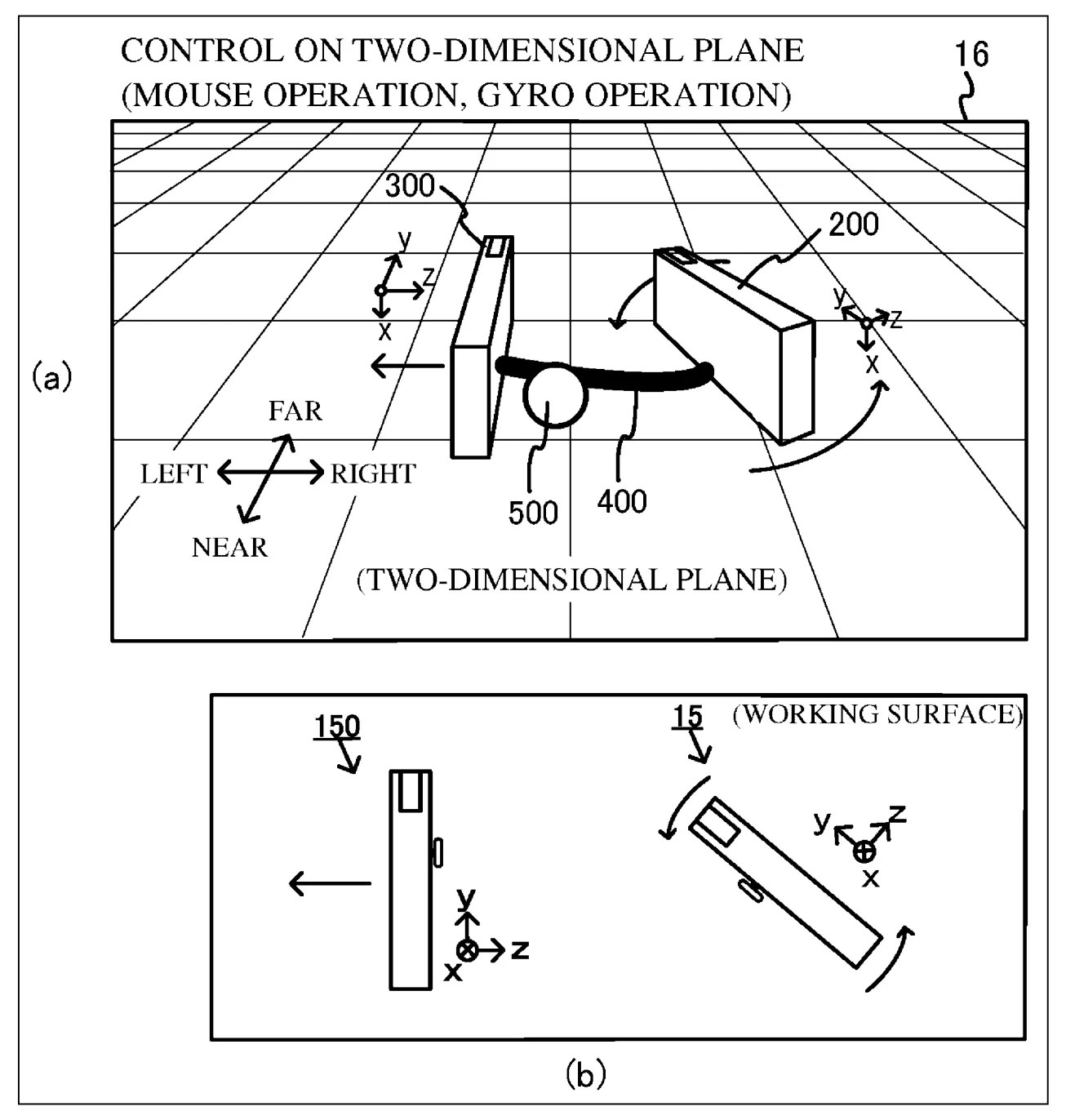
In a new patent application, Nintendo posits that the Joy-Con 2 is a 5-DoF controller, by incorporating a 2-DoF mouse sensor and 3-DoF gyro sensor (imgs 1-2). The height of the 2D plane can also be altered by the analogue stick or buttons, making it a 6-DoF equivalent (but Nintendo doesn’t call it that).
More complex object manipulation can be performed with the combined input from two Joy-Cons (img below).
![Excerpt from patent application US 20260175128: [0057] As shown in FIG. 4, first, a relative velocity vector RelV is calculated based on the velocity vector LV of the virtual listener L and the velocity vector SV of the movable object S. The velocity vectors LV and SV have velocity components in the axis directions in the three-dimensional virtual space. Specifically, RelV is calculated based on the following formula (1). [00001] RelV = SV - LV (1) [0058] Next, the velocity at which the movable object S goes away from the virtual listener L is calculated. Specifically, a vector SL from the position P1 of the virtual listener L to the position P2 of the movable object S in the virtual space is calculated, and a component Vsl in a direction along the vector SL of the relative velocity RelV is calculated. Specifically, Vsl is calculated based on the following formula (2). [00002] Vs] = RelV .Math. NSL (2) [0060] Next, a correction value CV obtained by multiplying the calculated direction component Vsl by a coefficient Ratio set in advance is calculated. Specifically, the correction value CV is calculated based on the following formula (3). [00003] CV = Vsl × Ratio (3) [0062] Accordingly, in the exemplary embodiment, the correction value CV is decreased at a decrease rate according to the distance D between the virtual listener L and the movable object S. For example, the decrease rate is calculated based on the following formula (4). [00004] decreaserate = POWER (COEF, -D) (4) [0064] Then, an attenuation reference distance CD is calculated by subtracting the correction value CV decreased at the decrease rate calculated using formula (4) from the distance D. Specifically, the attenuation reference distance CD is calculated based on the following formula (5). [00005] CD = D - (CV x decreaserate ) (5)](https://ninpatentswatch.com/wp-content/uploads/2026/07/bsky-3mpnlniflyk2o-p2-m1.webp)