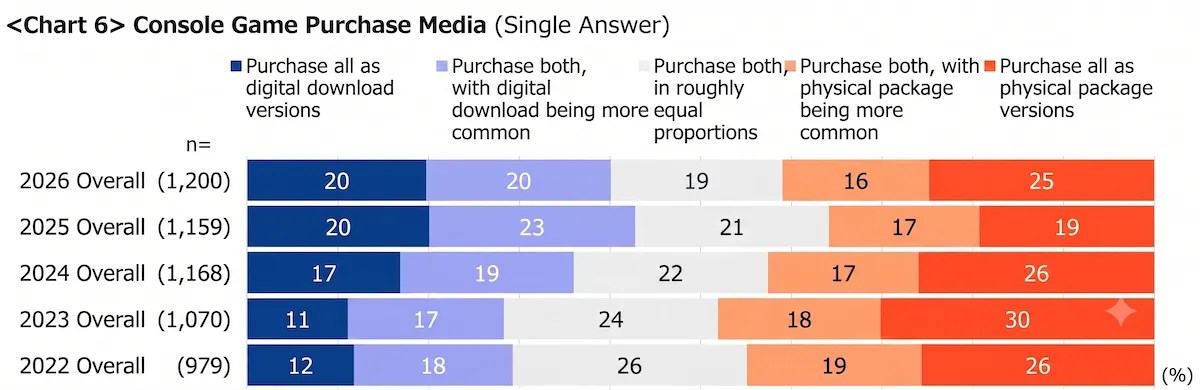
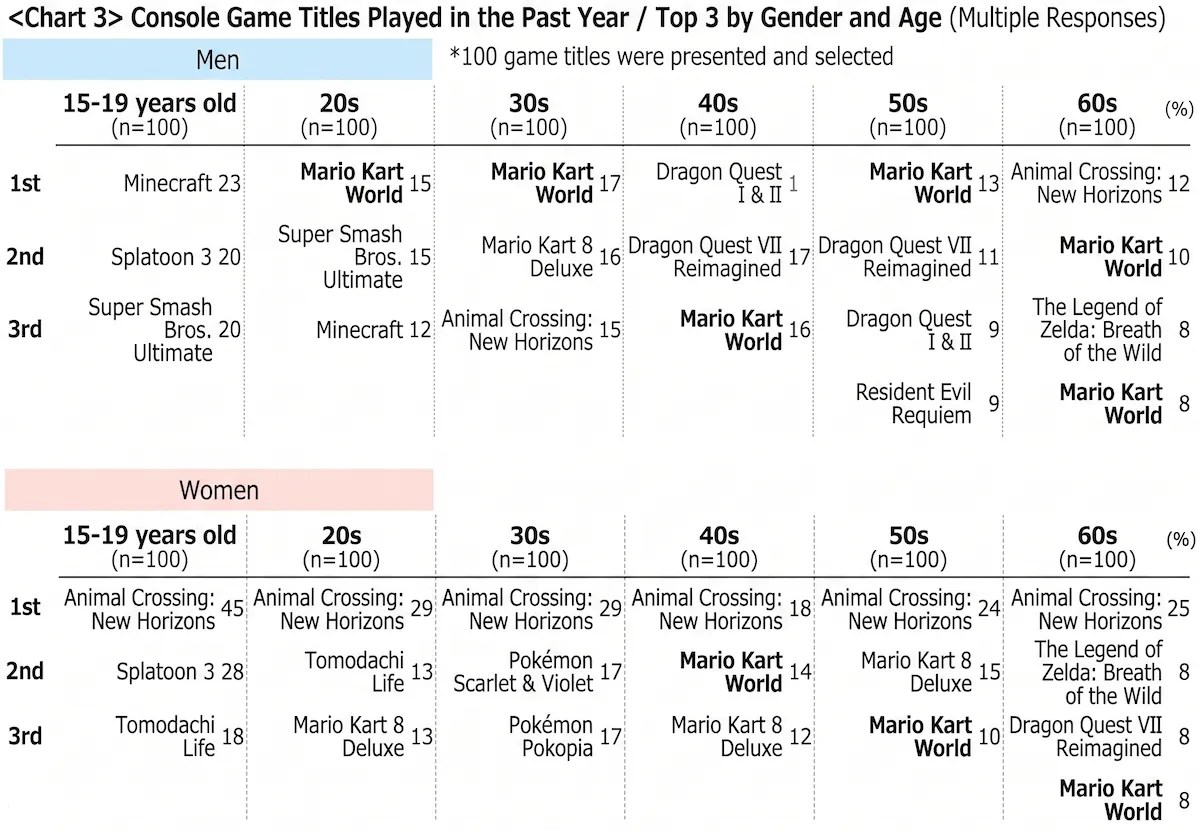
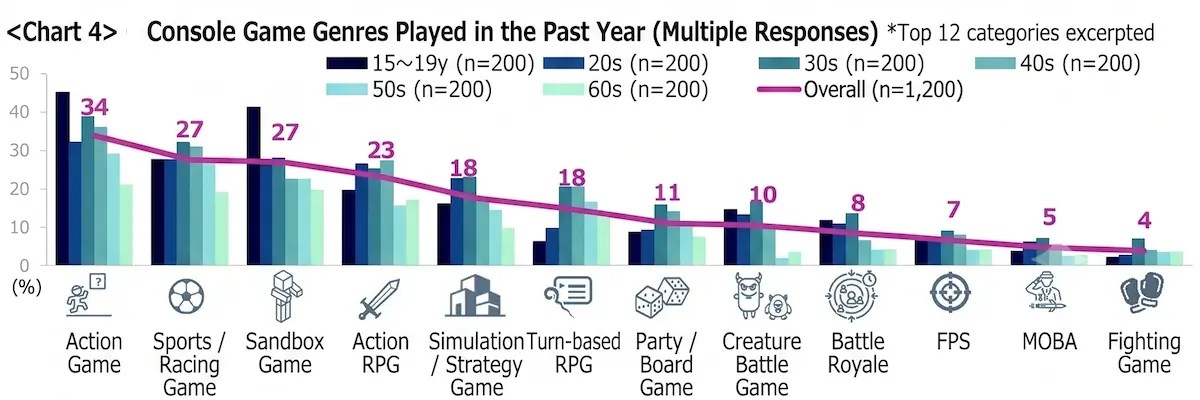
Unlike the amateurs at Valve (jk), Nintendo kept on converting cash into inventories (img 1) to counter the rising component costs. According to the company’s latest balance sheets, at the end of Q1 FY2026-03, the value of inventories officially crossed over 600B yen for the first time, to the stratosphere of 618B (~3.92B USD; img 2).
As a reaction to the news of yet another East Asian developer releasing a game based on generative AI, I’m offering an explainer (not advocacy) for western gamers. It isn’t exactly a great mystery why the general—but not universal—attitude toward AI is more positive in East Asia:
Structural labor shortage
Financial windfall from AI boom
Data centers not as concentrated in poor neighborhoods
Stronger labor protection
1. Crude birth rates in East Asia are among the lowest in the world (Reuters/CDC):
Taiwan: 4.6 births per 1k population Korea: 5.0 China: 5.6 Japan: 5.7 US: 10.7
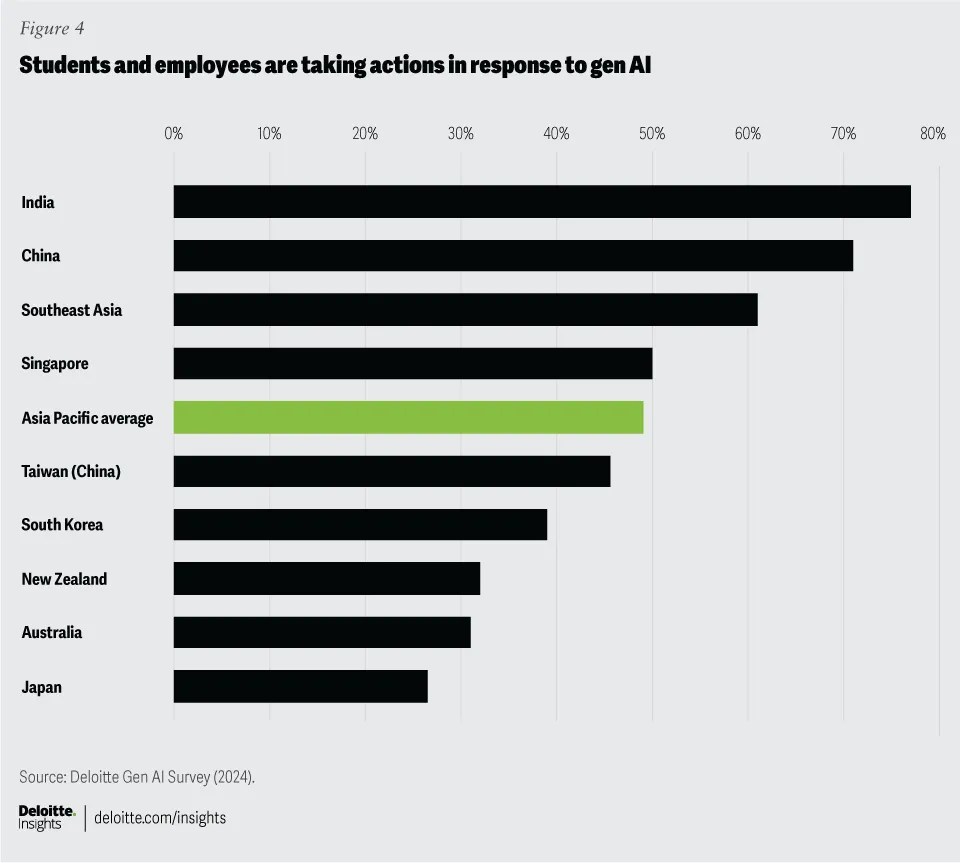
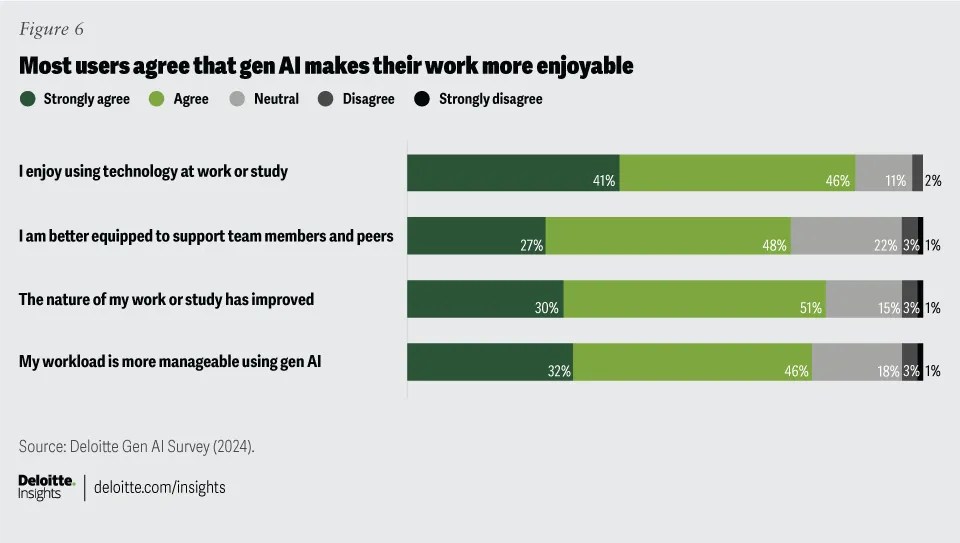
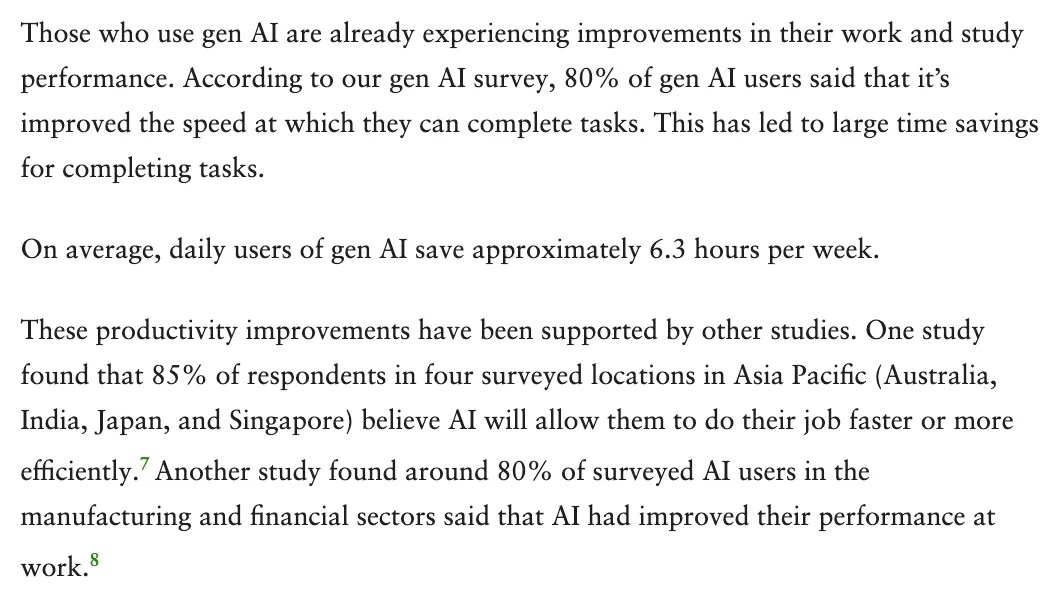
Due to the structural labor shortage, employees look to AI to improve their working conditions (Deloitte, imgs below).
2. Workers at SK Hynix, TSMC, and other suppliers are getting record bonuses. Due to high stock ownerships in Korea and Taiwan, plus spending from the workers and stockholders, the AI windfall spills over to the rest of the population. So much so that the Bank of Korea warns of inflation.
Korea: 64% of trading volume by retail investors; 1 in 3.5 citizens owns stock (KSD) Taiwan: 54% (TWSE) US: 18% (SIFMA)
Since a large number of East Asians directly or indirectly benefit from the AI boom, it may influence their perspectives.
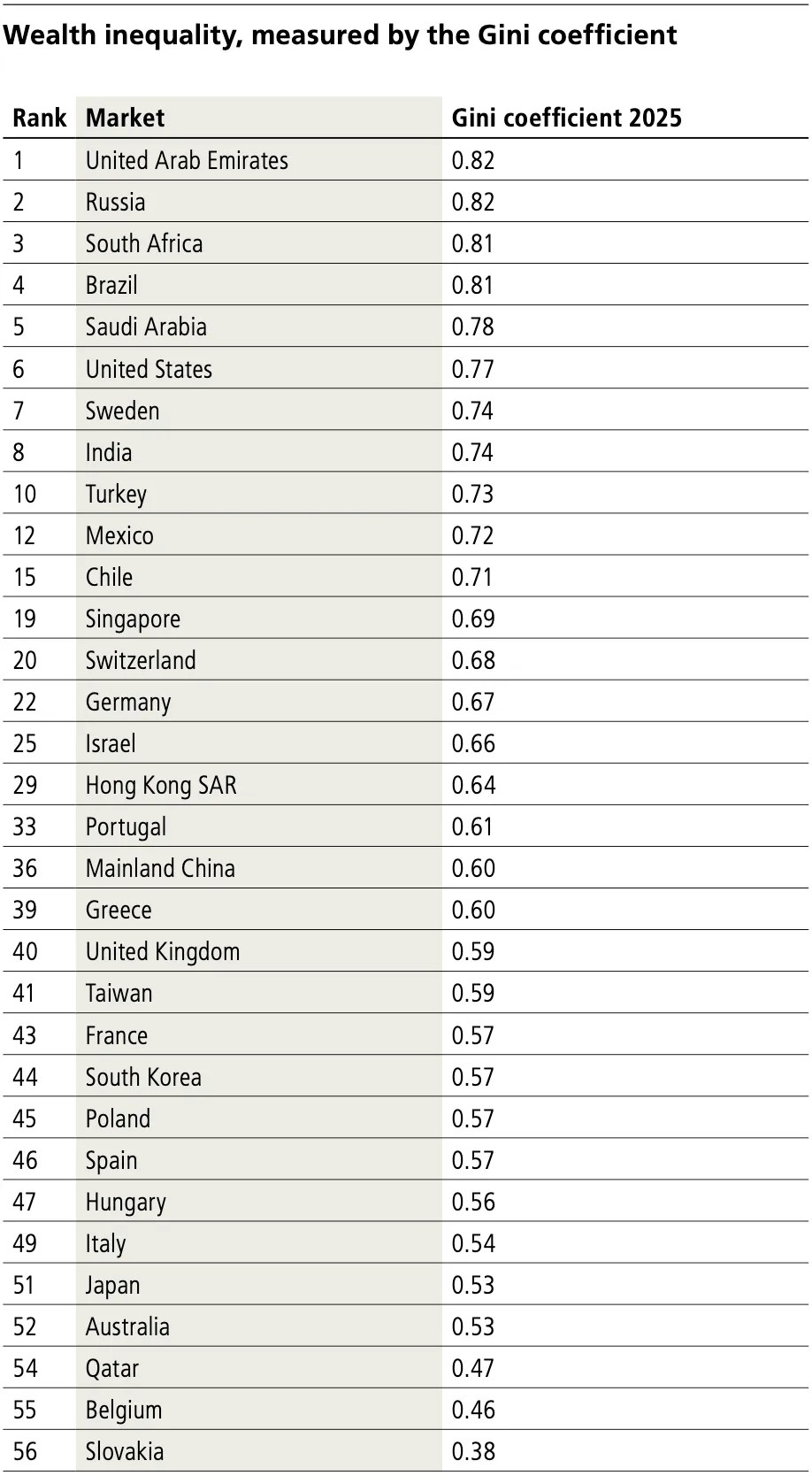
3. Wealth inequality is higher in the US than in East Asia (UBS, img below). That, plus the weak transit and discriminative financing, low income Americans live more segregated. Unsurprisingly these poor neighborhoods are often targets for data center development. This is less of a concern in East Asia.
4. Japan already has stringent labor protection (seiri kaiko). Firing for AI is unlikely to pass the “four factor test”. In China, there are arbitration and court rulings (Beijing; Hangzhou) that specifically block firing for AI, and CAC provisions that protect workers from “algorithmic recommendation”. Korea also has regulations regarding “automatic decisions” for employment/recruitment (PIPA; AI Framework Act).
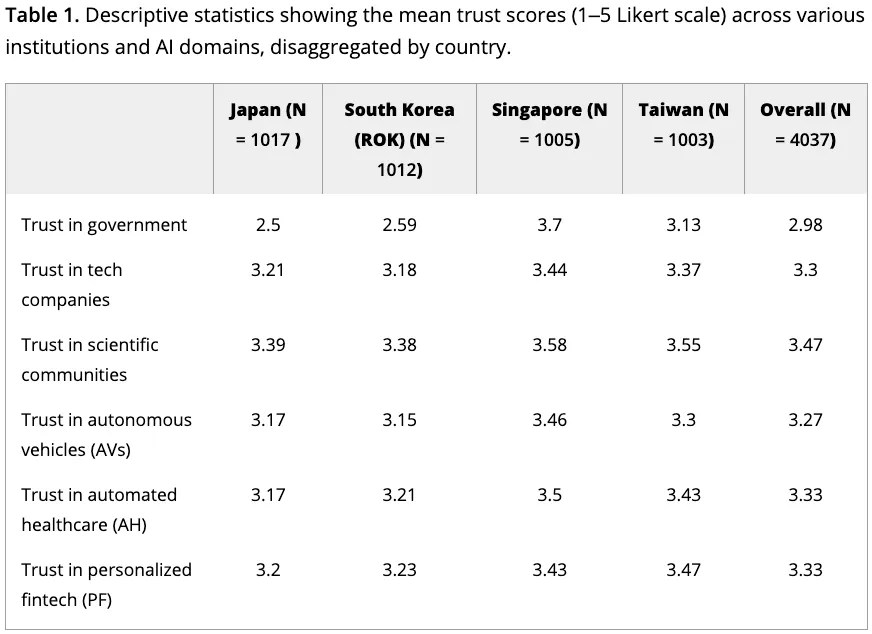
Bonus point: It may be hard for some western minds to comprehend, but many East Asians trust tech companies more than their governments (ntu.edu.sg, img below).
Again, this is only an explainer, and I’m not suggesting that western gamers shouldn’t impose our own economic insecurity on Easter Asian developers. We are the consumers, and can freely let our preferences heard. Just know that choices like the AI Ryza are born from a different economic reality than ours.
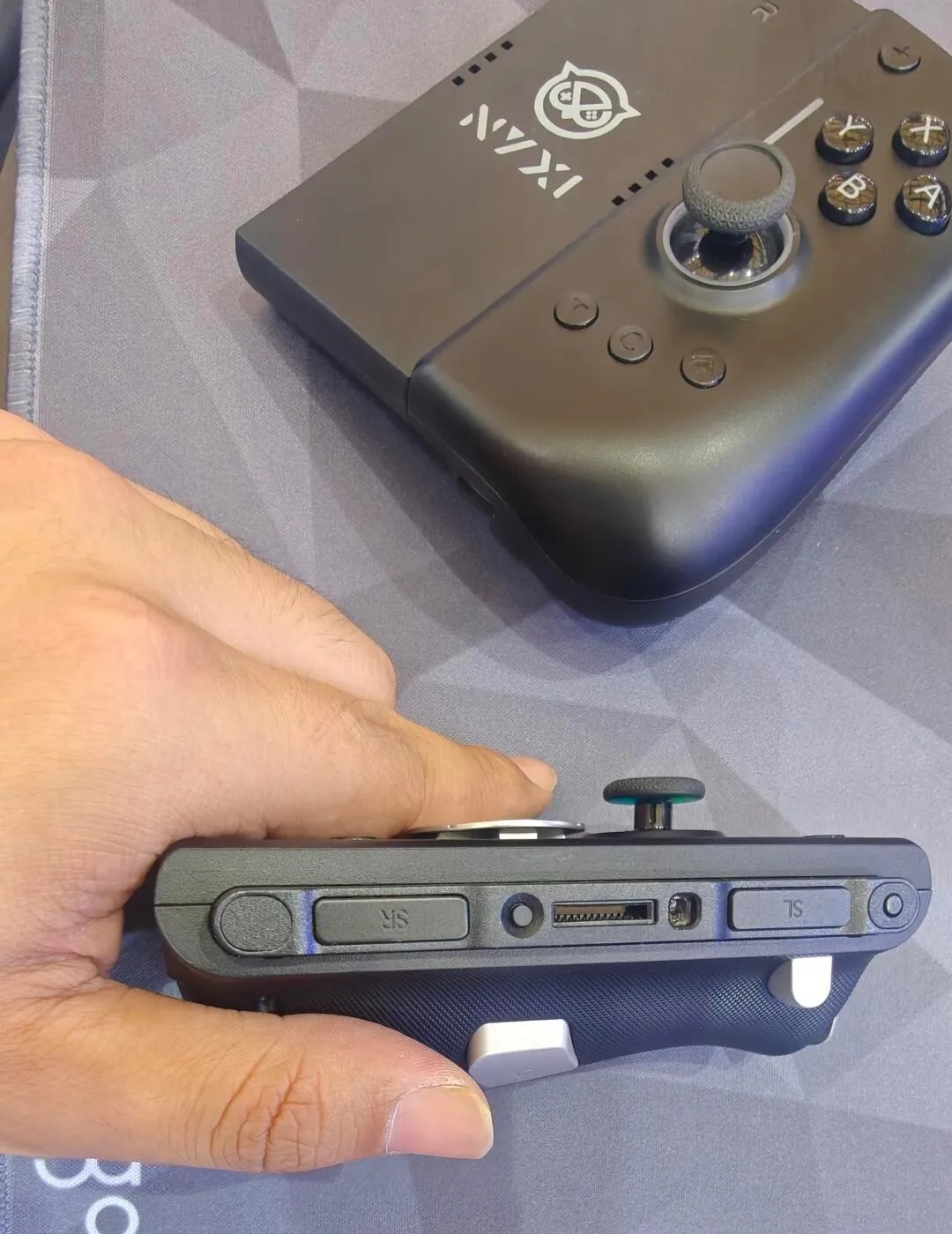
At ChinaJoy 2026, NYXI offer hands-on demo of the Hyperion 3 Ultra. They claim that the Ultra is a “full-featured” Switch 2 Joy-Con replacement: HD Rumble 2, mouse mode, 9-axis motion, NFC, and GL/GR/C buttons. The visitor reports that I saw were very positive, except the ergonomics of mouse mode (img below). Its bootleg HD Rumble 2 can reproduce fine vibrations, and also make sound. Since Hyperion is larger than the genuine Joy-Con 2, NYXI needed to tune the rumble strength for better hand feel.
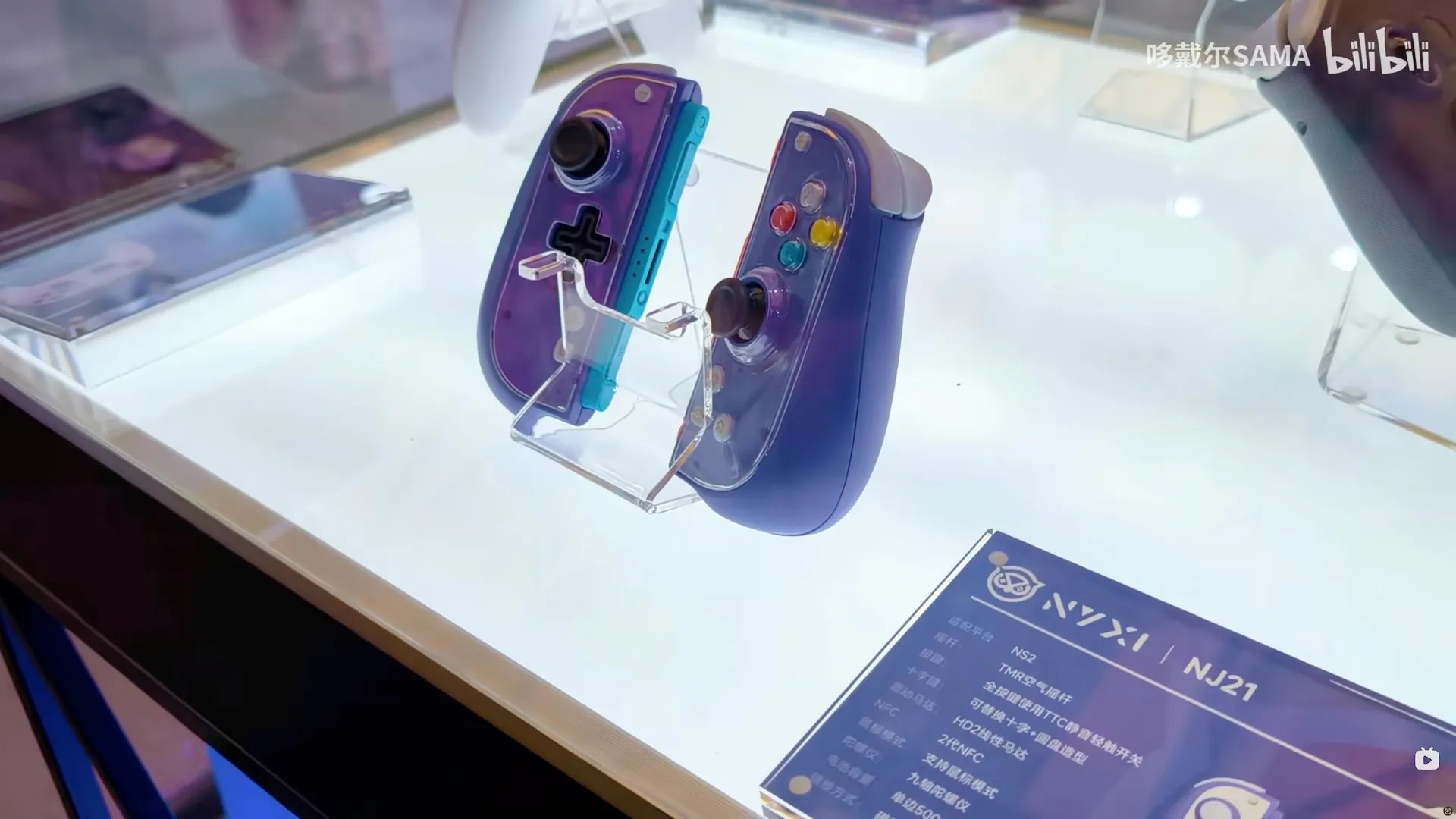
Interestingly, the company also gave a preview of yet another Joy-Con replacement. It has all the features of Hyperion 3 Ultra, but is smaller and uses “silent” switches (img below). No words on the release date yet.
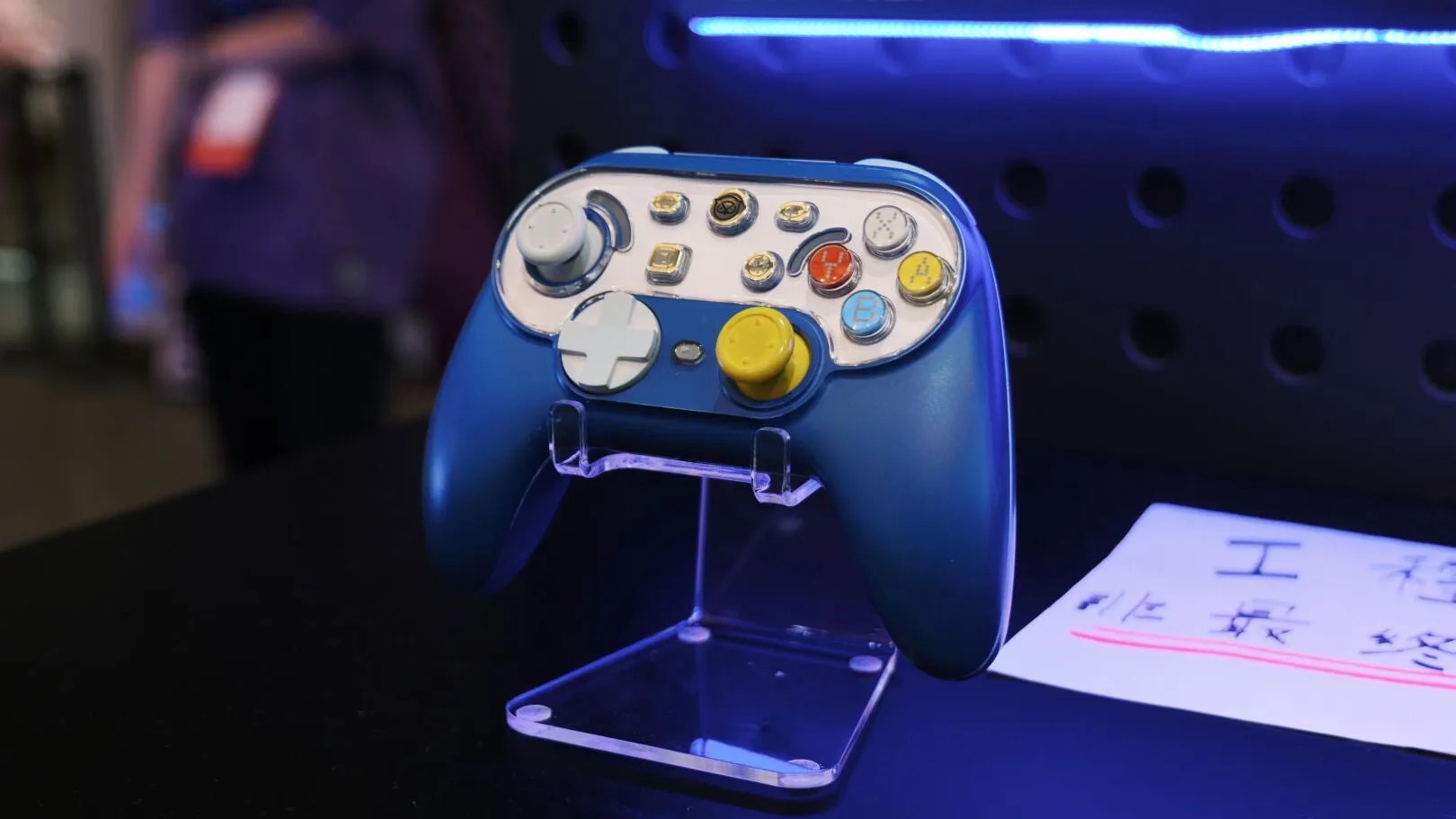
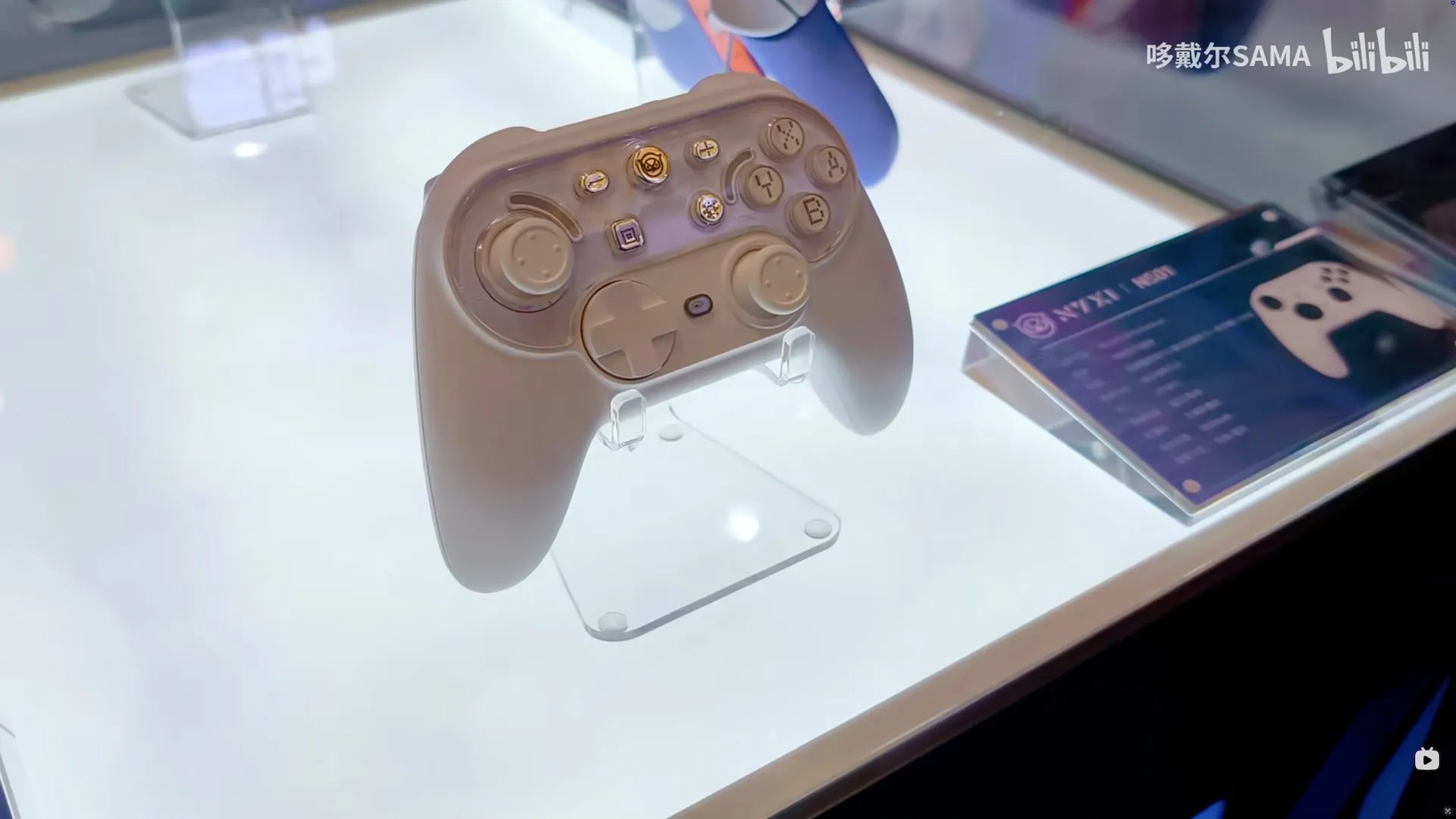
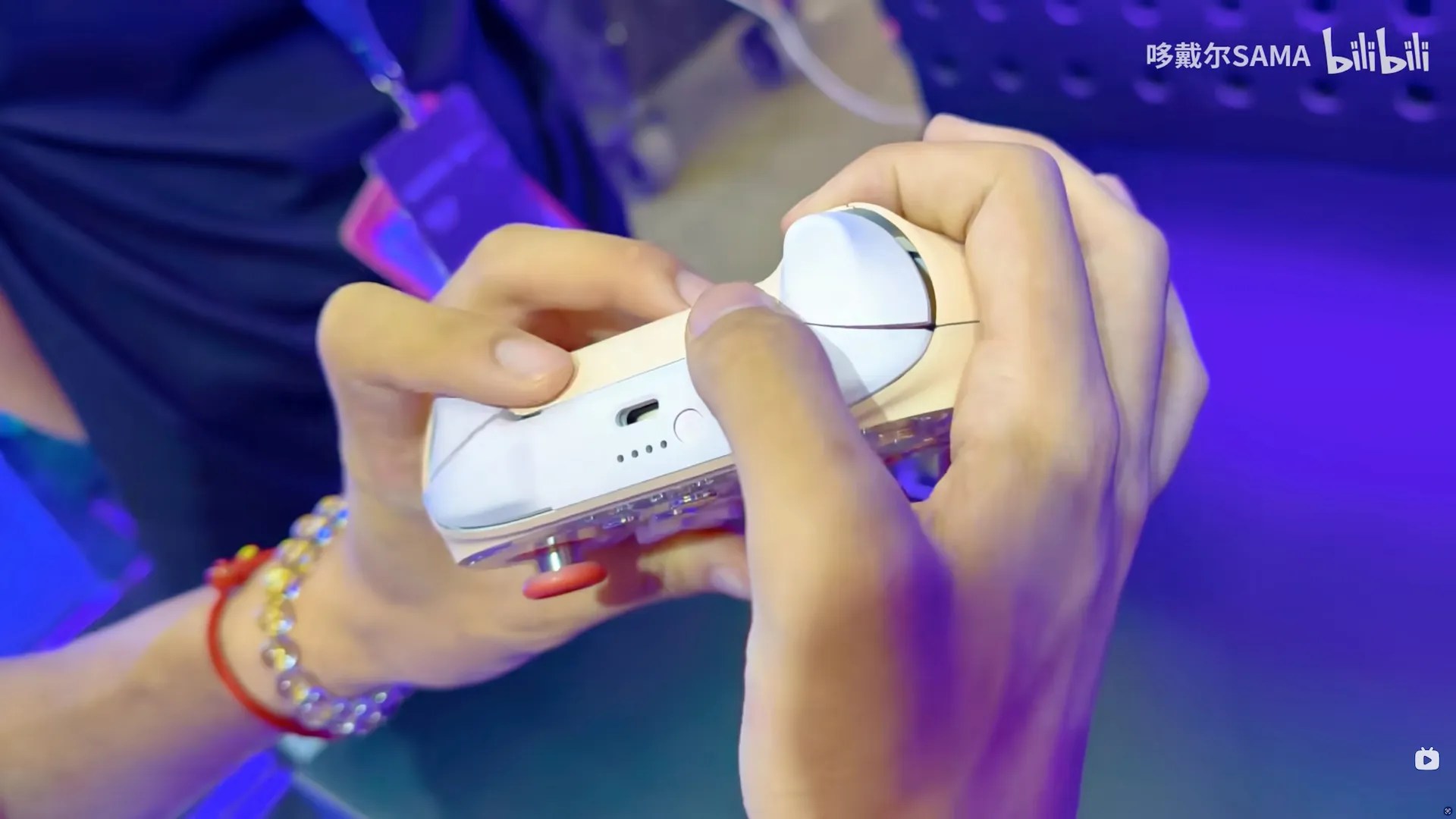
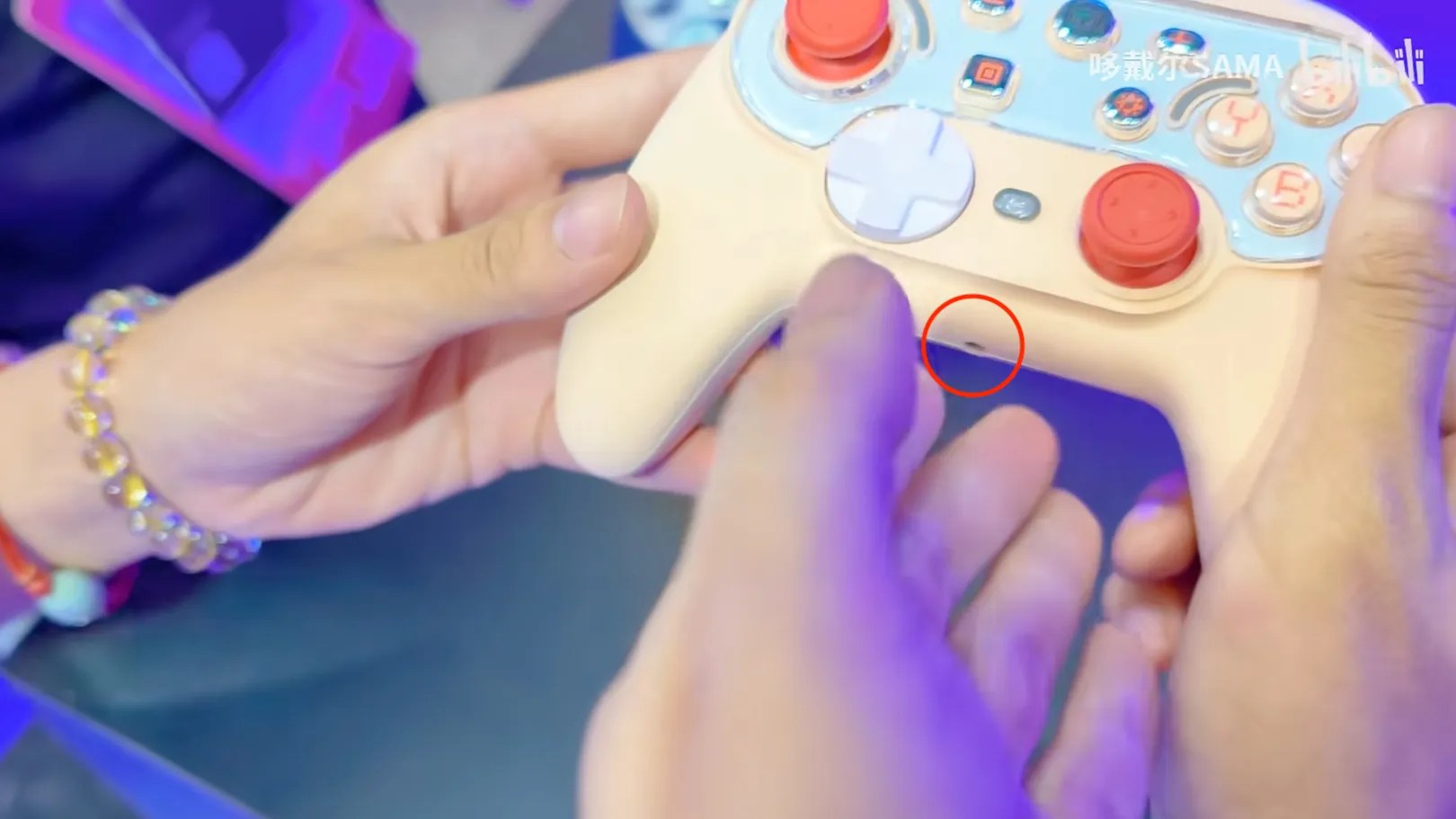
And there’s something unexpected: NYXI showed off the first true Pro Controller 2 replacement (imgs 1-3 below), featuring HD Rumble 2 and even an audio jack (img 4). These are engineering samples, so the final product may vary slightly. They aim to release it in September, but the rep didn’t sound very confident though.
[Sidebar] Alps Alpine is now selling the new rumble actuator to accessory makers, enabling them to replicate HD Rumble 2. However, 3rd parties still need to reverse-engineer the HDR2 software for it to work properly. Judging from Mobapad founder’s Bilibili video on 07-21, the company is still working on an HD Rumble 2 solution.
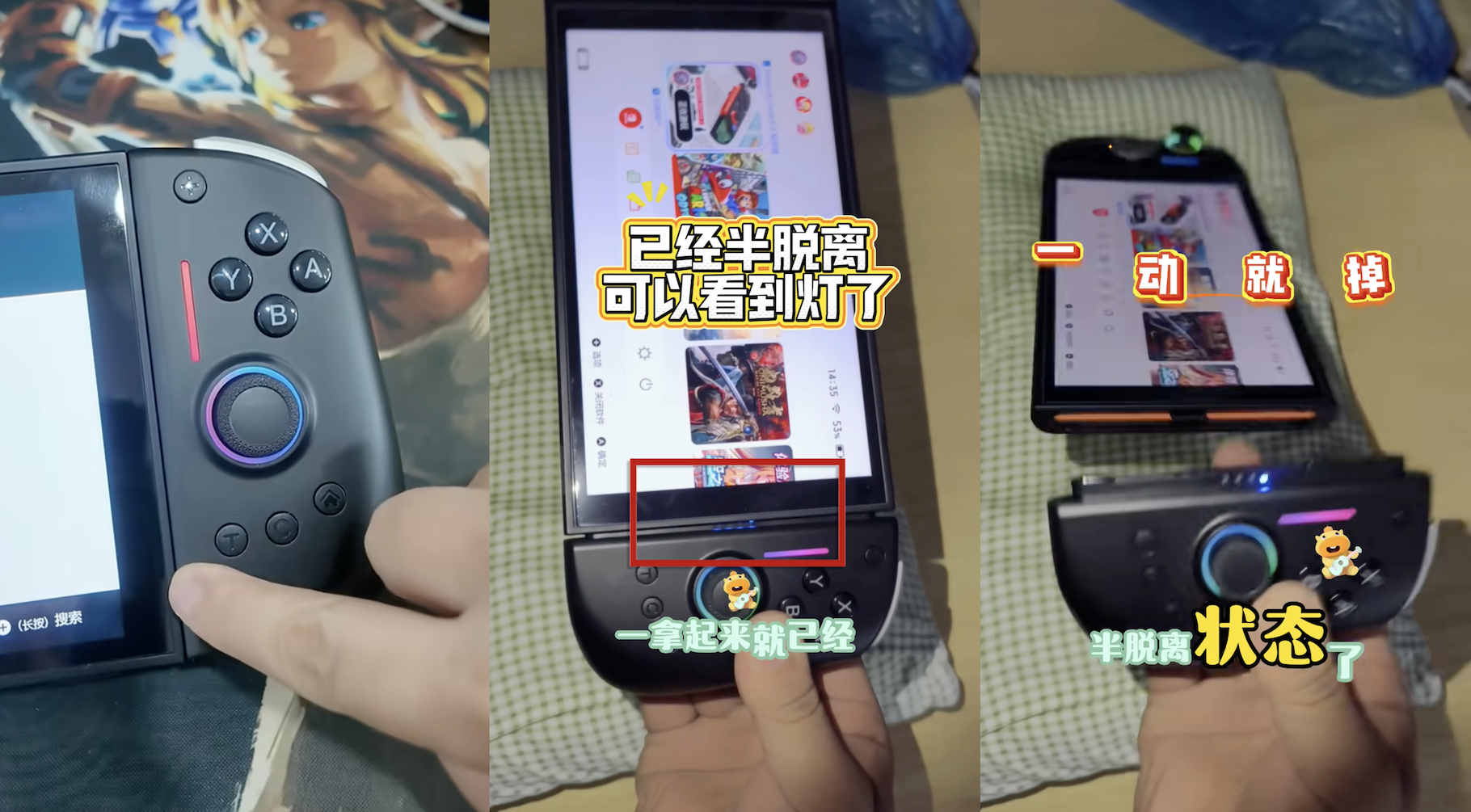
[Update on 2026-09-01] Some NYXI Hyperion 3 Ultra owners reported that it’s prone to fall off, because there is no seam between the controller and console. 🤦 In addition, some said that its bootleg HD Rumble 2 feels duller than the real deal—“about 80% there”, according to one owner. So it seems that the quest to replicate the Joy-Con probably will go on for some time. In the time being, just buy the genuine Joy-Con 2 and add an ergonomic grip available from Jsaux, Savage Raven, Genki, MystiForge, and many other brands.
In an article regarding JAXA’s lunar base study, Nikkei Searchlight touched on a previously unknown game console planned by Casio.
According to the report, in the 1990s Casio secretly worked on using camera input for motion-controlled games (imgs below). However, the project was canceled because the technology wasn’t matured enough (Kinect didn’t come out until 2010) and Casio was also developing Loopy, which later became one of the rarest consoles ever produced.
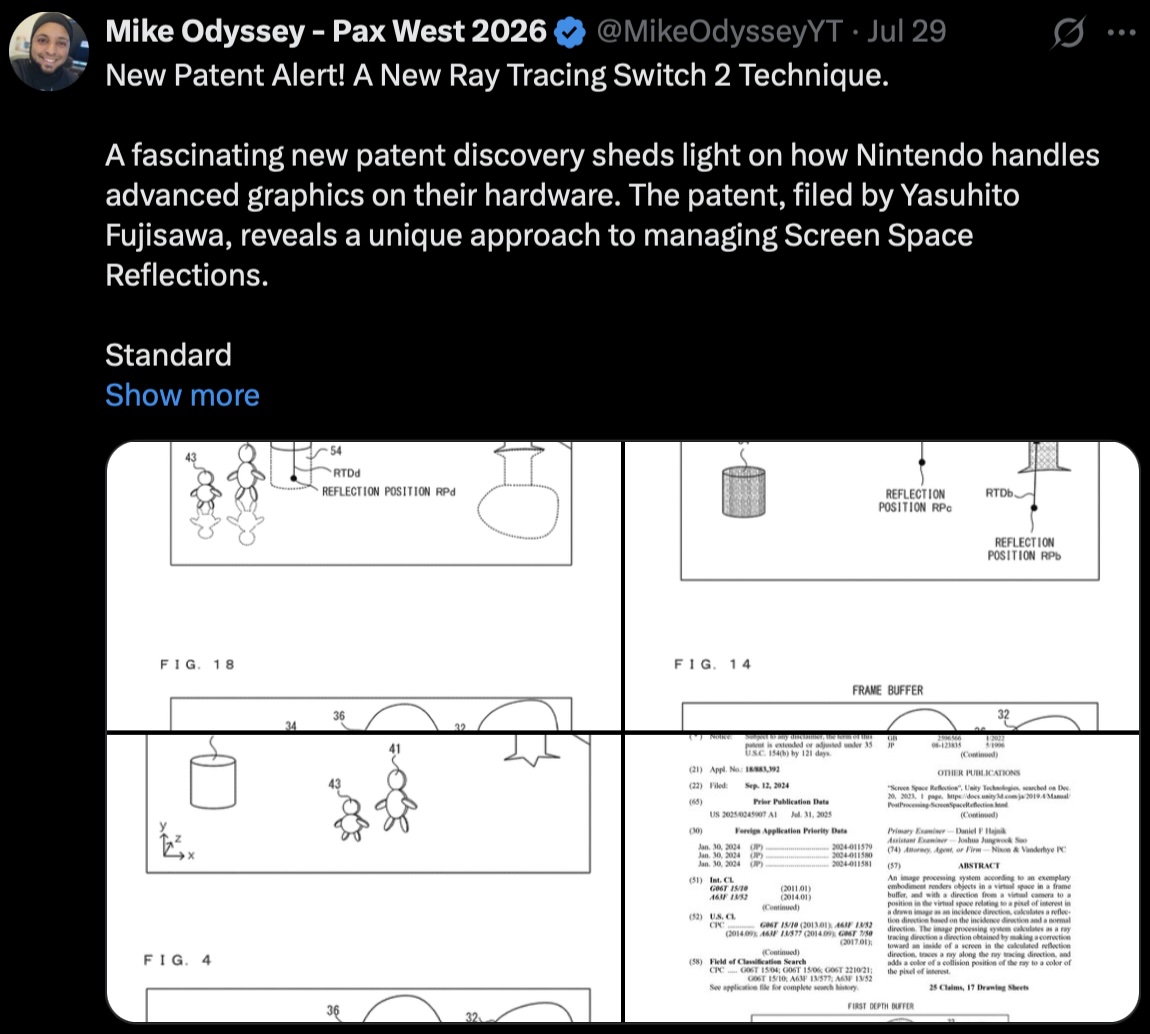
What the heck is Mike Odyssey talking about? This is a rendering technique patent for Paper Mario The Thousand-Year Door!
The application was filed in 2024-01, and published in 2025-06 (i.e., not “new”). It is one of three sibling patents about rendering reflections in The Thousand-Year Door. They cover the following:
Per-object reflection control
SSR near screen edges
Reflection for partially obscured object
Whey they were published, I didn’t find them that interesting and posted only a short overview and the source links. You can read them here.
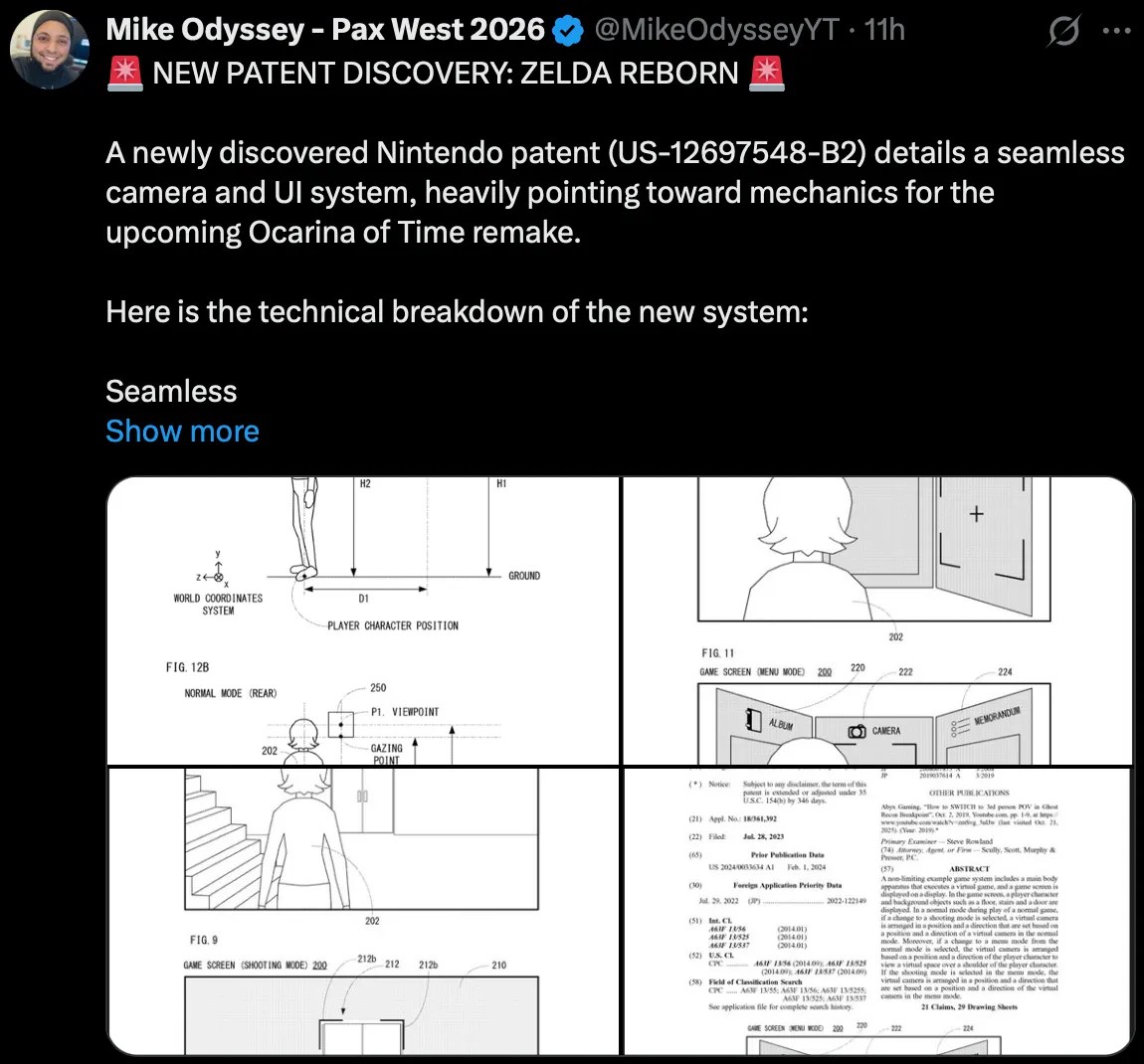
[Update on 2026-08-05; another Mike Odyssey patent fiction]
In their latest quarterly earnings call, Capcom stated that the Switch 2 price hike in Japan “has had no impact on sales” of Capcom games (“販売影響が出ている状況ではない”). → This makes sense in the short term, because Japanese consumers rushed to buy NS2 before the price hike, pulling market penetration forward.
Although physical media account for less than 10% of sales, “we are not considering compulsorily eliminating physical media” because “some users prefer physical media as collectors” (“パッケージをコレクターとして好むユーザーもいるため、無理にパッケージをなくすことは考えていない”). → It sounds like at the very least that Capcom will continue releasing collector’s editions with physical media. Will they be Switch exclusives?
[Sidebar] Pragmata reached 2.5 million units “faster than anticipated”. Capcom now aims to sell over 3 million copies.
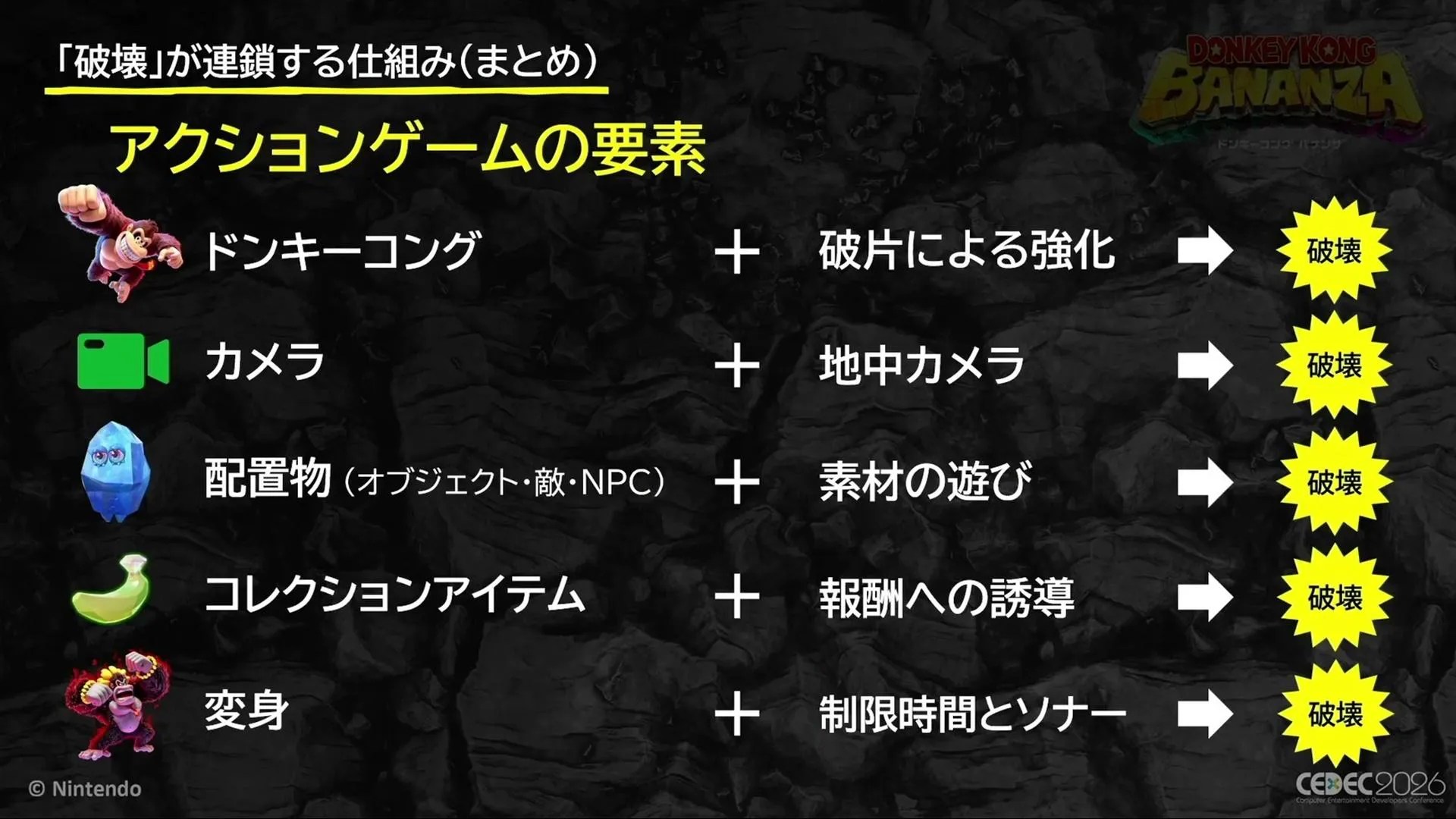
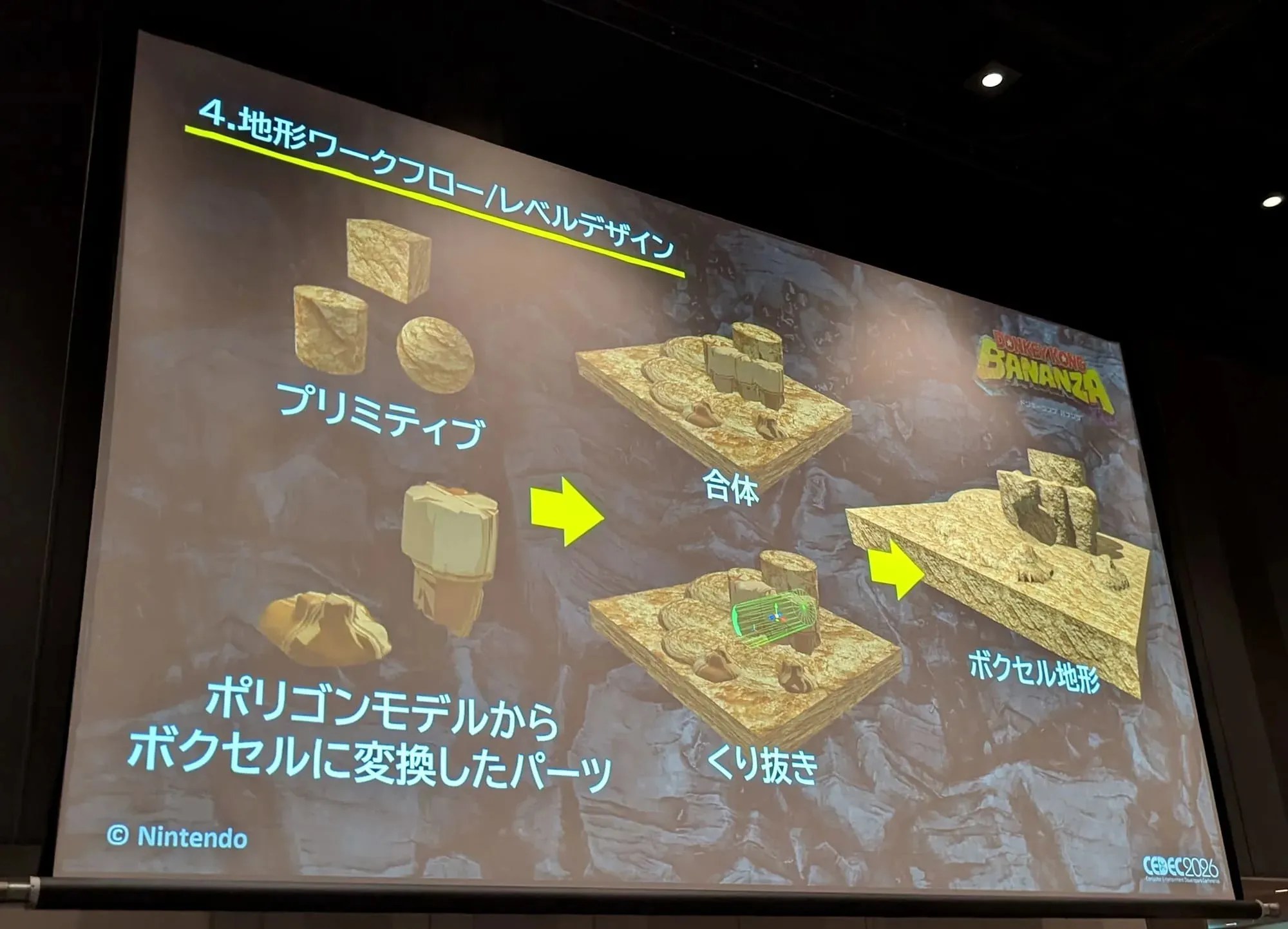
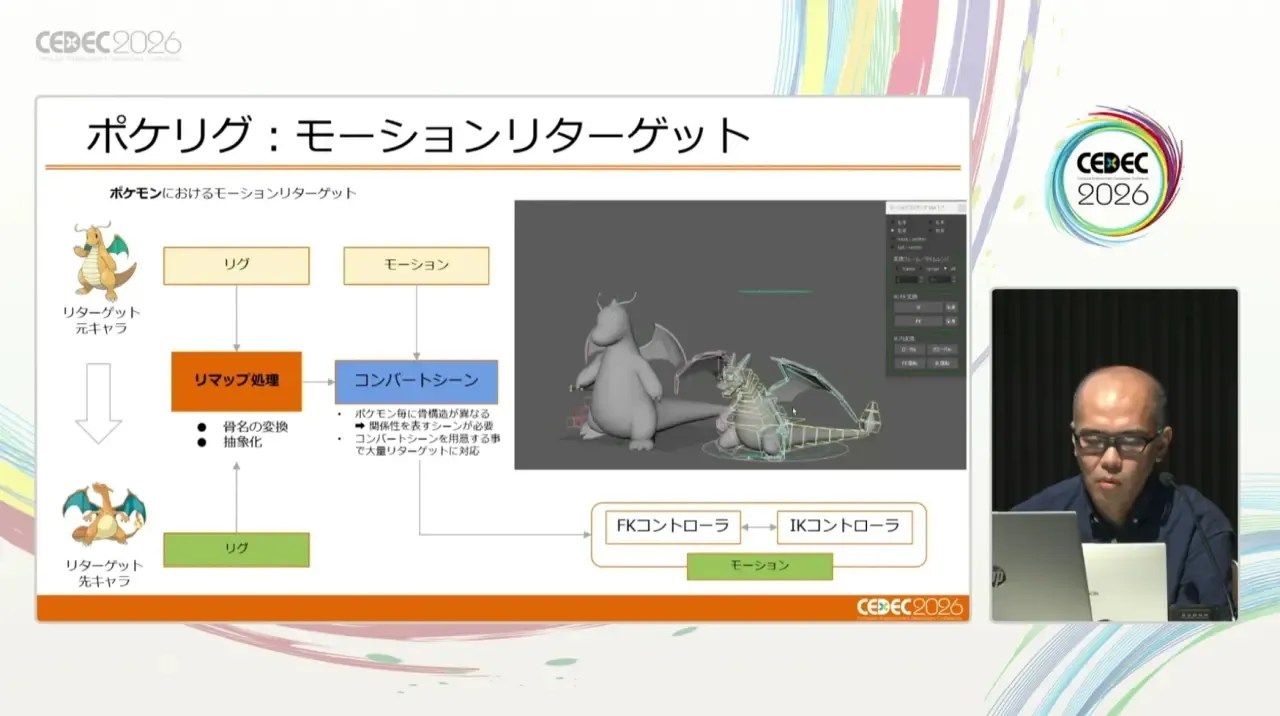
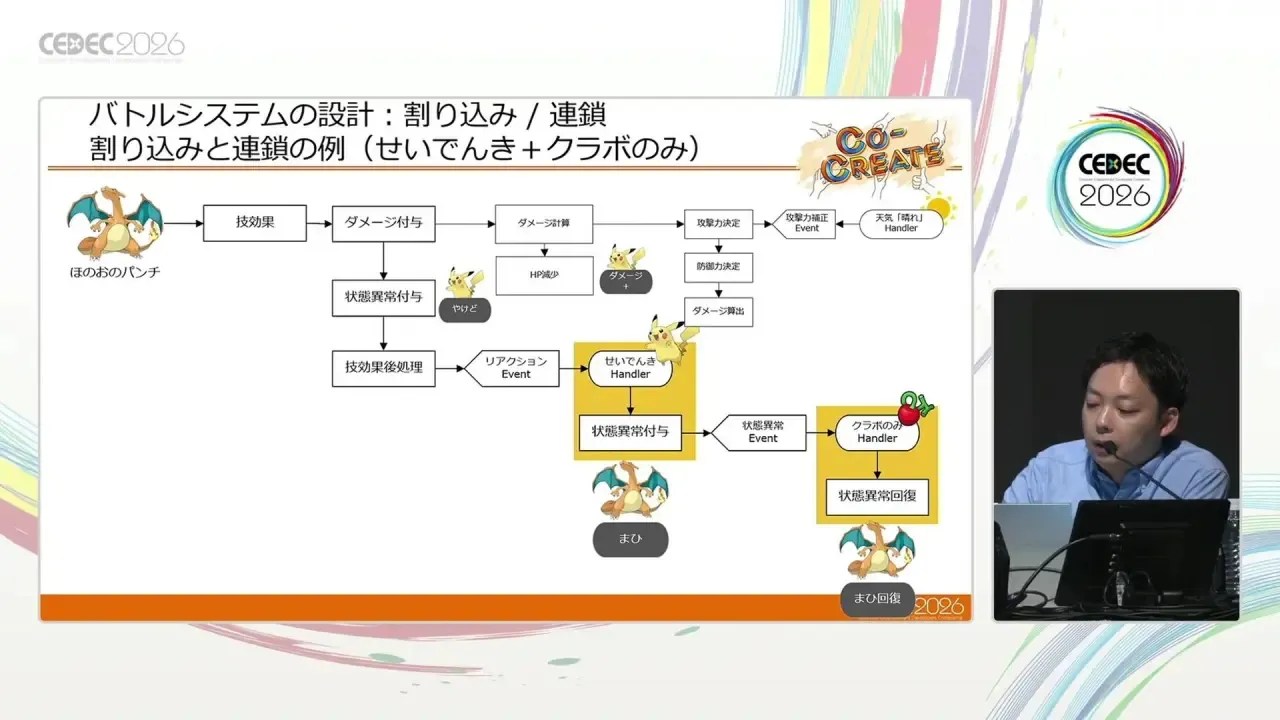
In addition to the Donkey Kong Bananza QA talk at the CEDEC 2026, there are other sessions by Nintendo and Game Freak that some might find interesting.
These two Bananza presentations are essentially expanded versions of the GDC talk in March:
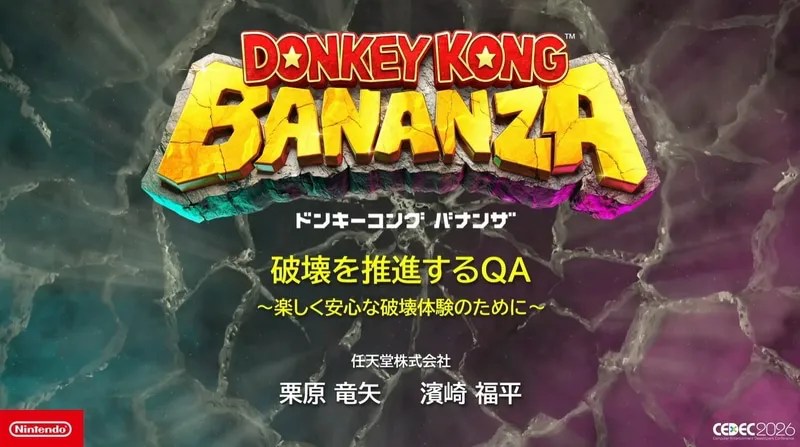
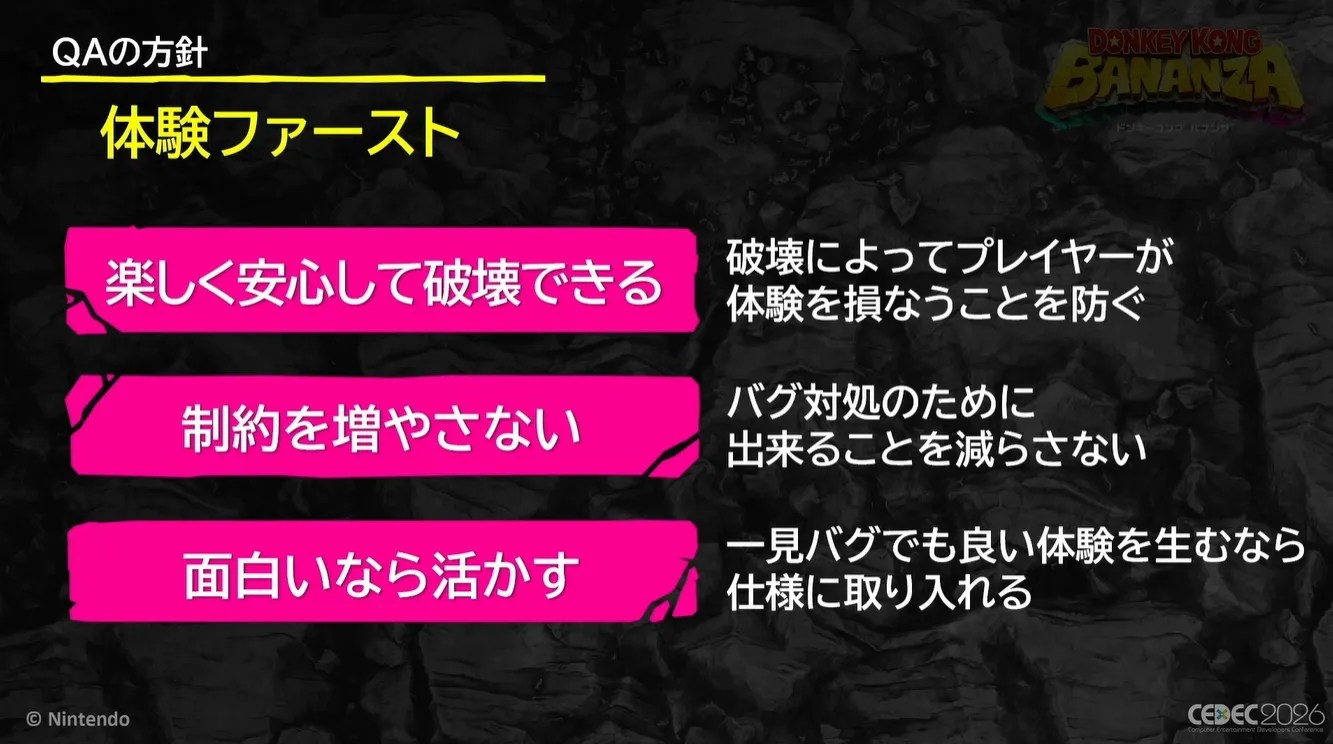
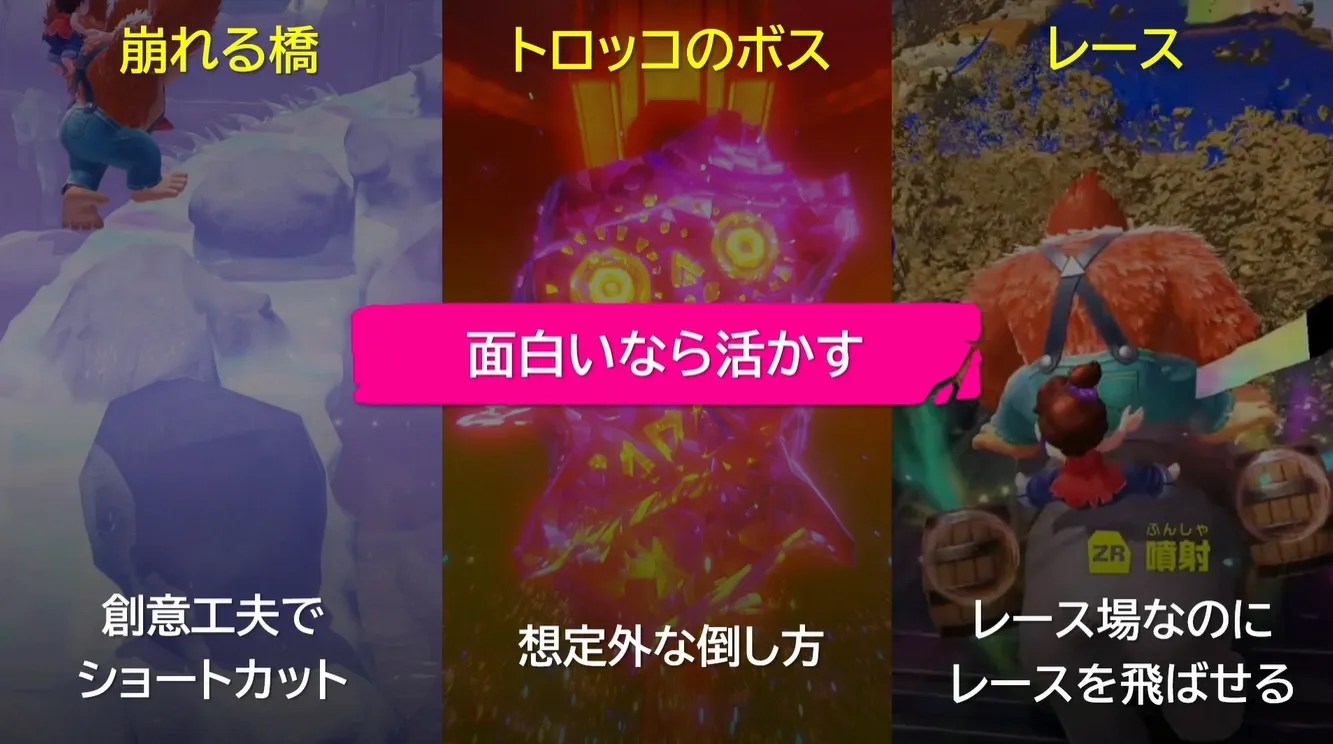
How do you do QA for a game in which everything is breakable? The Donkey Kong Bananza QA talk at CEDEC 2026 answers that (img above). It started with the philosophy of “experience first” (img below):
Ensure destruction doesn’t spoil experience
Do not restrict freedom to avoid bugs
If a bug is fun, use it
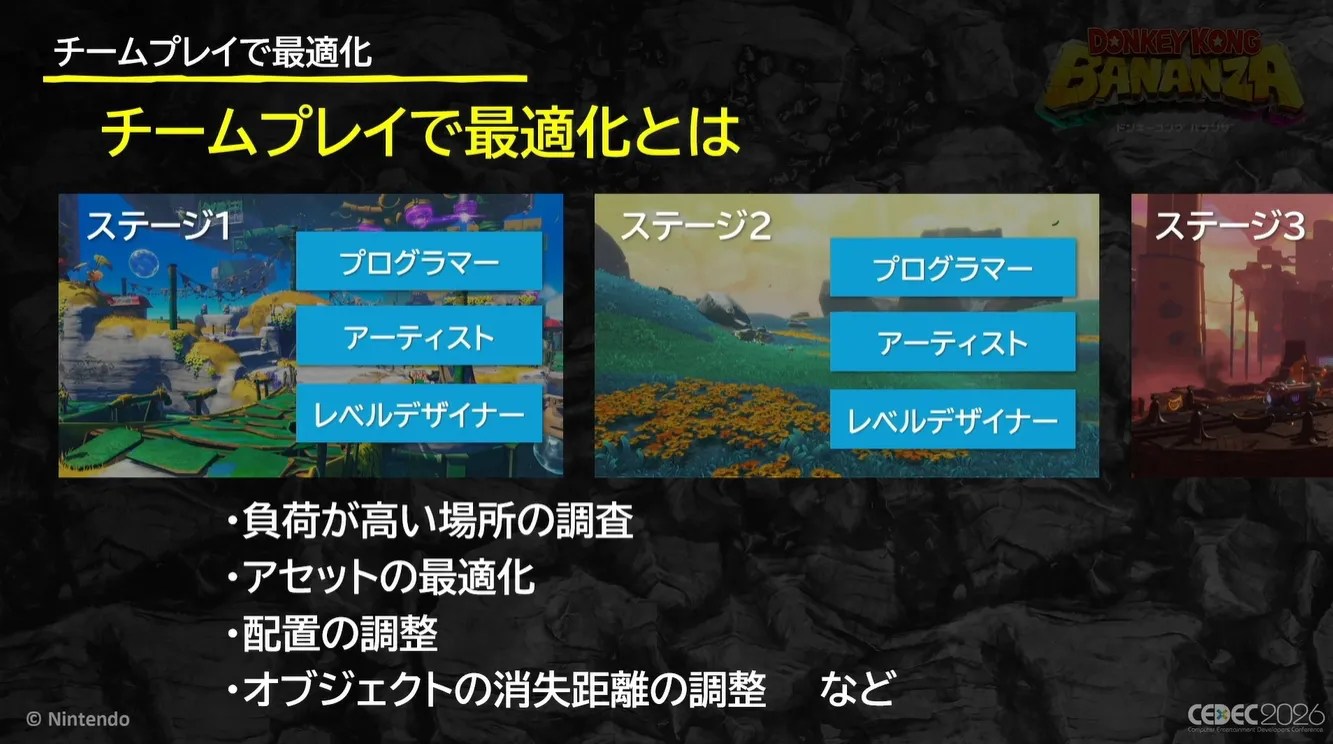
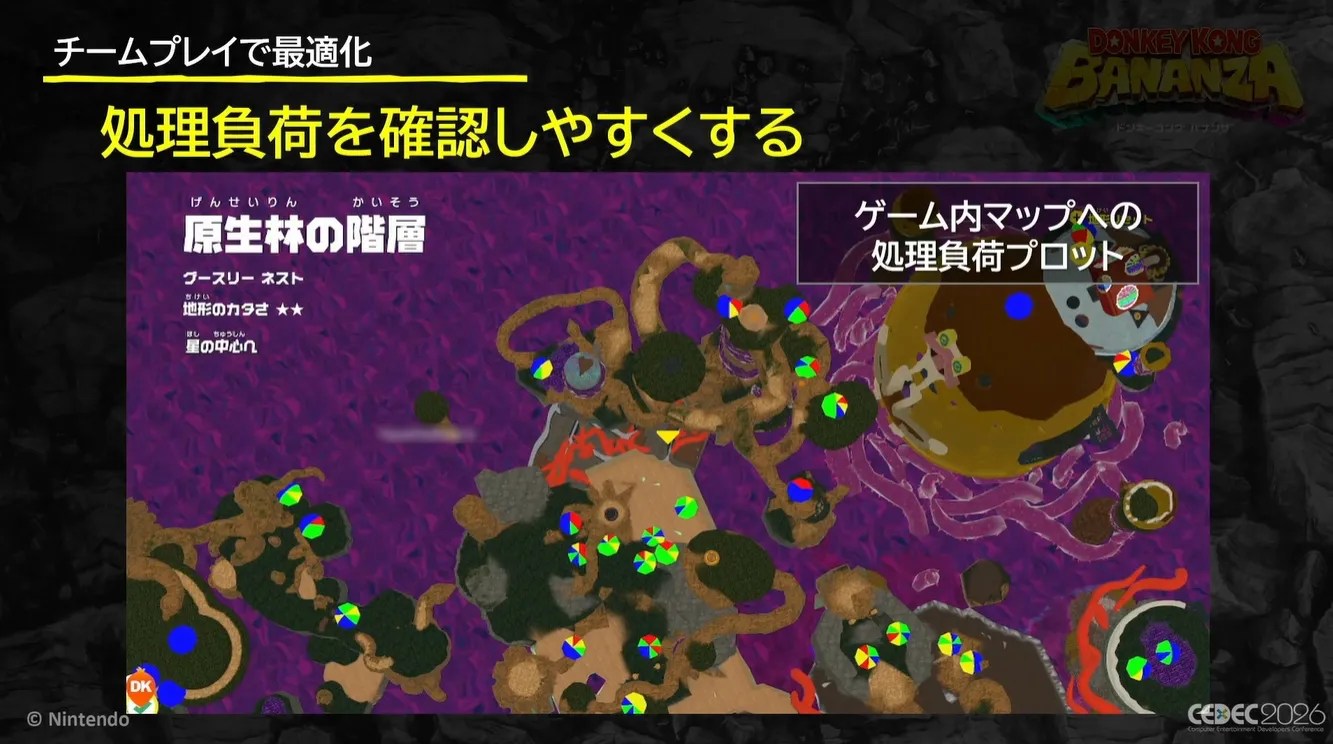
Each stage was assigned to a team of programmers, artists, and level designers to optimize (img 1 below). A visualization tool was created to show everyone the optimization status (img 2).
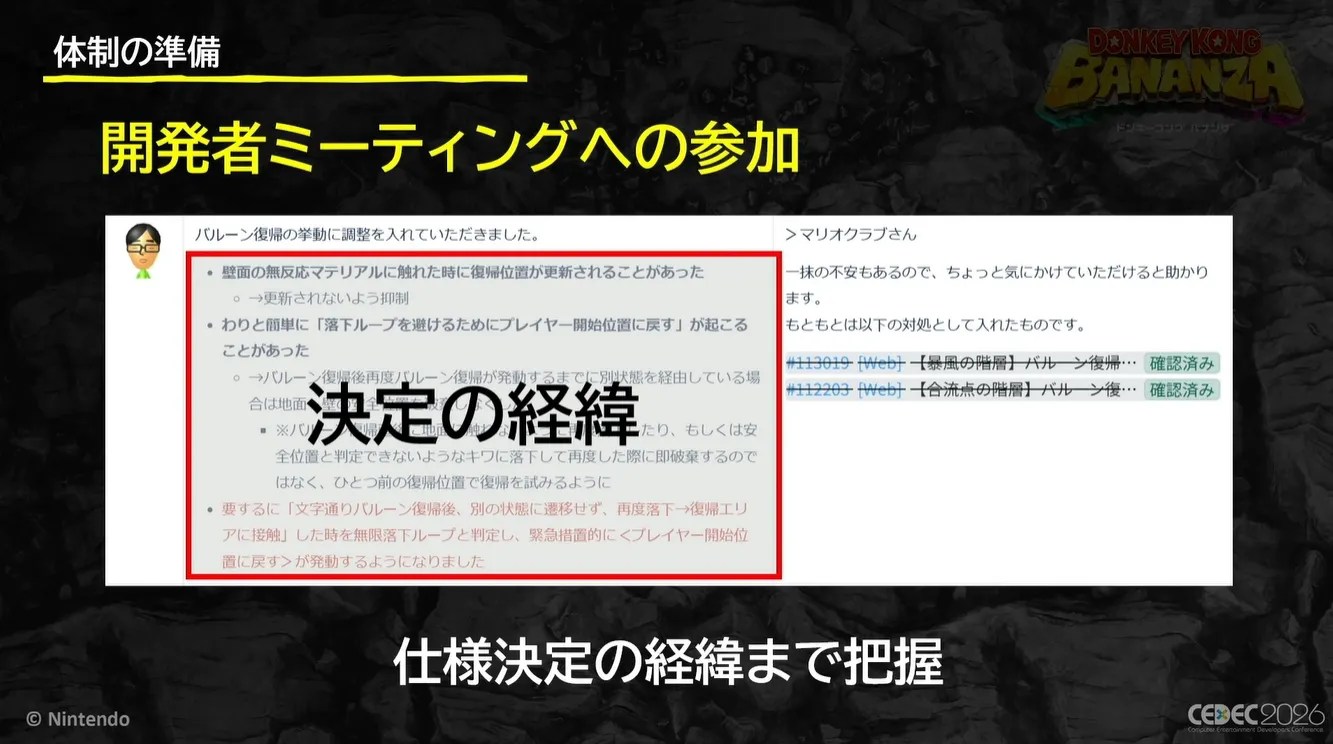
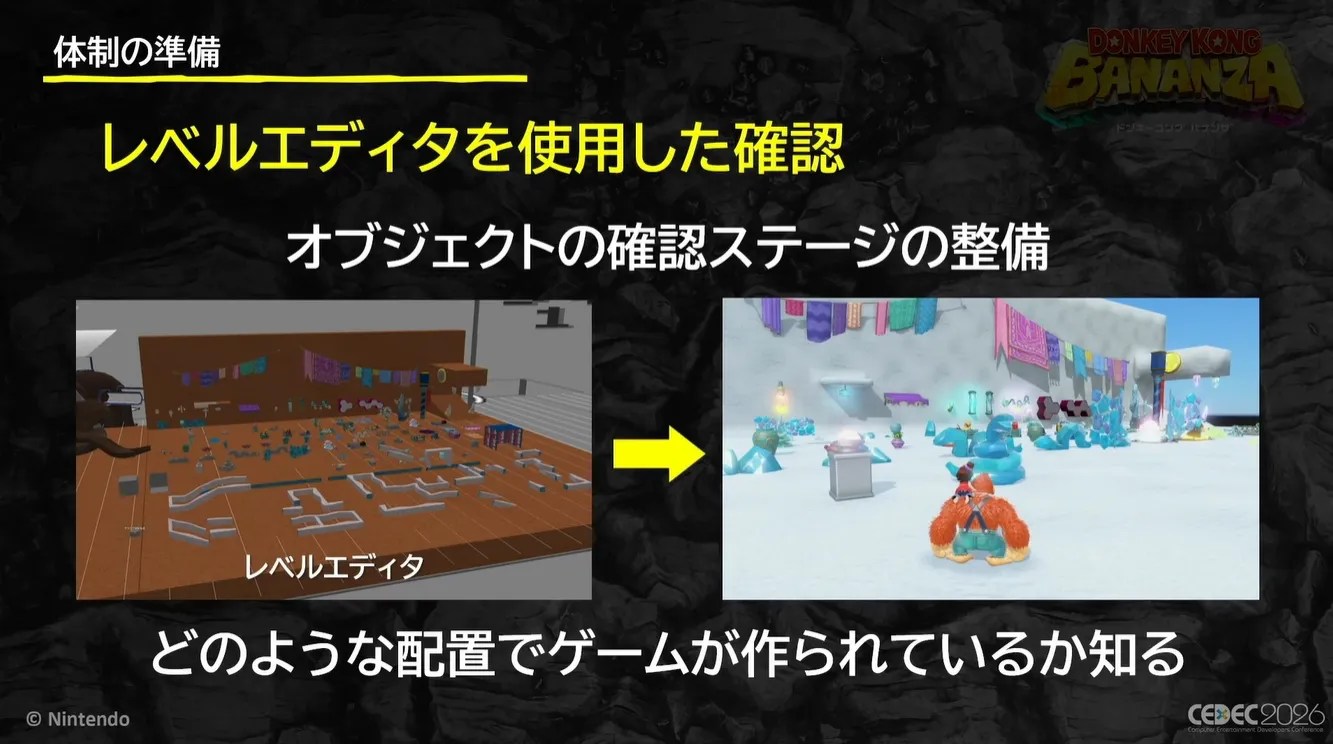
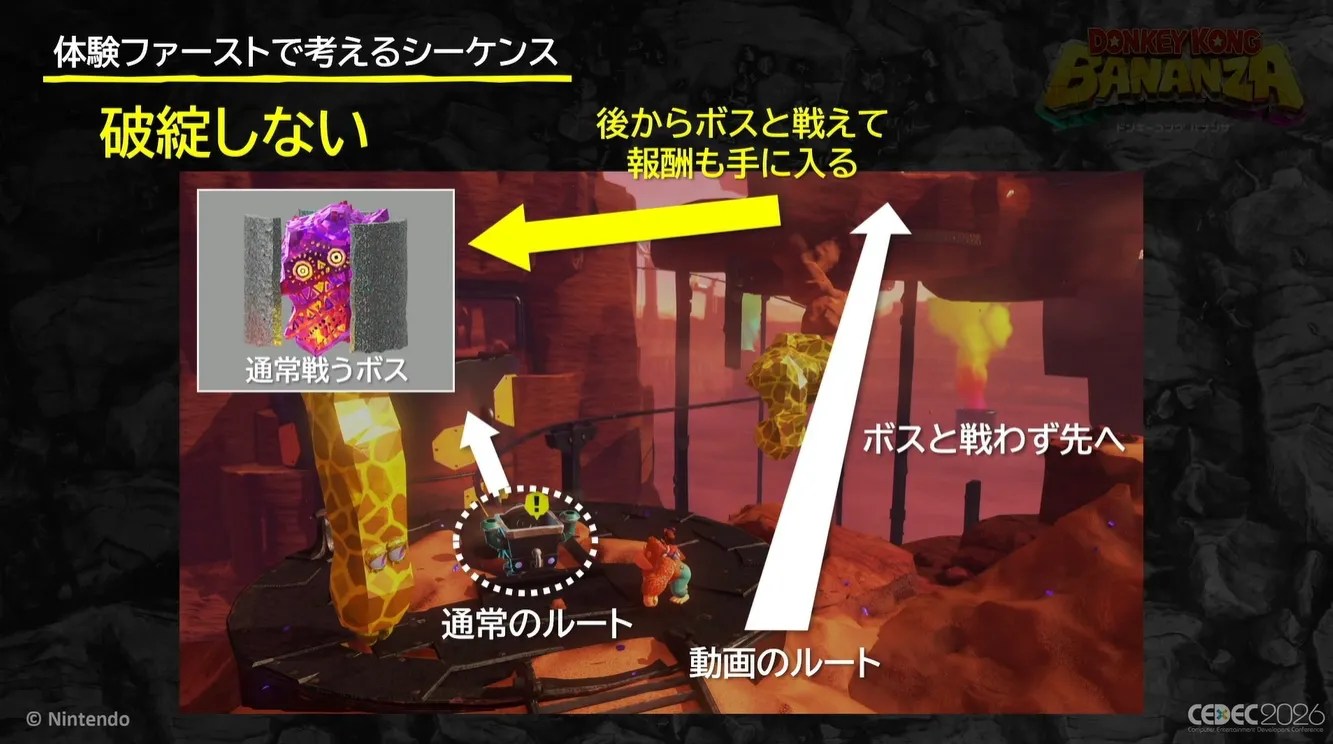
The QA testers from Mario Club were embedded in the development team from the early phase, participating in dev meetings and having access to the level editor (imgs 1-2 below). Sometimes they were able to use speedrunning techniques to get ahead; when the team decided to incorporate the “bug” because the experience was fun, some dialogues or item acquisitions were adjusted to ensure congruity (imgs 3-4).
The automatic testing not only could play the game from beginning to end, but could also manipulate voxels. It is also revealed that some debugging features were repurposed in DK Artist.
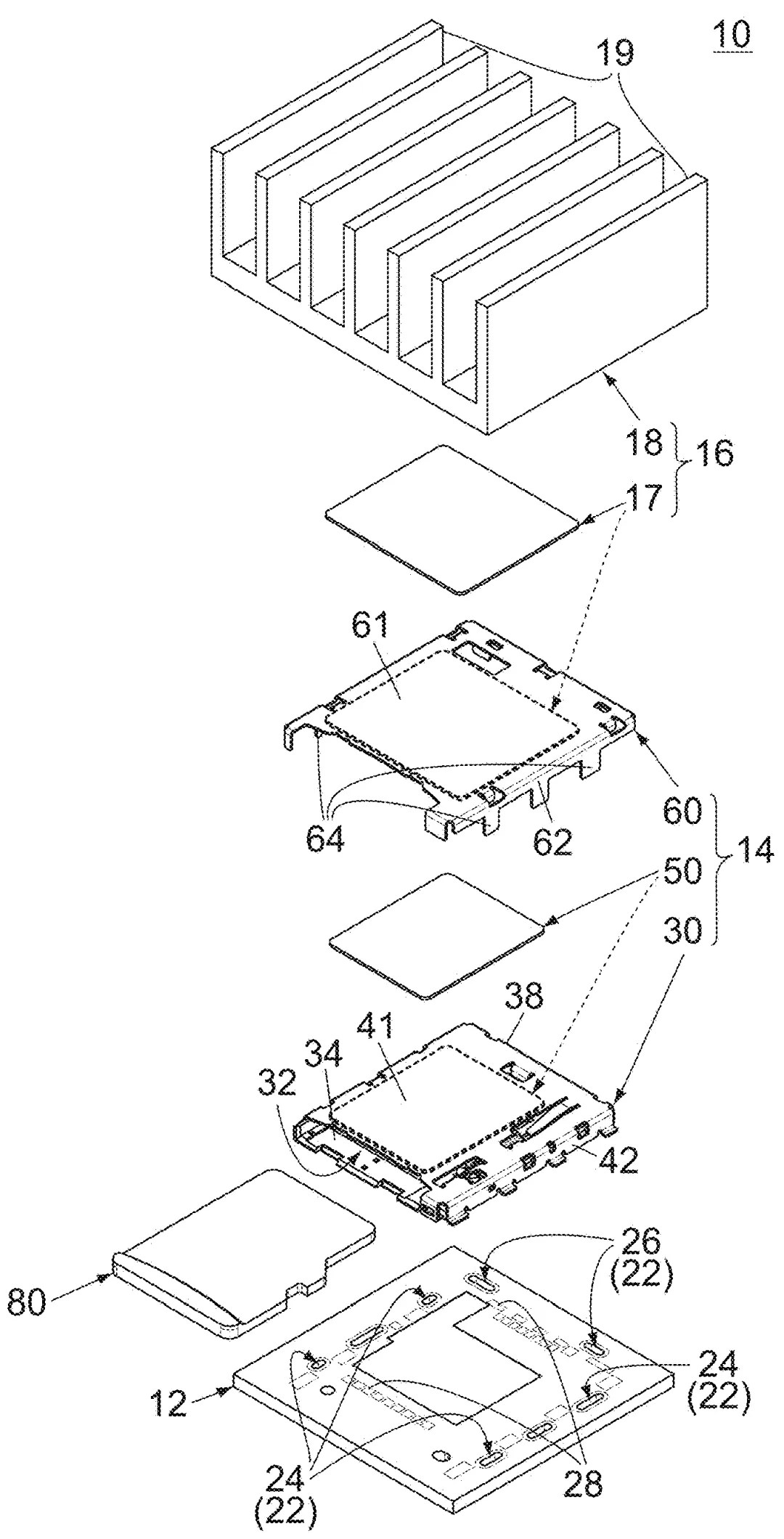
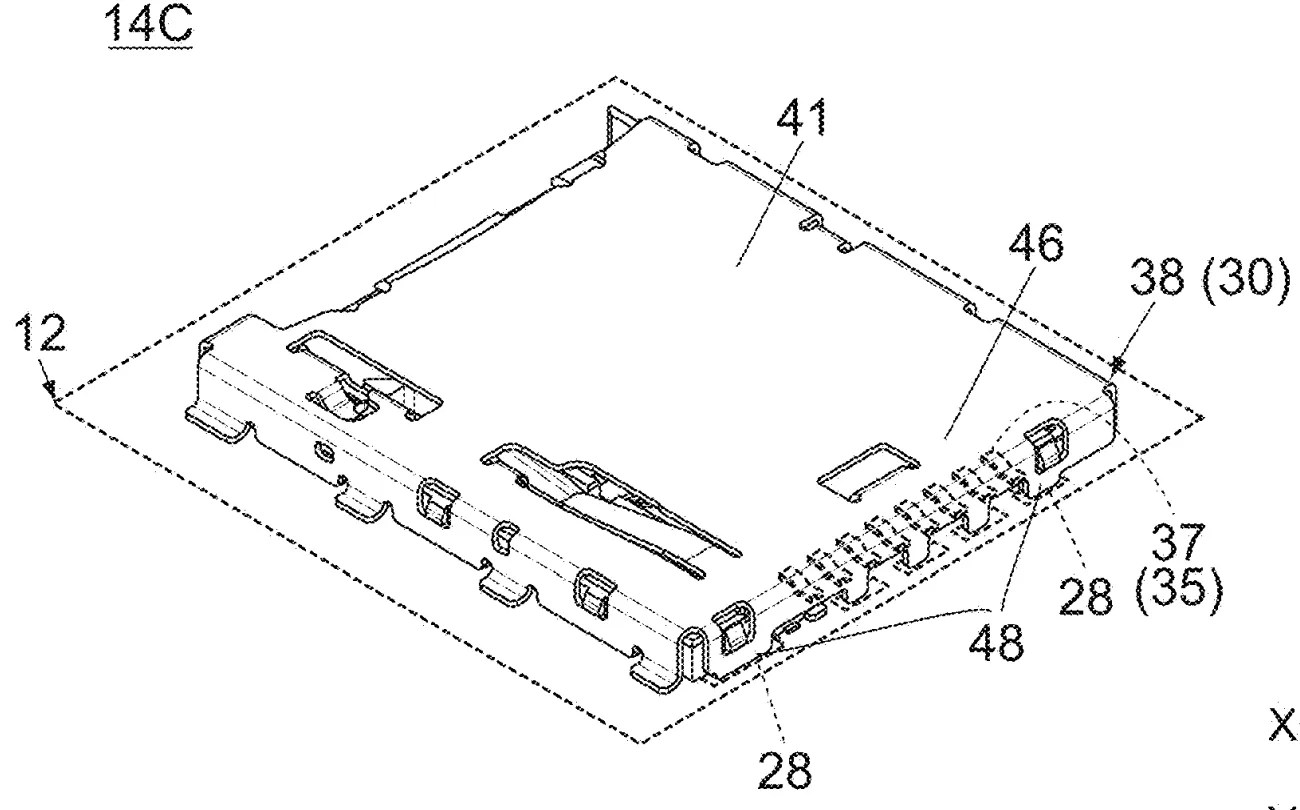
In late 2024 some Famiboards sleuths already sussed out that Switch 2 would adopt microSD Express, one of the evidences being a new microSD connector part from Japan Aviation Electronics. Today a joint patent by JAE and Nintendo is published, detailing the connector’s thermal management.
Due to the heat generated from the Express card’s high data rate, conventional connector just won’t do. The solution is to add a metal bracket (#60 in img below) that hugs the connector shell (42); it stops EMI leakage and conducts heat to the heat sink (18) and board (12).
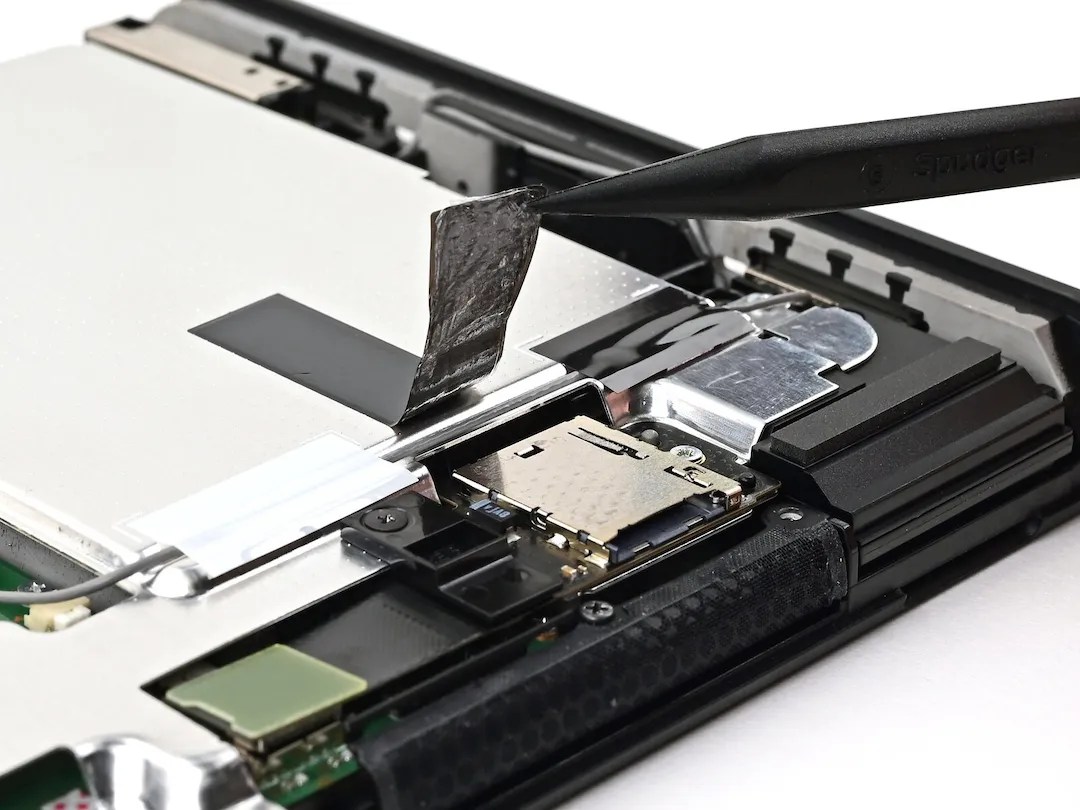
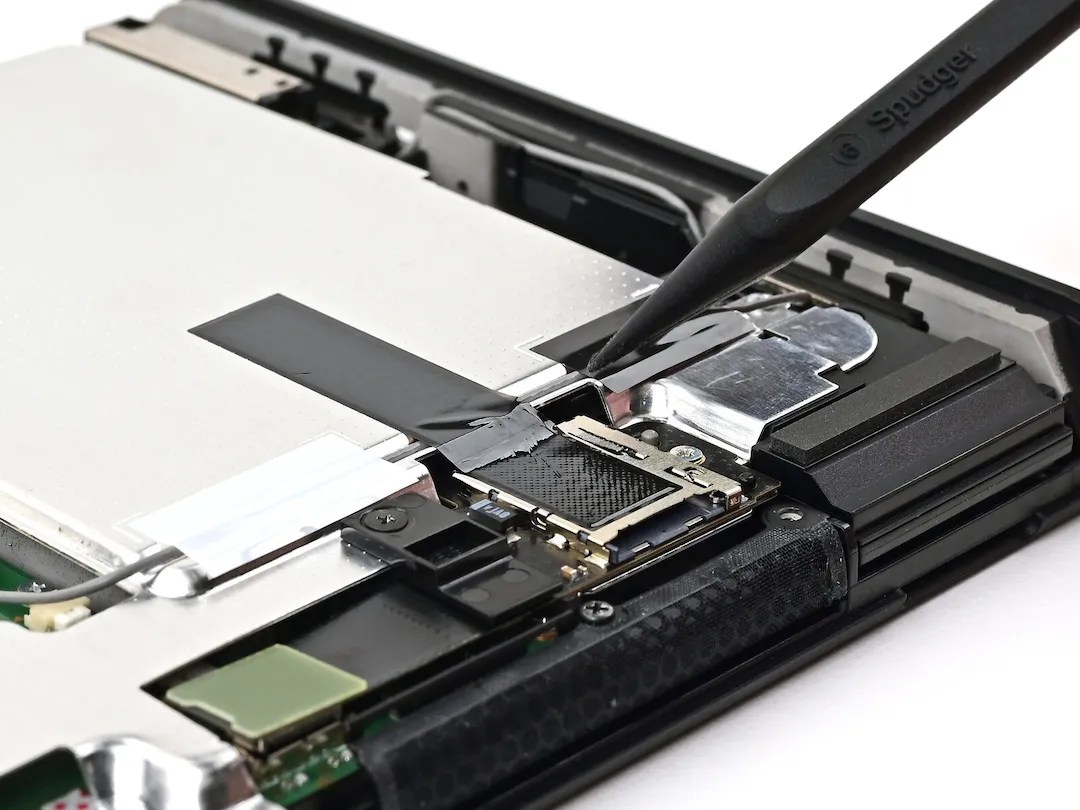
However, this is over-engineered for Switch 2, and a simpler version is actually used (img 1 below). The bracket is omitted, but the connector shell is enhanced to contain EMI, and conduct heat to the board and also the main shield plate via a thermally conductive tape (imgs 2-3; source in alt text).
(After copying the last post from my Bluesky account, I realized that I forgot to copy the following Bluesky post when it was published in May. So here it is.)
Mochizuki persists with his poppycock of Switch 2 “slowdown”. Let’s look at some hard data for what’s really occurring:
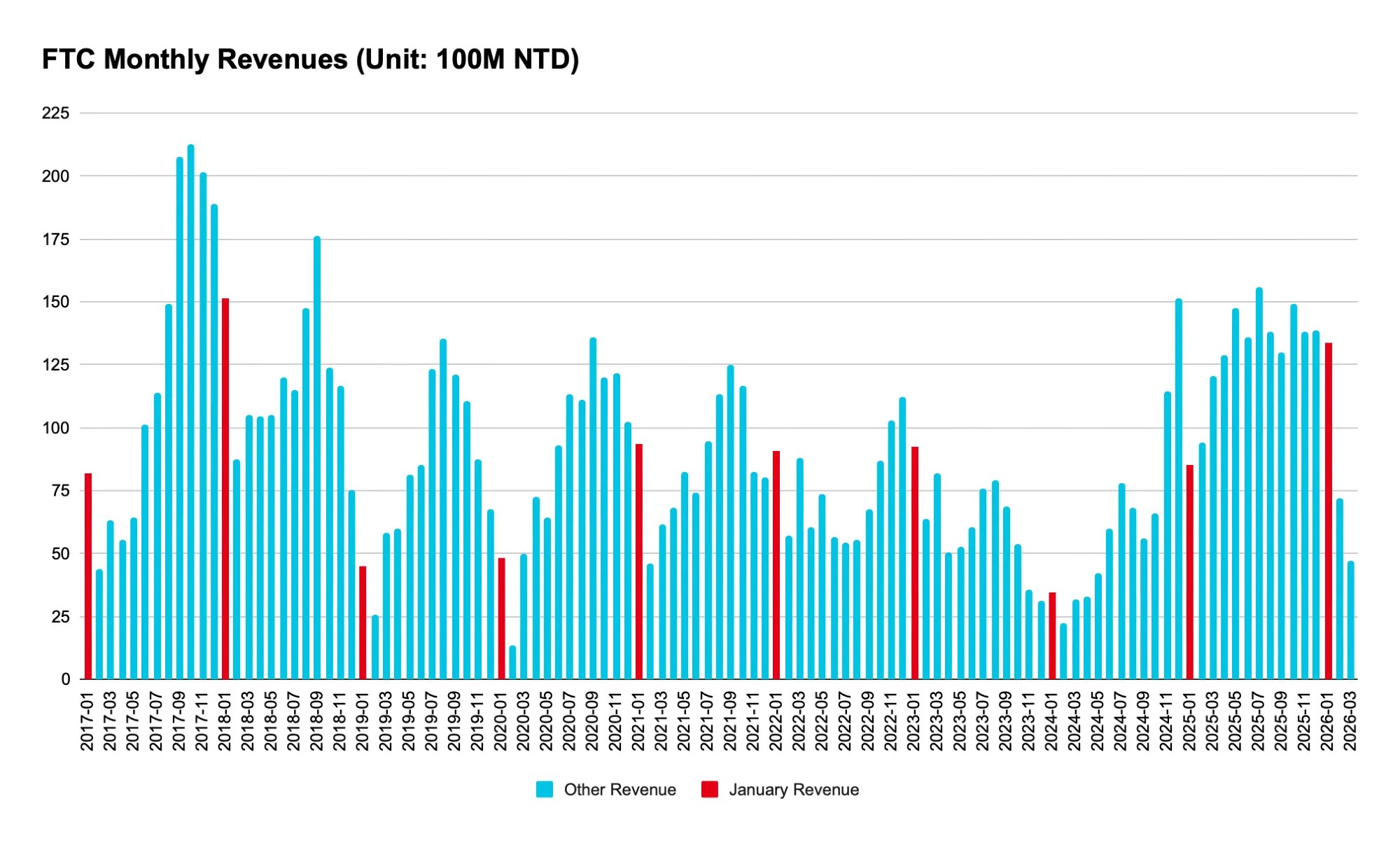
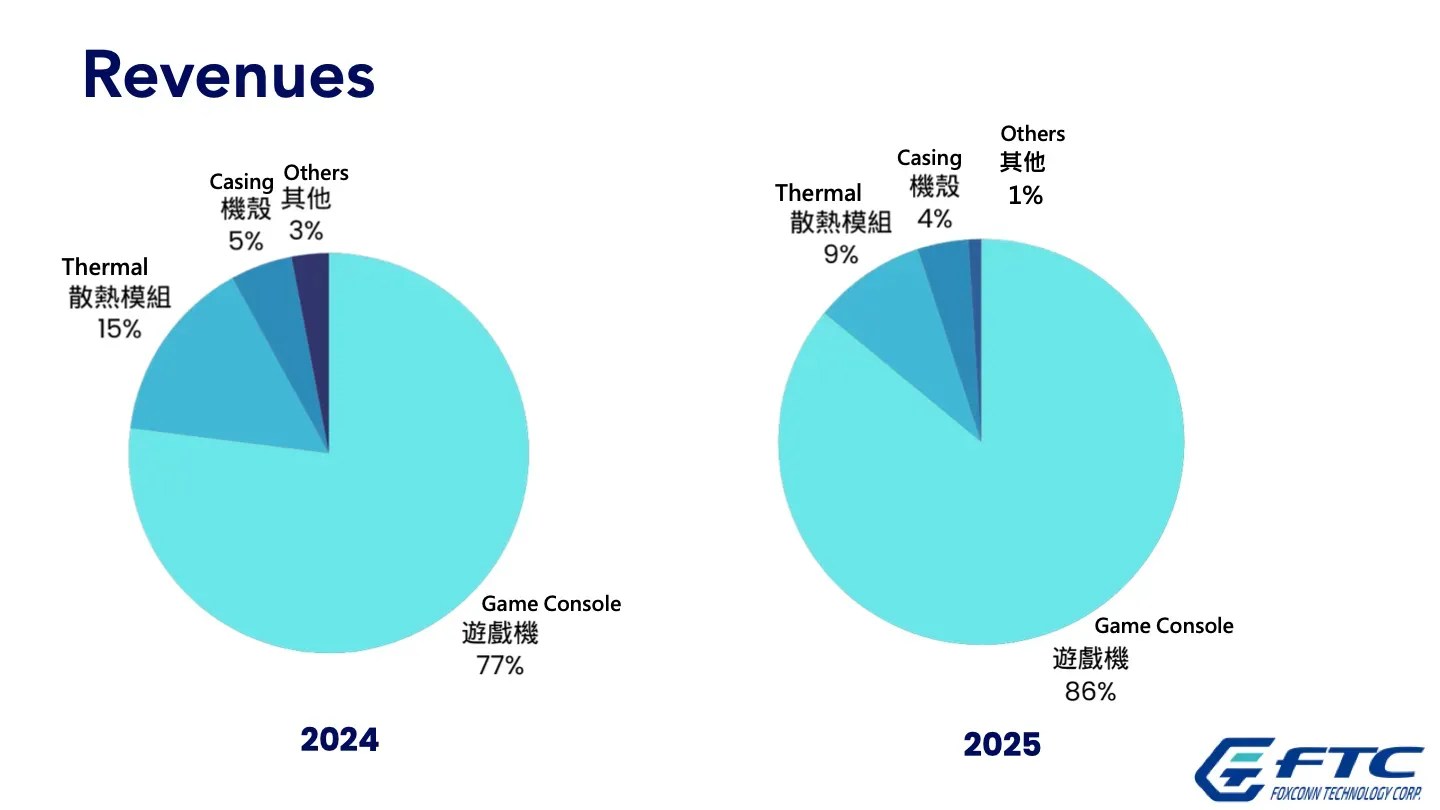
Image above shows the monthly revenues of Foxconn Technology Co. (FTC, 鴻準), a good proxy of Switch production volumes (because Nintendo is its biggest revenue source; img below).
Note: A 2nd assembler Hosiden was added in 2019, and a 3rd MinebeaMitsumi in 2020. So for a fairer comparison, you may want to mentally lower the 2017-2018 numbers a lot and 2019 numbers a little.
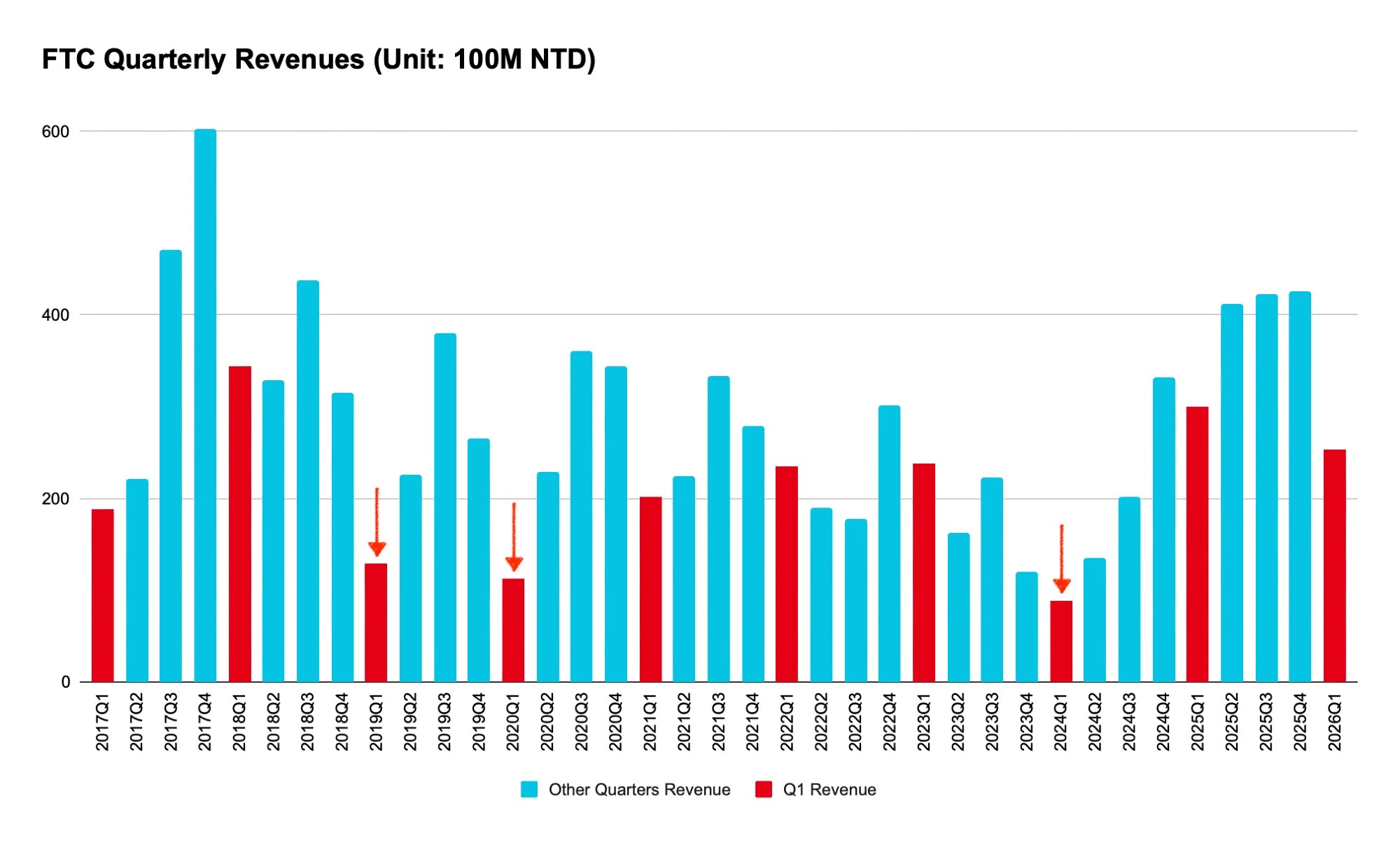
As you can see, the production volumes are cyclical in waves, except the sustained high outputs between 2024-11 and 2026-01 to stockpile Switch 2 units. Yes, the productions in 2026-02 and -03 decreased sharply, but that isn’t a sign of slowing sales.
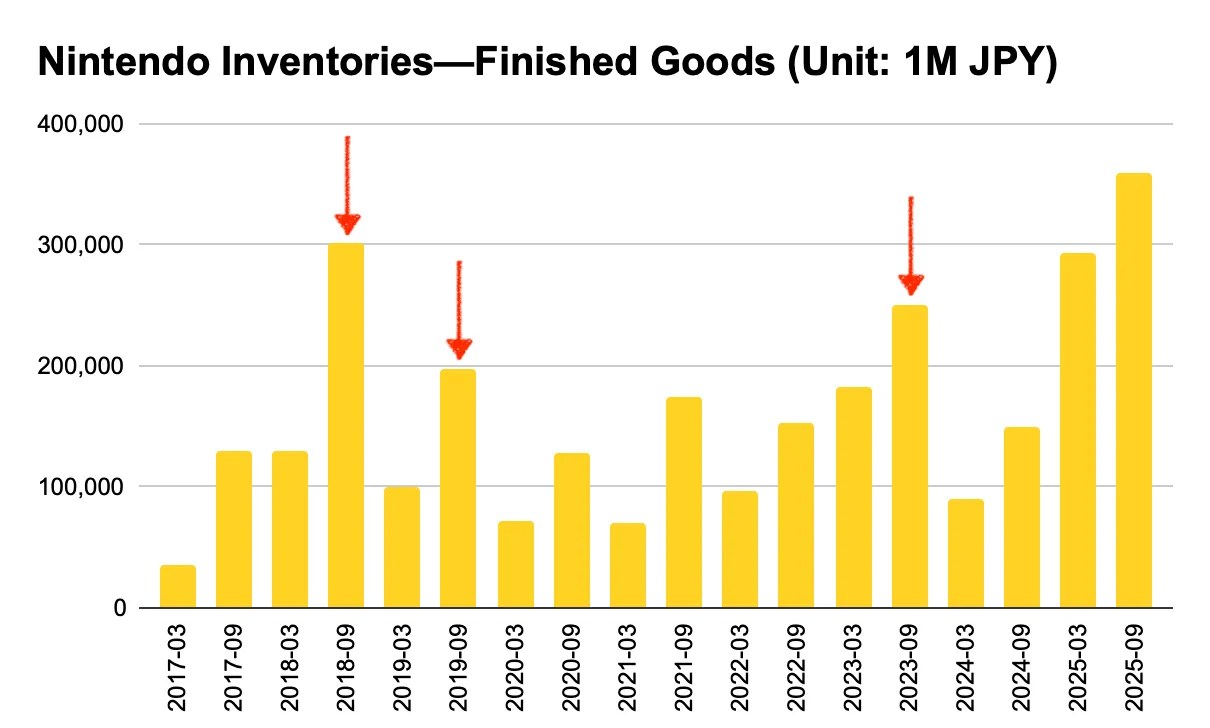
Looking at FTC’s revenues by calendar quarters (img 1 below) and Nintendo’s finished goods inventories (img 2) side-by-side, it’s evident that Q1 productions invariably dropped after the holiday shopping season, in order to adjust the inventory level. The most obvious examples are the high inventories in late 2018, 2019, and 2023—leading to the lowest productions in the following Q1s.
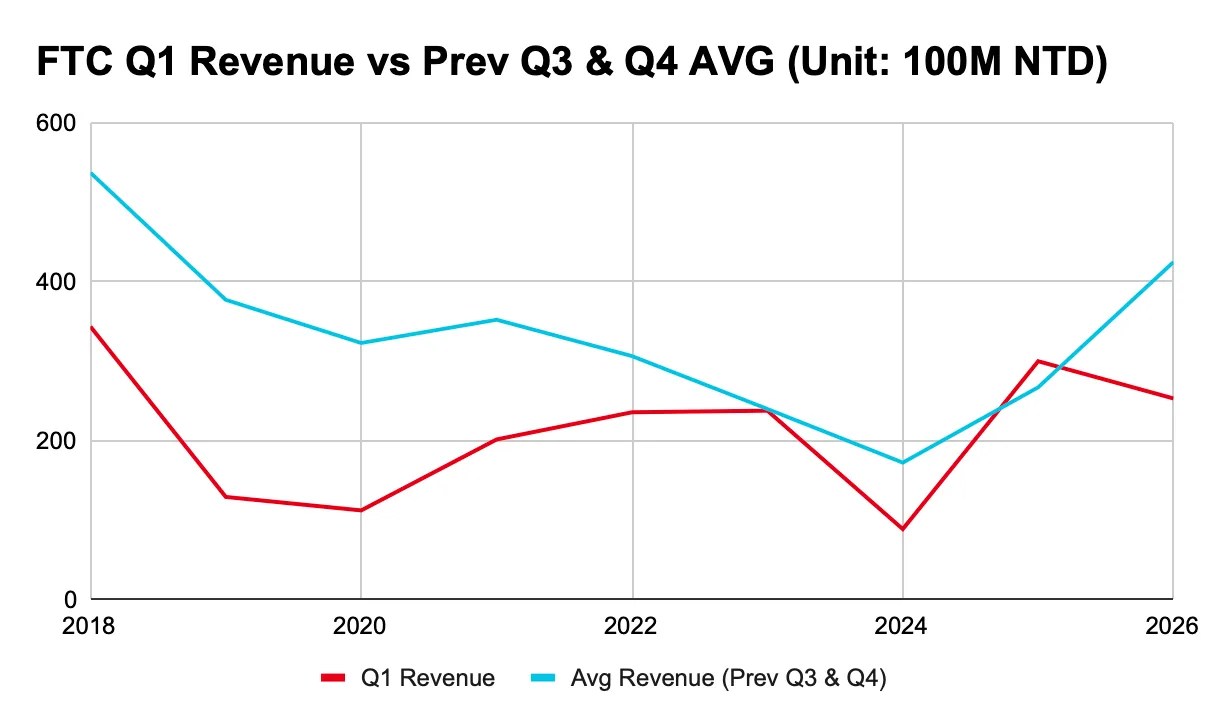
The chart below is another visualization of this. Aside from Q1 2023 (TotK OLED Model launch) and 2025 (Switch 2 launch), Nintendo maintained a fairly consistent gap of production volumes between Q1 and the prior quarters—the Q1 2026 number is no exception. The “production cut” reported by Bloomberg is just the company rebalancing the inventory as it always has.
[Speculation] It seems to me that Mochizuki’s source(s) used the assembler data to concoct stories, possibly for market manipulation. Check out Nintendo’s share price movements before and after Bloomberg’s “25M units production” and “30% output cut” reports, respectively.
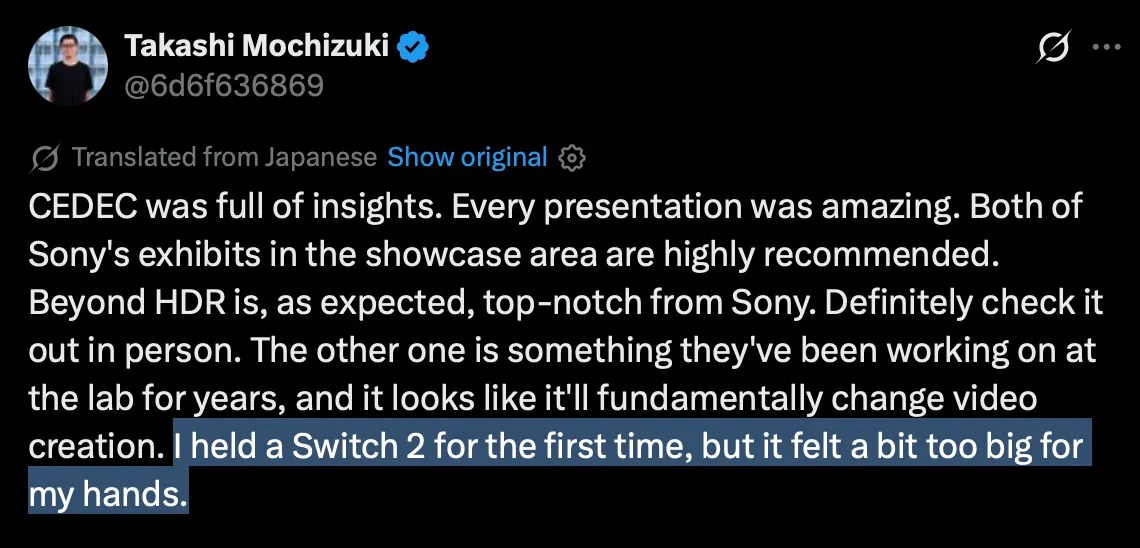
I had to do a double take but it’s true that Takashi Mochizuki, a game industry reporter, admitted to only trying Switch 2 for the first time 413 days after its launch, and still managed to find something negative to say.
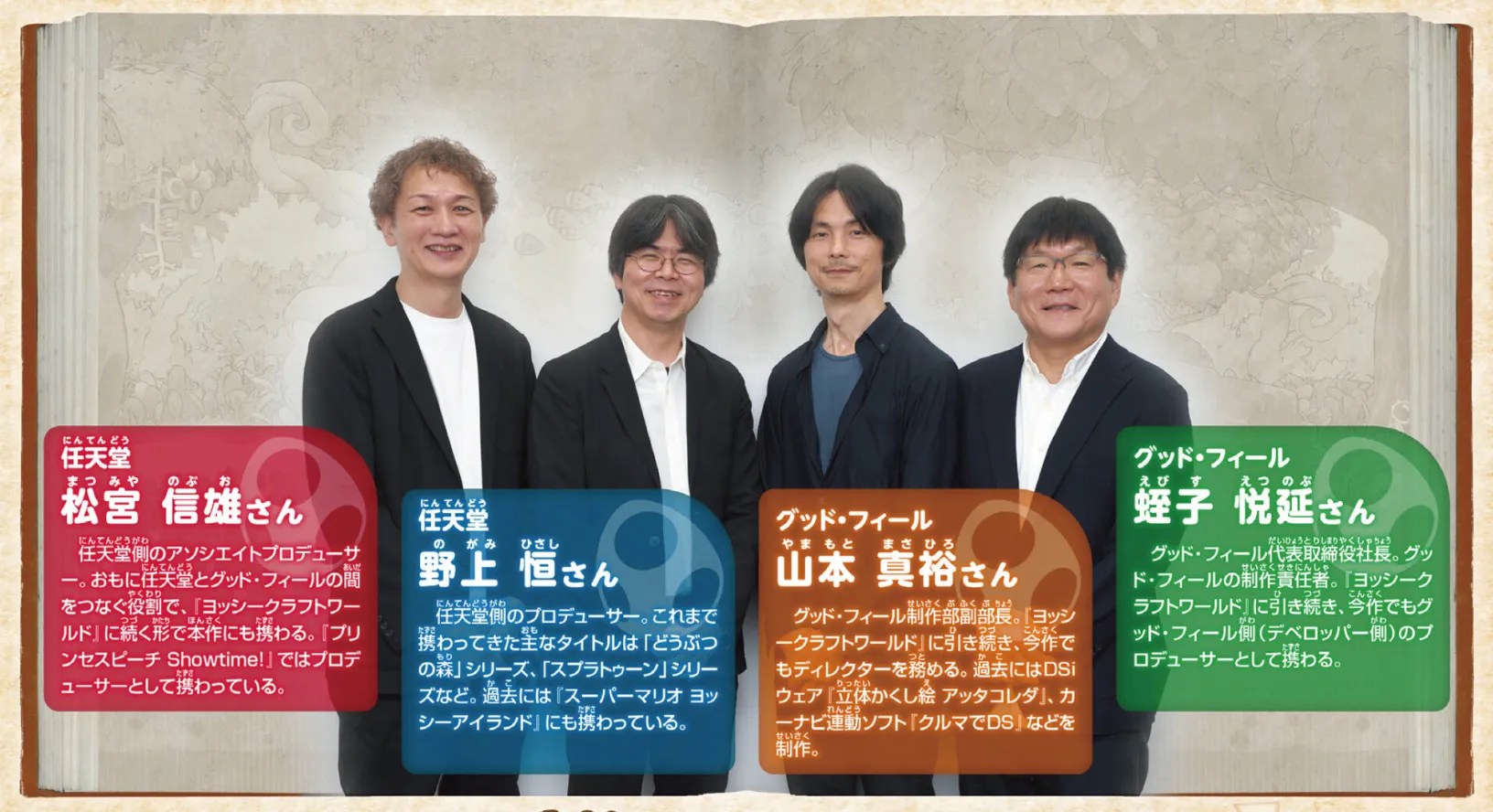
The September issue of Nintendo Dream includes an in-depth dev interview re: Yoshi and the Mysterious Book. I’ll avoid any spoilers and only share some interesting points:
Tezuka was involved in the initial phase. Later he was tied up with Super Mario Bros. Wonder, so Nogami took over the Producer role.
The game was originally planned for Switch 1, but changed to Switch 2 during development.
“No dying” isn’t to make the game easy, but to encourage no-holds-barred exploration.
The encyclopedia concept only came into shape toward the end of development.
Different chapters may not exist in the same timeline. (This explains some late game content.)
The naming system was complex to implement, but a team member insisted on it.
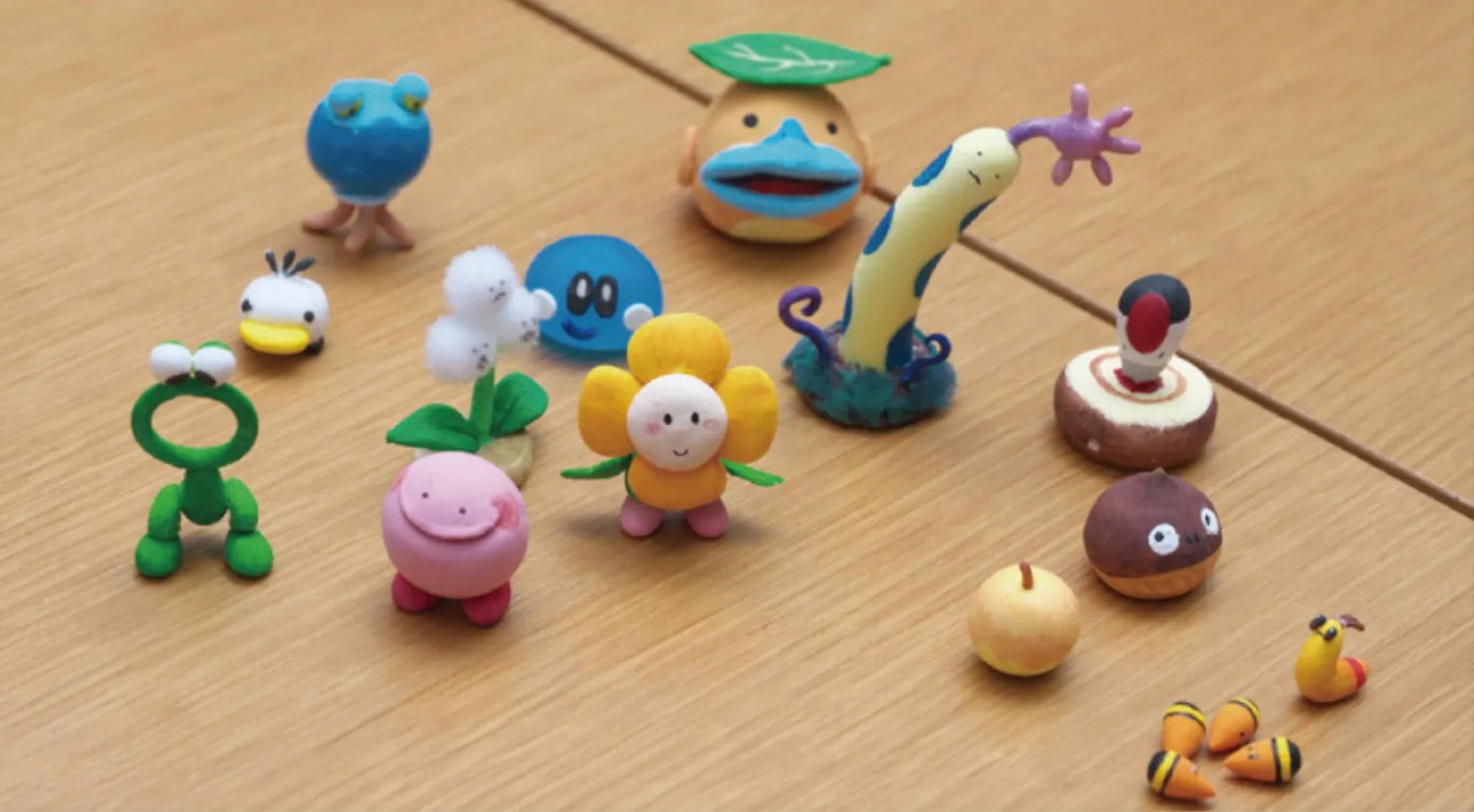
Photo of the clay models for development below
There are a lot more details in the full interview. You can buy a digital copy to support real journalism on BookWalker.jp or Amazon.co.jp.
[Update on 2026-08-13] Nintendo Dream has published the dev interview on their site. There are spoilers toward the end, but the article warns you beforehand.
[Update on 2026-08-18] Famitsu also published a dev interview for Yoshi and the Mysterious Book. One fact I’d like to highlight: The team spent at the minimum a month developing one creature; Chapter 6 Remote Isle alone took three years.